


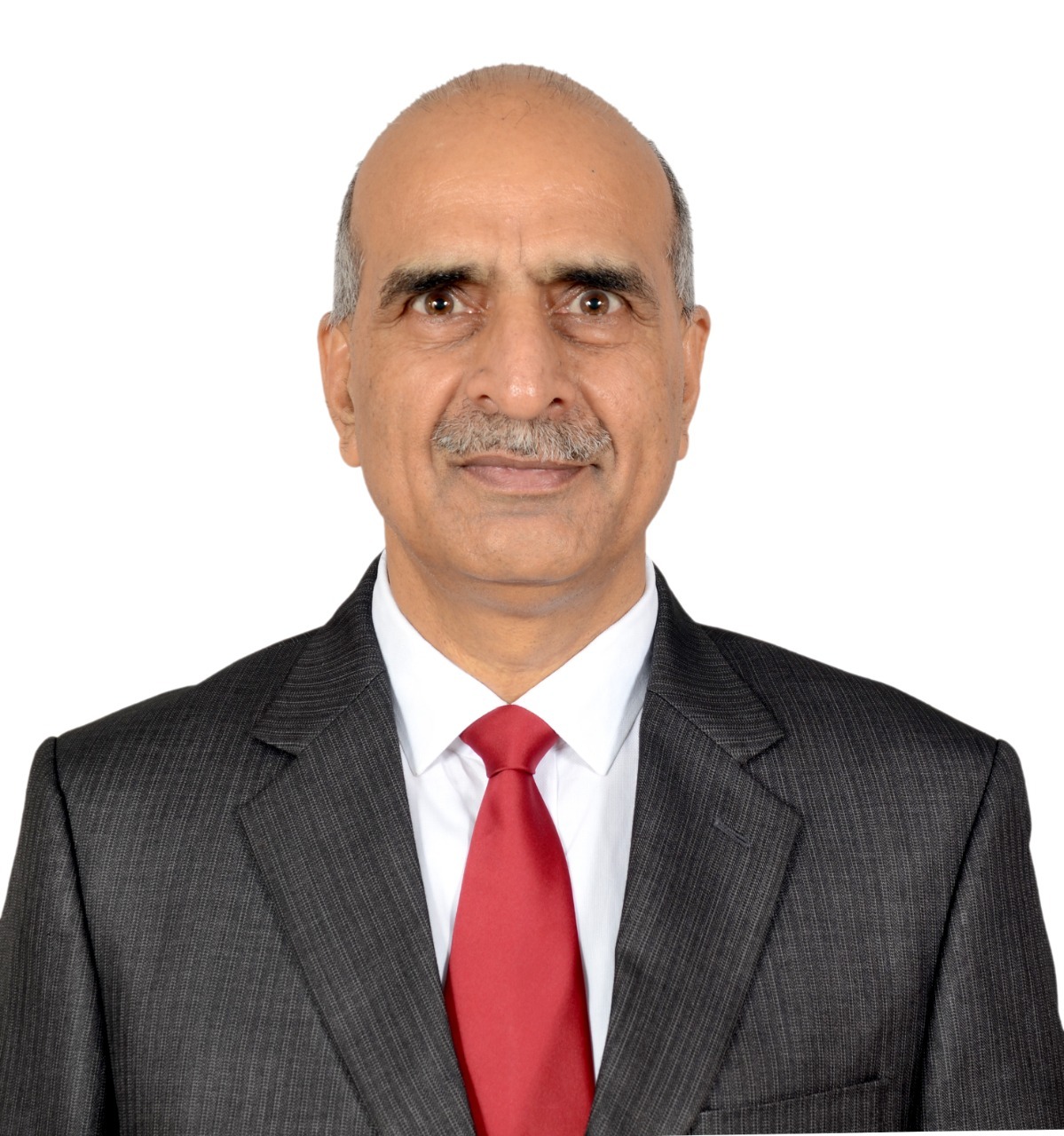
The Final Battle: Why Hospice and Palliative Care Should Become Part of ECHS By Col Narinder Singh Dahiya (Retd.)
Date:- 19 July 26
EDITORS NOTE :
"Palliative and hospice care both prioritize comfort and quality of life for those with serious illnesses, but differ in timing and treatment focus. Palliative care starts at any stage of an illness and continues alongside curative treatments. Hospice care is specifically for end-of-life support when curative treatment is stopped" -AI Overview This article is on a relevant subject that concerns veterans that are / will soon be in their last leg journey of life . As is customary for the MS branch to ask for choice of final / last leg posting, here too, the ECHS / Hospital authorities should ask for final last leg choice for their ' Hospice and Palliative Care ' to enable both the veteran and also his better half exit gracefully and peacefully from this mortal world.
All images for symbolic representation only .
-Editor ,MVI
Every Indian soldier who goes into battle wears two identity discs—the familiar round and oval discs, popularly known as dog tags in USA. Their purpose is simple yet profound. Should the worst happen, one disc remains with the body for identification, while the other is used to notify the chain of command and maintain official records. Even in death, no soldier is left unidentified.

Perhaps, in life's final campaign, a veteran needs a different kind of tag—not one made of metal, but one made of informed choice. It may take the form of an Advance Medical Directive (Living Will), including instructions such as Do Not Attempt Resuscitation (DNAR) in legally and medically appropriate circumstances. Such a directive enables a veteran to state that, when death is inevitable because of irreversible illness, medical care should focus on comfort, dignity and freedom from suffering rather than futile attempts to prolong the dying process.
This is not a choice against life. It is a choice for dignity.
The Ageing Veteran
India's population especially veteran population is ageing rapidly. Thousands of ex-servicemen are now in their seventies, eighties and nineties. Many suffer from advanced cancer, end-stage heart disease, chronic lung disease, kidney failure, dementia, Parkinson's disease and multiple chronic illnesses.

The Ex-Servicemen Contributory Health Scheme (ECHS) has been one of the most successful welfare initiatives for veterans. It has provided quality healthcare to lakhs of ex-servicemen and their dependants through an extensive network of polyclinics and empanelled hospitals.
However, healthcare is a continuum. It begins with prevention, extends through treatment and rehabilitation, and should conclude with compassionate end-of-life care.
It is this final link that is missing.
What Modern Medicine Has Learnt
Dr. Ken Murray's celebrated essay, ‘How Doctors Die’, initiated a global discussion on end-of-life care. His central observation was that doctors, who understand the benefits and limitations of modern medicine better than anyone else, often choose less aggressive treatment for themselves when faced with terminal illness. They prefer comfort, dignity and meaningful time with family over repeated invasive procedures that offer little hope of recovery.

Another widely discussed essay, ‘Why I Killed My Father’, revealed the emotional burden families carry when they are forced to decide whether to continue life-support and invasive treatment for a loved one who has no realistic chance of recovery. The author's anguish illustrates how the absence of advance care planning leaves families with impossible choices and lifelong guilt.
These essays highlight a simple truth:
Medicine should not merely prolong biological life. It should preserve the quality and dignity of the life that remains.
A powerful real-life example came from former U.S. President Jimmy Carter. At the age of 98, after repeated hospitalisations, he chose to stop curative treatment and enter hospice care at home. Instead of spending his final months in intensive care units and hospital corridors, he remained with his family, receiving comfort-oriented care. He lived for nearly two more years and died peacefully at the age of 100. His decision demonstrated that hospice care is not about giving up; it is about choosing quality of life, dignity and freedom from unnecessary suffering.

The Indian Perspective
Indian civilisation has always distinguished between curing disease and caring for the person.
When recovery becomes impossible, doctors in erstwhile Bollywood movies often commented:
"Ab isko dawa ki nahin, dua ki zarurat hai."
This simple expression does not advocate abandoning treatment. Rather, it recognises that there comes a stage when compassion becomes more important than intervention, comfort more valuable than another procedure, and the presence of loved ones more healing than another machine.
Hospice care gives organised medical expression to this timeless Indian wisdom.
Completing the Promise of ECHS
ECHS has excelled in financing consultations, investigations, surgery, medicines and hospitalisation. Like most health insurance systems, however, it is naturally structured to pay for treatment rather than comfort care.
This creates an unintended consequence.
The system rewards investigations, procedures and hospital admissions far more readily than symptom control, counselling, home nursing or hospice care. Consequently, elderly patients with terminal illnesses often undergo repeated investigations, ICU admissions, ventilator support and invasive procedures that offer little realistic prospect of recovery.
What begins as a boon can, at times, become a burden.
The objective of healthcare should not always be to do more. It should be to do what is right for the patient.
Another concern that deserves attention is misuse of the system. Like any large publicly funded healthcare programme, ECHS is susceptible to unethical practices by a small minority. Unnecessary investigations, avoidable admissions, inflated billing and procedures driven more by reimbursement than by clinical necessity increase costs and expose frail elderly veterans to interventions they neither need nor desire.
The overwhelming majority of doctors and hospitals serve veterans with dedication and integrity. Nevertheless, even isolated instances of misuse divert scarce resources and erode confidence in an otherwise outstanding scheme.
These shortcomings are not arguments against ECHS. They are arguments for its evolution.

What Hospice Care Offers
Hospice and palliative care do not mean giving up.
They represent a shift in the goal of treatment—from curing disease to relieving suffering.
Hospice care provides:
- Expert pain and symptom management.
- Skilled nursing care.
- Psychological and emotional support.
- Spiritual care according to individual beliefs.
- Guidance for family caregivers.
- Home-based care whenever possible.
- Assistance with Advance Medical Directives.
- Dignified care that enables patients to spend their final days peacefully, often in the comfort of their own homes.
The objective is neither to hasten death nor to prolong dying.
It is to maximise the quality of the life that remains.

The Way Forward
ECHS should now take the next logical step in veteran welfare.
It should:
- Empanel recognised hospice and palliative care centres.
- Cover home-based palliative care teams comprising doctors, nurses and counsellors.
- Reimburse essential medical equipment such as hospital beds, wheelchairs, oxygen concentrators and suction machines.
- Establish palliative care units in Command Hospitals and major Military Hospitals.
- Train ECHS medical officers in end-of-life counselling.
- Encourage Advance Medical Directives and DNAR discussions in accordance with Indian law.
- Introduce stronger clinical audits to discourage unnecessary investigations and procedures.
- Enhance transparency and accountability to minimise misuse of public funds.

These reforms would complete the continuum of healthcare that ECHS has so successfully established.
Compassion Is Also Good Economics
Repeated ICU admissions, prolonged ventilation and futile interventions during terminal illness consume enormous healthcare resources while often adding little to either survival or quality of life.
Hospice care frequently achieves better patient satisfaction at lower overall cost by reducing unnecessary hospitalisation and enabling patients to remain at home whenever feasible.
Compassion and economy need not be opposing goals.

Conclusion
The Indian Armed Forces have always believed that no soldier should ever be left behind.
That principle should extend beyond the battlefield.
A grateful nation owes its veterans more than medicines, investigations and surgeries. It owes them dignity, relief from suffering and the assurance that they will not spend their final days trapped in a cycle of futile medical interventions.
Every soldier enters battle wearing identity discs.
Perhaps every veteran should also have the opportunity to leave clear instructions for the final battle of life—and to receive hospice and palliative care that honours not only the years he lived, but also the manner in which he leaves them.

The true measure of a nation's gratitude is not merely how it honours its soldiers in uniform, but how compassionately it stands beside them in their final march.
The time has come for ECHS to complete its noble mission by making hospice and palliative care an integral part of veteran healthcare.


Comments