


Beyond Geneva: The Search for a New Middle East - Brig LC Patnaik
Date:-18 June 2026
"The US and Iran are both parties to the core 1949 Geneva Conventions. Their ongoing conflict is subject to a newly signed memorandum of understanding, officially backed by the G7 nations during their June 2026 summit in Évian-les-Bains, France. The formal agreement signing event is scheduled to take place in Geneva, Switzerland." AI Overview
When President Donald Trump spoke at the conclusion of the G7 Summit, he revealed more than perhaps he intended. His references to China, Syria, Lebanon and the possibility of renewed military action against Iran suggested that the emerging Geneva understanding was no longer confined to the nuclear question. The subsequent release of the draft Memorandum of Understanding confirmed as much.

Geneva is being presented as a nuclear agreement. In reality, it is an attempt to prevent a wider geopolitical realignment in the Middle East from descending into a prolonged conflict. It is less a peace settlement than a crisis-management framework designed to stabilize a region that has drifted dangerously close to an escalatory confrontation.
Over the past two years, the Middle East has witnessed a dangerous convergence of crises. The Gaza conflict, recurring exchanges between Israel and Iran, instability in Lebanon, attacks on maritime traffic and concerns regarding the Strait of Hormuz have created one of the most volatile strategic environments since the Iraq War. The recent American strikes on Iranian facilities and Tehran’s calibrated response demonstrated both the risks of escalation and the limits of military coercion. Geneva has therefore brought together both United States and Iran after 47 years of mutual hostility to primarily control the cost of further escalation; be it political or military.

For Washington, the objective is clear. Prevent Iran from crossing the nuclear threshold while avoiding another prolonged military commitment in the region. For Tehran, the priority is equally obvious: preserve regime security, obtain economic breathing space and maintain its leverage through the Hormuz and the proxies in Lebanon and Yemen . The Gulf nations seek stability and Europe seeks de-escalation which was obvious from the numerous bilateral and multi-lateral meetings recently held during G7 conclave.
Yet the most interesting aspect of the emerging arrangement may not be the nuclear provisions themselves. Reports surrounding the framework point towards a substantial economic component, including reconstruction support, sanctions waivers, renewed access to markets and long-term investment flows. If realised, such measures could reshape Iran’s economic and political orientation.

This raises a larger strategic question. Is US merely seeking to constrain Iran, or is it attempting to gradually reintegrate Iran into a wider economic order? History offers precedents. The United States transformed former adversaries such as Japan and Germany into pillars of a post-war order. Decades later, it normalised relations with Vietnam despite a bitter conflict. Iran is unlikely to follow either path completely. Yet the logic of economic integration remains relevant. States that are economically invested in stability often become more predictable and responsible geopolitical actors.
Equally significant is the strategic subtext. For nearly two decades, sanctions pushed Iran steadily towards China. Today Beijing is Tehran’s principal economic partner and its most important external market. A successful reintegration of Iran into global markets would gradually dilute that dependence. The objective may not be to pull Iran into an American sphere of influence, but it could reduce the position of China and Russia as the dominant external beneficiary of Iran’s isolation. Hence, the most important outcome of a successful meeting at Geneva would be whether Iran could serve the American interests more than the Chinese and the Russian interests.

Lebanon remains central to the strategic calculations of both Tehran and Israel. Hezbollah continues to represent a critical component of Iran’s deterrence posture and an enduring security challenge for Israel. Syria remains the geographic bridge connecting the two. Any effort to redesign the regional security architecture without addressing these interconnected realities risks producing an incomplete settlement. Indeed, the greatest vulnerability of the Geneva process may lie in Israel than in Iran.

Washington appears willing to pursue a phased process of restraint, verification and engagement. Israel’s calculations are likely to be different. Israeli leaders will judge the agreement by a simpler measure: does it reduce the long-term military threat posed by Iran and its regional network? If the answer is perceived to be negative, Israel could emerge as the principal spoiler of a process intended to stabilise the region. Trump’s warning that military strikes could resume if Iran fails to comply underlines another reality. Israel is most likely to exploit this diplomatic vulnerability conducted under the shadow of force.
Equally revealing were Trump’s recent engagements with Gulf leaders. Their support reflects a broader transformation underway in regional thinking. For decades, Gulf security policy was dominated by deterrence through US bases in the Middle East . Iran’s ability to expose gaps and weaknesses in such deterrence is forcing an economic transformation to emerge as a powerful strategic imperative. It is in this light that a massive economic support ( US$300billion), waiver of economic sanctions and freezing of Iranian assets have been proposed in the MoU. Ambitious development programmes, logistics corridors, technology investments and energy transitions require regional stability. As such the GCC countries are more in favour of avoiding a perpetual confrontation in the region.

If this trajectory endures, the most enduring legacy of Geneva may not be diplomatic but economic. The India-Middle East-Europe Economic Corridor (IIMEC), announced with considerable promise but subsequently overshadowed by conflict and uncertainty, may acquire fresh momentum. President Macron has recently assured Prime Minister Modi to take the IIMEC forward . A less isolated Iran, a more secure Gulf and a reduced risk of regional conflict could transform the strategic geography through which IIMEC must pass.
For India, the implications are substantial. The recent crisis demonstrated how rapidly instability in the Gulf can spill into the wider maritime space stretching from Hormuz to the Arabian Sea. Stability in the Gulf is therefore not merely an energy and fertilizer issue. It is a question of maritime security, connectivity and long-term strategic opportunity. Removal of Indo from the US Indo- Pacific Command and US looking at India to be more of a strategic anchor than strategic partner in the Indian Ocean may entail recalibration of QUAD.

The significance of Geneva will not be measured by the number of centrifuges dismantled or sanctions suspended. Its true significance lies in whether it can create a political environment in which regional rivalries are managed through diplomacy rather than military escalation. The diplomatic initiatives in Geneva is therefore not for a nuclear settlement alone. It is a search for a new regional order. Whether that order emerges from cooperation or once again yields to confrontation will depend on developments that lie largely outside the text itself: the future of Lebanon, Israel’s security calculations, Iran’s strategic choices, Gulf economic ambitions and the broader contest for influence shaping the twenty-first century Middle East.
AUTHOR BIOPROFILE :
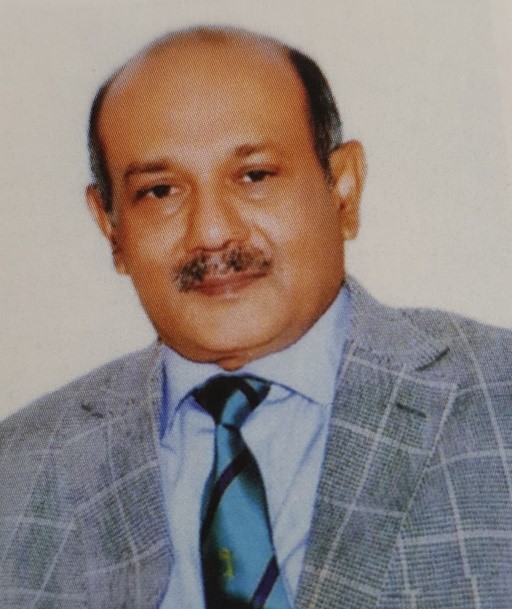
Brigadier (Dr) L. C. Patnaik :
Former Indian Defence Adviser, Embassy of India, Tehran (Iran) and Professor Emeritus, Rashtriya Raksha University
An eminent soldier-scholar, former Chairman of the Odisha Public Service Commission (OPSC), and former President of the Services Selection Board (SSB).


Comments