


A Pause, Not Peace By Brig Advitya Madan
- Brig Advitya Madan

- 2 days ago
- 4 min read
Updated: 2 days ago
Date :- 18 June 2026
The reported U.S.-Iran understanding may have reduced the immediate risk of conflict in West Asia. But the issues that matter most — Iran's nuclear programme, sanctions relief, regional proxies and enforcement mechanisms — remain unresolved.

Diplomatic breakthroughs are often celebrated for the conflicts they appear to end rather than the disputes they actually resolve. The reported U.S.-Iran understanding is a case in point. It has been welcomed as a significant step towards de-escalation in West Asia, yet the available information suggests that it may represent not the end of a crisis but merely the beginning of a more difficult negotiating process.
The enthusiasm surrounding the agreement rests on a simple proposition: both Washington and Tehran appear to have concluded that the costs of continued confrontation outweigh the benefits. That in itself is significant. After months of heightened tensions, threats of escalation, disruptions to maritime security and fears of a wider regional conflict, any arrangement that reduces the immediate risk of war deserves cautious support.
Yet caution is the operative word.

The most striking feature of the reported understanding is not what it contains but what remains unclear. Public discussion has focused on ceasefire arrangements, maritime access, sanctions-related issues and broader efforts to stabilise the region. However, the central question that has defined relations between Iran and the United States for decades — Iran's nuclear programme — appears largely unresolved.
This is no minor omission. The nuclear issue lies at the heart of the strategic distrust between Tehran and the West. Any durable settlement would ultimately require clarity on uranium enrichment, stockpiles of highly enriched uranium, inspection mechanisms, compliance procedures and the consequences of violations. Without progress on these issues, it is difficult to argue that the underlying dispute has been settled. At best, the current understanding appears to create political space for future negotiations.

The same ambiguity extends to sanctions relief. Iranian officials have signalled expectations of economic benefits, including access to frozen assets and greater financial breathing room. American statements, however, have often been more cautious. Such differences matter. Diplomatic agreements frequently fail not because they lack signatures but because the parties involved attach different meanings to the same commitments. If Washington and Tehran begin implementation with divergent expectations, future disagreements may be built into the arrangement from the outset.
The Strait of Hormuz presents another test. Few waterways are more important to the global economy. Any reduction in tensions in the Gulf is therefore welcome. Yet history suggests that declarations of freedom of navigation are easier to make than to sustain. The true measure of success will not be the language of any communiqué but whether commercial shipping moves without disruption in the weeks and months ahead.

The regional implications are equally important. Israel's position remains a critical variable. Successive Israeli governments have viewed Iran's nuclear and missile capabilities as an existential concern, and it remains unclear whether all parties share the same understanding of the agreement's long-term objectives. Several Gulf states, too, continue to balance engagement with Iran against concerns regarding its regional influence. A settlement that lowers immediate tensions without addressing these broader anxieties may prove fragile.
For this reason, claims of clear winners and losers are premature. Nevertheless, one reality stands out. Iran's political system has survived a period of intense military, economic and diplomatic pressure. Predictions of regime collapse have not materialised. Indeed, Tehran may emerge from this episode convinced that strategic patience and resilience have yielded results. Whether one describes this as victory or survival is largely a matter of perspective, but it is an outcome that cannot be ignored.
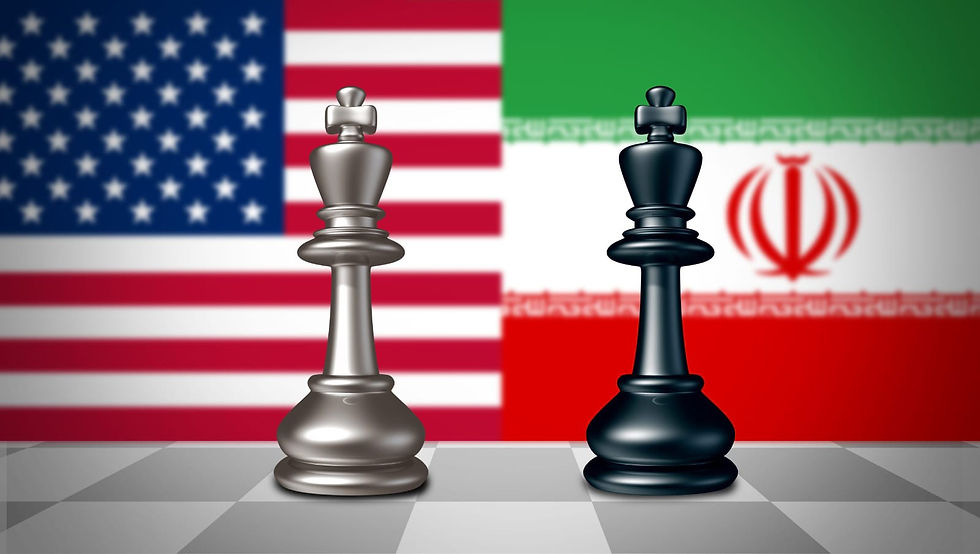
The United States also has compelling reasons to seek de-escalation. Another prolonged Middle Eastern conflict would carry economic, military and political costs that few American policymakers are eager to bear. Stabilising energy markets, reducing regional volatility and avoiding further military commitments are rational objectives. But diplomacy should not be mistaken for resolution. Agreements that postpone difficult questions can create opportunities for peace, but they can also defer crises rather than solve them.

That is why the coming weeks will matter far more than the headlines surrounding the announcement itself. The durability of the understanding will depend on implementation, verification and political will. It will depend on whether the parties can bridge their differences on sanctions, nuclear issues and regional security. It will depend on whether events on the ground reinforce confidence or revive mistrust.
The most important lesson is that diplomacy should be judged not by the ceremony of signing but by the substance that follows. The reported U.S.-Iran understanding may well reduce the immediate danger of conflict. That alone would be an achievement. But until the hardest questions are answered, it would be unwise to confuse a pause in confrontation with a lasting peace.

The real test of this agreement will not be the optimism that accompanies its announcement. It will be whether, months from now, the fundamental disputes that brought the region to the brink have genuinely begun to recede. Until then, the deal raises more questions than answers.


Comments