


Will tomorrow's Theatres Be Better Than Todays Commands?

Date:- 10/08/2026
AUTHOR'S NOTE:
An article on Theatres by me was published by MVI on 03 Aug 2023. Much has happened since then. Our military leadership has changed and this year, all Chiefs and CDS will be new appointees. Very recently there have been articles by veterans on Theatres. A point made was that when the IAF’s strength goes up to 42 Fighter Sqns, then we can create Theatres. My view is that even then to parcel out Air Forces between Theatres as small ‘havai tukdis’ has no vindication. We are forgetting that not only 'history' but 'geography' must also impact on the Shape and Size of India's Armed Forces. Operation Sindoor, for which supposedly Theatres was being forecast, was a brilliant success under our 18 Commands. Because of its recurring relevance, the article is being republished in its updated version of 2026, after 3 years.
1. The subject of readjusting forces under different 'umbrellas' keeps happening with changing scenarios and threats. The strong objection at this stage, from some veterans to the Theatre concept is understandable because of many reasons. One, there is this feeling that "Why did I not think of it". Second, "what a waste of time & effort"? Third, "Why change it when it is working ok now?" There are many more such points and arguments. The objectors, like the proponents, have tremendous exposure to force levels, planning, threat assessment, ability to do battle and so on. It is also true that many veterans object now under the cloak of retirement cum freedom of expression. This is the pattern across Indian veterans. Post-retirement wisdom has no bounds.
2. Recall when Army's South Western Command SWC was created. SWC was carved out of portions of Western and Southern Command’s Areas of Responsibility, AOR. Created on 15 April 2005 and declared operational on 15 Aug 2005. Just four months. Imagine the preparations that must have gone into this exercise within the Army and MOD before it was actually done. Internet was alive & kicking then but never read anything against creating SWC from any veteran. Why not? Was it inescapable? Had this been argued and deeply debated within the Army War College, College of Air Warfare, CDM, NDC, and during the so many Joint Tri-Service Commander’s conferences? Were commanders of the Air Force and Navy privy to this plan? I am making a reference because SWC should have seen the light of day in the aftermath of Brass Tacks and IPKF in the late 80s. But SWC came up only in 2005, more than 15 yrs after IPKF withdrew and about 20 yrs after Brass Tacks. There had been only Kargil in 1999 followed by Parakram in Dec 01 / Jan 02. It does then make us believe that Parakram was the trigger for SWC. Many senior army veterans will be able to clarify. Yet, many will ask, "Has the creation of SWC made any difference to what we can do with Pakistan in a conventional conflict?”
3. Then why were there no violent objections and distress when SWC was carved out? The same is going to happen when we create Theatres is it not? One reason that shines bright is that the creation of SWC generated many higher posts. Two Lt Gens, possibly 8 Maj Gens, maybe 15 Brigs, and many colonels. All select grade posts that opened avenues for further promotions. There was no talk of amalgamation, reduction of some posts and creation of another set of posts which could be held by people from the other Services. Since the Air Force had a SWAC, then surely the Army needs SWC, frankly, it was what is termed as a Win-Win situation. The Air Force also got extra posts with the creation of an Advanced HQ of SWAC in Jaipur in support of SWC. Only our Navy did not get anything out of this cake.
4. But the vehement objection to Theatres, therefore, seems difficult to fathom. What is it that the Army’s veteran strategists, sitting at home with their grandchildren, find unacceptable? Will the ability to fight China & Pakistan diminish if we change over to Theatres? Will the command & control disappear between Service HQ and Army & Air Commands? Will the Div Cdrs / Brigade Cdrs / AOCs / TAC Cdrs become ineffective and confused with the Theatres’ Chain of Command? Will existing War Orders and Op Instructions be rewritten with major changes for fighting formations causing utter confusion? It is these issues that matter more than anything else. The subject is enormous and I am unqualified to answer all these questions, which are pertinent and the objectors to Theatres must answer, since they write strongly that creating Theatres will engender weaknesses in the system.
5. My hesitations are a few. Theatres are generally a part of Commands if the USA is to be seen as the model. USA Central Command is defined as “being between Europe Command, Africa Command and Indo-Pacific Command". How is that for a description? Whenever there are active hostilities with the use of weapons in a specific area of the Command, that area is defined as "the Theatre of Operations". Afghanistan Theatre was placed under CENTCOM. There was no Afghan Command. Operations in Somalia by US forces were in the ‘Horn of Africa Theatre’ under Africa Command. There was no Somalia Command. Vietnam was a theatre under Pacific Command; there was no Vietnam Command. Thus "Theatres" exist within a Command and theatres are created only because there is actual hostile intense fighting taking place within a specific limited area; within that geographical Command, and that hostile geographical entity, is called a Theatre. If the USA model is our trigger, actuator, spark for creating theatres, then we have got it all wrong. Our Theatres are being made without any war-like activity. These Theatres are going to be peacetime formations which are swallowing peacetime Commands. What is achieved? When there will be engagement with an enemy in say Doklam; will we call it Doklam Command within Eastern Theatre? Or should we call it the Doklam Theatre of Operations inside Eastern Army Command? Should we not call it the Kargil Theatre of ops within Northern Command? Should we not call it Sopore Theatre within Northern Command? Surely it was Sri Lanka Theatre within Southern Army, Southern Air Force, and Southern Naval Commands. There was no Sri Lanka Command. It just so happened that when IPKF was active, the concept and imagination of Theatres had not been conceived. Those who would give birth to Theatres were far too junior to express their views then. Possibly they were yet to even conceptualise it. That would happen as they rose and got exposed to other abstracts and constructs, possibly from abroad.
6. My next hesitation is thus. Theatres envisage appointing Four-Star General Officers (FSGO), as Theatre Commanders. We already have four FSGOs in India, the CDS plus three Chiefs. Now we will add another four making the total eight FSGO. This is highly incongruent in a hierarchy like ours where we will be burdened with a frighteningly top-heavy organisation without any visible benefit and value addition. The USA has 43 FSGOs and USA’s armed forces total 150 lakhs. We on the other hand barely reach 15 lakhs. On average, the USA has one FSGO for every 350,000 persons. We, dear readers, will have one FSGO for every 188,000 faujis from all three Services. Do conditions in Bharat justify such a ratio? Observe that the 43 FSGOs of America are posted all over the globe, our 8 FSGOs are going to be within the geographic boundaries of Bharat. Imagine the weight of these Eight FSGOs on our Armed Forces. Bahut bhaari padega’. What justification, logic, reasoning and rationale can be enunciated by those who propose this unbalanced structure for the Armed Forces of India? Even a cursory glance will make an ordinary Indian shiver at the incongruity and poorly managed hierarchy that must constantly wobble, because it is far too Top Heavy. If indeed India’s Fauj needs restructuring into Theatres for the wars / battles / skirmishes of the 21st century, go ahead, but creating Theatres as declared and defined, is the worst path chosen. Indians, Faujis and civilians, will not forgive the perpetrators of Theatres, for this forcing this undesirable reorganisation; without enhancing the fighting and administrative capability of Indian Armed Forces. We have yet to forgive those who made our Ordnance Factories manufacture toasters and ovens. This is why some ask, should any road or building or anything, be named after Krishna Menon?

7. Another hesitation is this. It is assumed and stated that Theatres will always be self-sufficient and they will fight their wars by themselves, having all three military elements under the FSGO. A Theatre Commander is not supposed to request forces on loan from the adjacent or other Theatres. Because the Theatre has been designed and armed with forces that will take on the threat against that Theatre. That is one of the bedrock principles being enunciated. So let us look at some of the battles, wars, skirmishes and operations we have engaged in over the last 50 years. IPKF would have been in the AOR of the proposed Maritime Theatre, or call it Southern Theatre. Would the strength of forces, in the Air on the Ground and at Sea, that were committed for IPKF, be inherently under command of this Maritime or Southern FSGO? Impossible. Why so? Because such a large force could not have been permanently located in the Maritime / Southern Theatre. It would be doing nothing there, except waiting for an IPKF-like operation to happen. They would be deplorably underutilised and lacking in continuation training. The truth is that more than 70% of this force would have to be intensely engaged on the Northern and Eastern frontiers against our active adversaries. This reality percolates down to this truth, the Southern / Maritime Theatre FSGO would have had to borrow forces from other Theatres to manage IPKF. He would thus be violating the basic principle of how theatres should operate. Many proponents of Theatres will argue that all Theatres belong to India, they work under the CDS / MOD / Defence Secy / RM and finally Rashtrapati, thus shedding forces and borrowing forces is normal and intrinsic to the creation of Theatres. Sounds terrific, but then is this not what we are doing today? We have Commands who regularly shed forces and borrow forces under orders of their Chiefs and COSC / CDS. How will renaming this whole exercise as Inter-Theatre switch of forces make India more lethal?

8. So how will Theatres improve this lending and borrowing and thus revolutionise the strategic and tactical capability of Bharat’s military forces? By renaming Butter as Makhan, have you changed its quality and capability? Finally, all it can still do is “lagao maska”. Look back at the Tsunami disaster. How would the FSGO of our Maritime Theatre have handled it without asking for forces from other Theatres? Would the Northern Theatre FSGO have managed Kargil without borrowing forces from other Theatres? Would the Maritime FSGO been able to launch the airborne assault into the Maldives without borrowing IL-76s, AN-32s, AN-12s, and Parachute Brigade; which would never have been a part of his Theatre? Even today if the Maritime Theatre were created, that FSGO will never ever have such large Land and Air Force elements with him. The IL-76, C-17, C-130, and AN-32 fleets as well as the offensive air support fighter aircraft; now under their respective Commands, who will be 3 Star men, are freely available for use by any other Command with a Three-Star Commander. Such precious force multipliers cannot be carved and split into non-effective air forces, and parcelled out to FSGOs who will have no purposeful tasks for such ‘havai tukdis’ within their Theatres. But when such air power is centralised and used where needed, it will tilt the battle in our favour. Imagine how crippled the airlift capacity of India would have been during the Covid crisis if the Min of Health had to deal independently with each FSGO to use his IL-76 / C-17 / AN-32 / MI-17 for moving vaccines and oxygen. Because India’s airlift resources were centralised, miracles happened, and that airlift has been documented for posterity and witnessed by crores of our countrymen. There is an incontestable law, it says, “You can never establish sound security on borrowed money‟. Recall the rescue ops at Kedarnath which would be under say Central Theatre. Heptrs and fixed-wing tpt aircraft from other Theatres would have had to be inducted for the operation. Kedarnath was actually done by Central Army Command and Central Air Command jointly and they borrowed forces from other Commands. Borrowing from other Commands is intrinsic, but borrowing from other Theatres is not permitted because you have given to each FSGO what he deserves or needs. If Theatres will do tomorrow what Commands are doing today, why are we changing first names and surnames? Why are we upsetting what is working smoothly and efficiently? If we had incorrectly proclaimed that India must change over to Theatres, and now find it to be not quite what we need, we must retract. There is no shame in it. The greatest of all military manoeuvres is the Strategic Retreat. All senior military leaders must be trained for it and must always be prepared to execute a strategic retreat, be it on the Ground, in the Air, at Sea or on Paper. Any commander who executes a Strategic Retreat successfully, and retrieves the majority of his forces, to fight again, is the true Fauji leader. Today’s military leaders must initiate this strategic retreat from Theatres and strengthen their Commands for the next battle. I cannot but insert the fine example of how Sindoor was conducted without Theatres. A concept first articulated in January 2020, and was kept under deliberations for many reasons, but it was supposedly suggested for a Sindoor type of battle. Well, we fought and won Sindoor without Theatres, and learnt many lessons from it, one of them being that, we do not need Theatres to defeat Pakistan or China. Our present Commands and Integrated air as well as ground defence structures are good and need to be upgraded and made even more robust. It is happening.
9. My submission to those who make military things happen is very humble. Where modification is needed, please do it if the modification will not break the system which is working well. Renaming a child after she is registered in a school and after Aadhar card has been made, is a dangerous proposition. Changing one's Pension account to another bank is a dangerous exercise and pensioners seldom do it. Thus, I humbly say, taking a leaf out of Red Indian stories, Do not create too many ‘Chiefs’ or FSGOs, while the number of ‘Fighting Braves’ remains the same. The British have just three to four FSGOs, and we have borrowed heavily from them. Their inherited systems are working well because we Indians have made them better. But the ‘Goras’ methods are good and time tested over more than 1000 yrs. Our “sanskriti‟ today which is a combination of many faiths and books, cannot eliminate jealousy, stepping on toes, turf battles, blaming others for our flaws and seeking what one does not deserve. No system is perfect, but keeping it uncluttered at the top is a sure way of superior functioning with transparency. And lastly, the politico-bureaucratic-intelligence-corporate combination has and will always wish to control the Armed Forces. They have been doing it in India since 1950 and will keep doing it. The false bogey of a military coup still reverberates now and then, and is nurtured by this quadruped. The slimmer and less crowded that we keep our top brass, the more difficult for this civilian grouping to exploit the Armed Forces. When we get Theatres, they will have 8 FSGOs to manipulate and we faujis will be walking into their trap. War is a cruel business which no other profession experiences from close. It is a cardinal rule that ‘in all professions but especially the military, character is always more important than experience’. And to add, it is not intellect that makes anyone great, it is always character. It is this unique military character that must determine whether Theatres as conceived, are good for India or not. Let us suppose for argument's sake, that the top-notch military strategists who proposed Theatres as envisaged, change their minds, this is is a major disavowal for them. Because changing one’s mind and accepting the other’s point of view, does not just mean that you were wrong; it also means that the other fellow was right, and that really hurts. Theatre making is a crisis, going forward cannot be interrupted and too many people’s ego is at stake. We are in a crisis situation and our ancient books advise us that, character is not made when you are handling a crisis, but it manifests then. The Arrow called Theatres was released many years back, at that time no one imagined that it may have to be recalled. Not one archer, military or civilian, has the knowledge to get the arrow back into the quiver, and we do not have Lord Krishna to retrieve those arrows. These Ashwathamas who shot from their bows will have to retrieve their arrows themselves. Can they, will they? The Indian military leadership, with just four FSGOs, is in a quandary on the issue of making Theatres. Imagine the churn when we have eight of these FSGOs deliberating. The civilians will keep their distance and make it seem that the whole idea was solely ours; and that they agreed to it, because the military desperately wanted it, and the political masters also expressed their desire for integration and cost-saving with commonality of materiel & weaponry. The unknown factor is this, will integration and cost savings actually take shape on the ground? Paper exercises can be misleading. Recall that McNamara as Defence Secy won the Vietnam War on the whiteboards of the Pentagon hundreds of times, but lost it on the ground in Saigon and Hanoi. We have not even ventured onto the Ground where Theatres will start functioning. It is possible today to interpolate what could transpire say seven years from now, it will be a sort of Formal Appreciation using new tools. Incidentally, who has done the appreciation on the creation of Theatres? Is it available for scrutiny by like-minded military strategists who were not involved in the appreciation but supported the idea? Was a Formal Appreciation done? The silence in response to this question will be deafening. To be sure, it must be answered before we establish Theatres.

10. Making Three / Four Theatres and doing away with the 18 Military Commands may yet be a wonderful mission for India. But to this writer, it seems that the stated reasons and benefits of Theatres have been defined amorphously and done with misplaced haste. There is no one individual who must carry the burden of this hasty proposal, many wish to place it in one man’s lap. That is unfair. Most of us who are writing on this issue are quite unaware of what transpires in the corridors of our governance. Those of us who are not privy to actual exchanges in the centres of power, verbal or written, are ill-equipped to pass judgments, and we must refrain from doing so, it is conduct unbecoming of an officer. There are many in govt, in the service, among veterans who possibly have a stake in the creation of Theatres. Financial benefits may be one reason, and accolades and promotions could be another, backtracking at this stage would mean a loss of credibility for many civilian / military wizards. Finally, who will tell the Cabinet, PM, RM, FM, and EAM that Theatres was in fact, not such a good idea? In my opinion, the integration, cross-germination of ideas, compatibility of weapons, and desegregating of training patterns and common syllabi should happen and is happening even now with our 18 Commands remaining intact. The process is a slow one and pushing it to be completed during one’s tenure is hazardous. We all know this to be true, don’t we?
11. A patently misleading factor that the proponents of Theatres put forward is that the very large number of general ranks will be shed by closing Commands and Theatres will not have that many. To my mind this is deceptive. Without going into the organisation chart and hierarchy diagram, with a FSGO at the top, and all three services incorporated, the number of Three, Two and One-star officers will be a plenty. These officers will be supported by a large number of Colonels and Majors. Below them will be a huge staff of Other Ranks. We know how the Indian Armed Forces work and organise themselves. This is tradition and customs that we are speaking about, descended for over 150 years at the turn into the 20thcentury. It cannot be, and will never be erased and definitely not in the 2020s. It is impossible to list the supporting staff and services that go with a FSGO. Look the dedicated support services that is attached to the present Four / Three-star officers and you can count the cost. The cost of land transportation, inspection visits, air transport support, both fixed and rotary, and a host of other statutory and traditional customs will be a big amount. It is debatable and well-nigh difficult to calculate today, what the actual cost saving and additional financial burden will be, by changing from todays 18 Commands to tomorrows Four Theatres. Some commands like IAF Maintenance Command cannot close down. Nor can the Strategic Forces Command close down, surely, we are not thinking of creating a Strategic Theatre? 11. There is another matter, if the manpower that will be needed to make all the Theatres function, is much less than what is in place for our 18 Commands; where will you put this surplus? What will you do with them? They cannot be sent home, can they? Wanting to create Theatres is a noble mission, however painstaking, gruelling, arduous it may be, but the spinoffs and administrative fallout cannot be dismissed and have to find a place of primacy in the overall costing. Even if for a moment we grant that operational capacity will be enhanced by creating Theatres; which we know is untrue, what will be the supporting costs, no one writes or talks about this, why not? Because the actual numbers would put the whole concept of Theatres into cold storage for ever. If there is no appreciable and tangible cost saving, why are we disfiguring a functioning operational cum administrative organisation, as expensive as it may be today? Whims and half-baked ideas and concepts cannot be pursued indefinitely just because they were enunciated some time back; specially when with time and further inspection, there are pitfalls and unforeseen traps clearly visible.

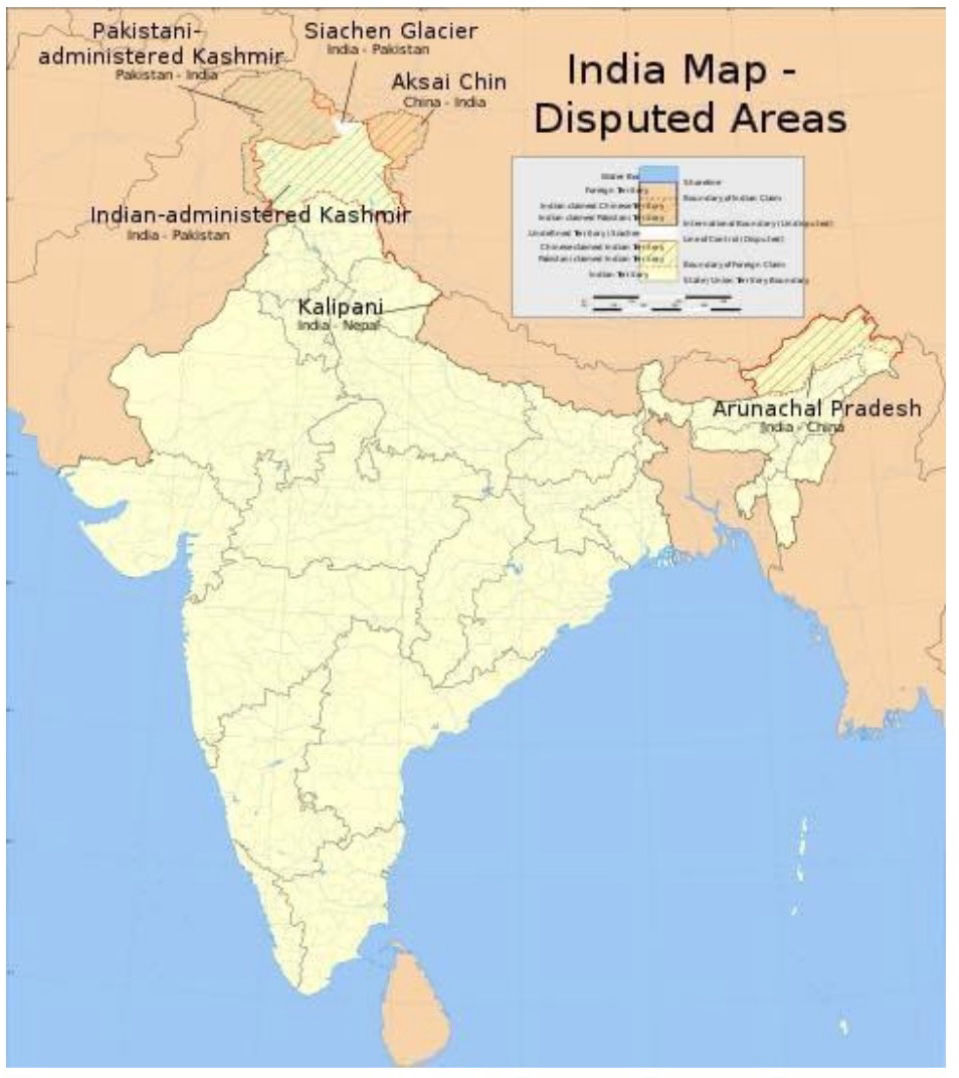
12. Finally, the diplomatic fallout. What will Jayshankar tell our neighbours about these aggressive formations called Theatres whose AOR as drawn on maps and charts, envelope foreign countries? How should these neighbouring nations explain India’s actions to their public and intelligentsia? Will the Opposition in these nations try to upset their present friendly governments that are today well-disposed to India? Has this aspect been debated and put through severe inspection? Did the proposers of Theatres consult with the Ministry of External Affairs before releasing their proposal in public, unlikely? If not, they have blundered badly. There have been anti-India rumblings in every nation on our periphery and even in some a little distance away. South East Asia will look with suspicion at our Theatres. Our ambassadors will be hard-pressed to assuage such doubts. To achieve integration and cost savings within our Armed Forces, then diplomatically, it is a pretty bad solution. Armed Forces from our friendly neighbourhood have been exercising in India for years. They have been freely exposed to our systems and philosophies, and they have found safety in that environment, and have reported back as such to their masters. Just ponder, will Theatres upset and break that safe environment and those reports? We have not reached the Point of No Return in making Theatres that retracting is impossible. Did we not withdraw the Farm Bill? There is talk of delaying UCC. Did not Pradhan step down after being rigid for months? For the safety of India and her izzat, any project that hurts us diplomatically, internally and internationally, banadoning the project has to be an option. We Indians, and especially the Indian Fauji, must be very circumspect and careful not to commend ourselves, even though we may have many successes Always remember; Security lies in Resolution, not in Resolutions. We have initiated an enormous project without, in my view, having gone the whole length to the end of the tunnel. Objections have possibly been brushed aside or smothered in the haste to achieve it during one’s tenure, but in fact, this task cannot be achieved in many tenures. We want to progress, but the greatest obstacle to progress is not ignorance but the illusion of knowledge. Sadly, across the world, the more senior one is, the greater the danger of such illusions. This is why the wise say that; being satisfied with what you have, is far more important than asking for more of what you want. It is desirable to move forward and the newer generations are better equipped, but also beware of the perils when the Egg starts believing it is Smarter than the Hen. Many times, the simplest flaw is hidden by our passion to do it as fast as possible. India rushed to the UNO in January 1948 under Chapter 7 and not Chapter 6, making Kashmir a Dispute and not an Aggression. We are still hurting because of that blunder. Military leadership must want to be trusted more than be celebrated. Making Theatres involves a huge overhauling process for thousands of personnel, what is the spillover of making Theatres on the lives and functioning of our officers and Other Ranks? The certitude being displayed of untold benefits that Theatres will bring is much bigger than circumstances warrant. Re-Appreciate more than once, before declaring Our Best Course of Action.

About The Author: Gp Capt AG Bewoor was commissioned into the transport stream of the Indian Air Force in 1965. He was one of the pioneer members to induct the IL-76 into the IAF. He flew the first IL-76 into Male during the abortive coup in Maldives in 1988. This, along with the other operations, earned him the Vayu Sena Medal (Gallantry) in 1990. He took premature retirement in 1993 while serving as the COO of 3 Wing at AFS Palam. He regularly contributes to military journals and magazines.


Multi domain warfare with almost full spectrum being activated simultaneously necessitating coordinated prompt synergised response across large theatres, unity of command, planning and execution is inescapable demanding theatre commands with the resources positioning can be threat and employment based and gaps being covered with long range vectors of all three services. ISR, EW, IW need to be coordinated and executed at theatre and national level. Due to paucity, certain resources may have to be positioned at central locations to be released at short notice but their availability in a certain timeframe and strength need to be assured. Paucity of aircrafts may have to be compensated by drones and missiles till the paucity can be made up. Demand between air assets…