


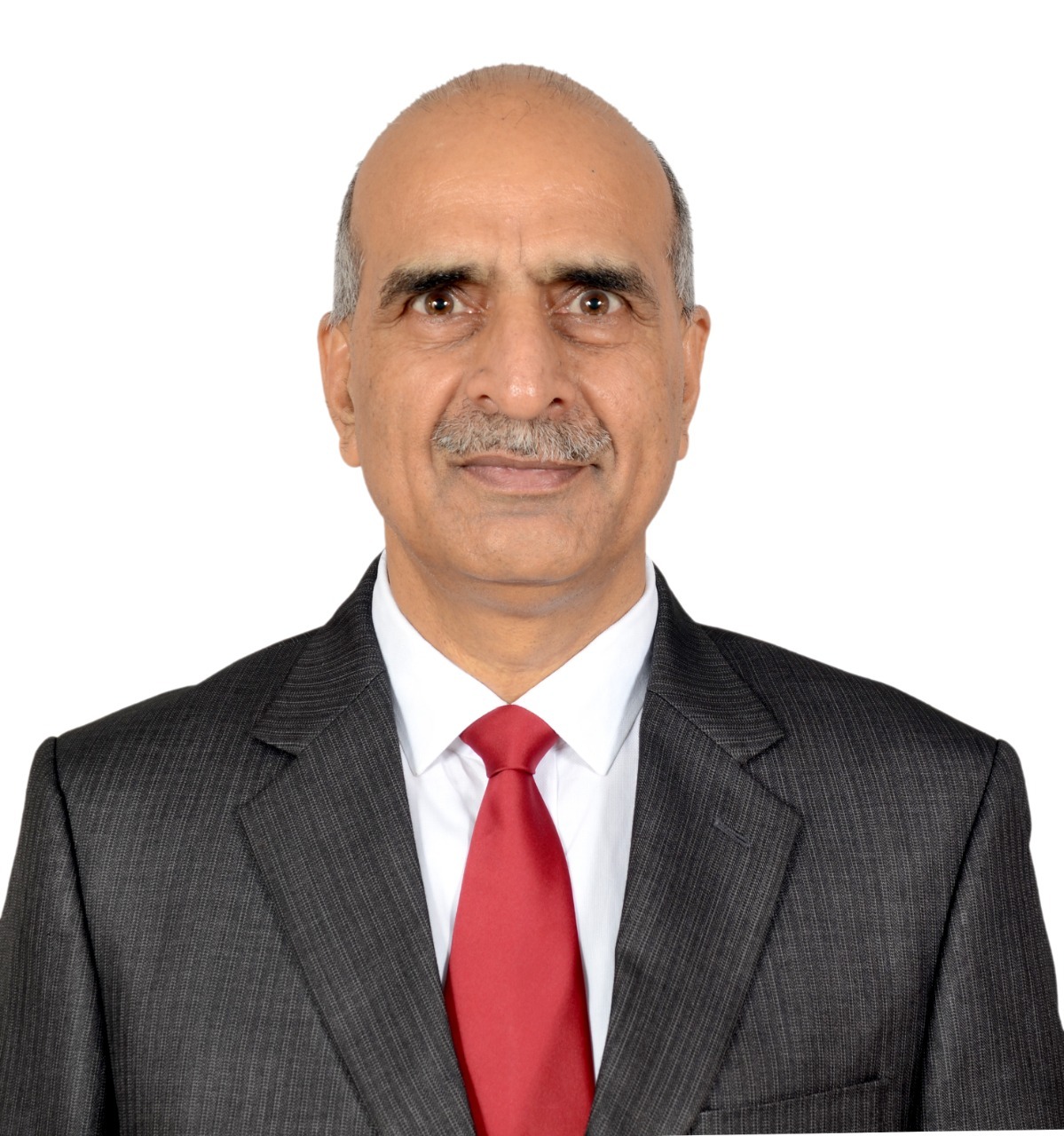
WHY THE INDIAN MILITARY ACADEMY MUST CHANGE ITS CHETWODE MOTTO? By Col Narinder Singh Dahiya (Retd)
Date:-26 November 2026
EDITOR'S NOTE:
This well thought through highly researched article critically examines the present relevance of the IMA Chetwode Motto. It deeply analysis its meaning , intended aim and purpose in 1932 when the British ruled India . It logically argues the continuation of the 94 years old motto with sound reasoning and in favour of a justified change for a professional, modern army of the free, sovereign, democratic republic of India .
- Editor MVI
"From a hierarchy of sacrifice to a philosophy of ethical military leadership"
For nearly a century, generations of Indian Army officers passing out of the Indian Military Academy (IMA) have been inspired by the Chetwode Motto:

"The safety, honour and welfare of your country come first, always and every time. The honour, welfare and comfort of the men you command come next. Your own ease, comfort and safety come last, always and every time."
The statement has had an outsized influence on the Indian Army's ethos and leadership culture. It is displayed prominently at the IMA, repeated at commissioning ceremonies and regarded by generations of officers as the ultimate expression of military leadership. Its moral appeal is undeniable. It places national interest above personal interest, the welfare of soldiers above the comfort of commanders and duty above self.

The problem, however, lies not in the individual values but in the hierarchy through which they are expressed and the manner in which they are interpreted. By placing these interests in a fixed order, the motto can encourage the belief that the welfare of the nation, the welfare of subordinates and the welfare of the officer are competing interests, with one group necessarily required to sacrifice for another.
The greatest harm caused by the motto is not what it explicitly says but what it often encourages. Over time, it has helped create a culture where excessive sacrifice is glorified. Long working hours become proof of dedication. Avoidable hardships become badges of honour. Family welfare becomes secondary. Questioning unhealthy practices becomes evidence of weak commitment. Officers are subtly encouraged to regard personal suffering as a virtue.
A COLONIAL LEGACY IN A SOVEREIGN REPUBLIC
The Chetwode Motto was formulated in 1932 by Field Marshal Sir Philip Chetwode for a military academy established under British rule. At the time, the Indian Army was an instrument of the British Empire, and the academy's purpose was to produce competent Indian junior officers, not future military chiefs or strategic leaders. The higher direction of the Army was expected to remain in British hands. Today, however, the same cadets rise to become Generals responsible for shaping military strategy and national security. While the motto offers useful guidance for junior leadership, it falls short of providing a sufficiently broad moral and intellectual compass for senior commanders entrusted with leading a modern military institution. An independent nation requires a military ethos that develops not merely obedient and self-sacrificing officers but thoughtful, competent and strategically minded leaders capable of guiding the institution at the highest levels.

THE PROBLEM OF THE "WHITE MAN'S BURDEN"
The motto also reflects a paternalistic worldview characteristic of its age. Underlying it is the notion that the officer must sacrifice himself endlessly for the welfare of those under his command. Such ideas emerged from nineteenth-century imperial notions of duty and service often associated with what Rudyard Kipling called the "White Man's Burden". The officer was portrayed as a selfless guardian expected to carry the burdens of others without consideration of his own interests. That concept may sound noble. It is also deeply unrealistic. Human beings are not saints. Nor should military institutions be designed on the assumption that they are. An officer who sacrifices his health, family life or personal well-being indefinitely may be displaying commitment, but he is unlikely to remain an effective leader over the long term. A military ethos should therefore cultivate self-mastery and balance, not perpetual self-abnegation.
THE AEROPLANE ANALOGY
Modern safety procedures reveal a wiser understanding of human behaviour. Whenever passengers travel by air, they hear an important instruction before takeoff:
"In the event of an emergency, put on your own oxygen mask first before assisting others."
This instruction is based on practical reality. A passenger who loses consciousness while trying to help others cannot help anyone.The same principle applies to leadership.A commander exhausted by relentless administrative burdens, damaged family relationships, poor mental health, and chronic stress eventually becomes a less effective leader. A military institution that teaches officers always to neglect themselves risks producing burnout rather than excellence. An officer who maintains his physical health, professional competence, emotional stability, and family support structure is not being selfish. He is ensuring that he remains capable of leading.
THE FALLACY OF SCARCITY: MUST THE NATION GAIN AT THE EXPENSE OF ITS SOLDIERS?

The first problem with the Motto is the impression that the welfare of the country must take precedence over the welfare of military personnel, as though the two are inherently opposed.
This has fostered a scarcity mentality in which every demand for better pay, improved accommodation, adequate equipment, leave or other legitimate service entitlements is viewed with suspicion. An officer who raises concerns about fair compensation may be regarded as placing personal interests above national duty. A soldier seeking his rightful entitlement may be portrayed as insufficiently selfless.
Such thinking is neither necessary nor desirable. The welfare of military personnel is not a competitor to national security. It is one of its essential foundations.
PRIORITIES WITHOUT ETHICAL BOUNDARIES
Another limitation of the Chetwode Motto is that it establishes a hierarchy of priorities but provides no ethical boundaries for pursuing them. It tells officers to place the country first, their men next and themselves last, but remains silent on how those objectives should be achieved. Can the interests of the nation justify concealing institutional failures? Can operational requirements be used to suppress legitimate grievances? Can concern for soldiers be invoked to justify unfair treatment of junior officers? The answer to all these questions must be no. Military leadership requires far more than a willingness to sacrifice. It demands integrity, fairness, professional competence, accountability and the moral courage to do what is right even when it is inconvenient. A modern military ethos must define not only priorities but also the ethical limits within which those priorities are pursued.
THE CULTURE OF UNNECESSARY SACRIFICE
The most damaging aspect of the Chetwode Motto is not what it explicitly states but the institutional culture it can foster. Over time, it has encouraged the glorification of self-sacrifice as an end in itself. Long working hours are often treated as proof of commitment, avoidable hardships become badges of honour, family welfare is relegated to the background, and those who question unhealthy practices risk being perceived as lacking dedication. The result is a culture in which personal suffering is too readily equated with professional virtue. Exhaustion becomes normalised, work-life balance is viewed with suspicion, and professional effectiveness is often confused with personal deprivation.

This mindset may also help explain why young Indian Army officers continue to incur exceptionally high casualties while leading from the front in counter-insurgency and combat operations. While their courage and commitment are beyond question, a military ethos that places excessive emphasis on self-sacrifice can sometimes encourage risk-taking that may not always be militarily necessary. An army must certainly demand sacrifice when the mission requires it, but it should not elevate sacrifice into a permanent way of life. There is a crucial distinction between necessary sacrifice in pursuit of military objectives and unnecessary sacrifice driven by institutional culture. The former strengthens military effectiveness; the latter ultimately weakens it.
THE SAFETY, HONOUR AND WELFARE OF THE COUNTRY
One of the unintended consequences of the Chetwode Motto has been the tendency to equate loyalty to the nation with unquestioning obedience to the government of the day. In the name of civilian control and putting the country first, senior military leaders have often appeared more compliant than professionally assertive. The statement by a former Army Chief during the Kargil conflict, "We will fight with whatever we have," reflected determination but also raised a troubling question: why was the military leadership not more forceful in demanding the resources necessary for the task? A professional military leader's duty is not merely to obey but also to advise, caution and, when necessary, challenge inadequate policies through proper channels.

A senior officer cannot automatically equate his own decision with the welfare of the nation. A formation's reputation is not necessarily more important than exposing a genuine failure. Nor is silence always an expression of loyalty.
NEGLECT OF ORGANISATIONAL INTERESTS
A fundamental weakness of the Chetwode Motto is that it recognises only the interests of the nation, the troops and the individual officer, while ignoring the legitimate interests of the military institution itself. By teaching officers to place themselves and everything associated with their organisation last, it inadvertently discourages senior military leaders from vigorously advocating the Army's needs before the government. In every democracy, institutions compete for resources, budgets, influence and policy attention. Such advocacy is not selfishness; it is an essential responsibility of leadership. Yet the military leadership has often appeared reluctant to assert its position on issues such as modernisation, pay commissions, manpower policies and veterans' welfare. The result is an organisation that frequently adapts to constraints rather than challenging them. An effective military ethos should encourage senior commanders not merely to lead troops in battle but also to protect the long-term interests of the institution they command. After all, a military that cannot defend its own interests will find it difficult to defend the nation's interests effectively.
WHAT ABOUT THE JUNIOR OFFICERS?
A curious omission in the Chetwode Motto is its silence regarding junior officers. The motto speaks of the welfare, honour and comfort of "the men you command", a phrase traditionally understood to refer to soldiers below officer rank. But where do lieutenants and captains fit into this moral framework? Junior officers are not merely intermediaries between commanders and soldiers; they are themselves among the most burdened and exposed members of the military profession. They lead platoons, command patrols, shoulder immense responsibilities at a young age and often face the greatest operational risks. Yet while the motto explicitly requires them to care for the welfare of others, it says nothing about the institution's responsibility towards them. This omission is not trivial. An army cannot expect junior officers to bear responsibility for everyone's welfare while treating their own welfare as secondary. A modern military ethos should recognise that officers, JCOs and soldiers alike have a legitimate claim to dignity, support and institutional care. In many ways, the persistent difficulties in attracting and retaining young officers may be a consequence of a philosophy that celebrates their sacrifices while paying insufficient attention to their welfare.
WELFARE OR SERVITUDE?
The second principle of the Chetwode Motto, "The honour, welfare and comfort of the men you command come next," was intended to promote responsible and compassionate leadership. However, in practice, the concept of welfare has often been interpreted so broadly that it risks blurring the line between leadership and servitude. Officers are frequently expected to attend to every personal requirement of their subordinates, whether or not it has any bearing on military effectiveness or the mission. Such an approach can create unhealthy dependencies and unnecessary friction within the chain of command. Soldiers deserve care, respect and fair treatment, but they also bear responsibility for their own conduct and welfare. A professional army is built not only on caring officers but also on self-reliant soldiers capable of taking initiative and overcoming difficulties. Equally, officers must be free to delegate, exercise authority and distinguish genuine welfare issues from matters of individual responsibility. Leadership should empower soldiers, not encourage dependency.
IT IS AN OFT QUOTED LIE
The Chetwode Motto asks officers to put their own interests last, "always and every time". Yet the Army, like every other institution, has produced its share of careerists seeking promotions, prestigious appointments and post-retirement opportunities. This is not a criticism of individuals but a recognition of human nature. As Aristotle observed, virtue lies in balance, not in the denial of reality. A leadership philosophy that assumes officers can permanently disregard self-interest risks creating hypocrisy rather than character. Most often commanders impose unreasonable demands on subordinates to make their formation /unit appear exceptionally efficient. Some senior officers also suppress adverse information to protect their professional reputation. Sometimes junior officers are expected to accept blame for a failure whose causes lie elsewhere. These are unintended consequences of the motto.
IT IS A CONVENIENT FIG LEAF TO HIDE WEAKNESSES OF HIGHER MILITARY LEADERSHIP
Another unintended consequence of the Chetwode Motto is that it can serve as a convenient excuse for senior military leaders to avoid vigorously defending the interests of their own institution. By constantly emphasising that the nation's interests come first and personal considerations last, the motto can foster a culture where demanding better resources, pay, equipment or service conditions is seen as somehow inconsistent with military virtue. It is not uncommon to hear senior officers proudly claim that they do not even know their salary and that they serve only for the honour of serving the nation. While such sentiments may sound noble, they often mask a reluctance to fight for the legitimate interests of soldiers and the armed forces. Consequently, military leaders can be easily persuaded that India is too poor to provide better pay, modern equipment or improved service conditions, even while other sectors aggressively advocate for their own interests.

PERFORMANCE RATHER THAN CHARACTER
The Chetwode Motto focuses on what an officer must do rather than what an officer must become. It emphasises duty, sacrifice and conduct but says little about character. As Aristotle observed, good actions ultimately flow from good character. An officer may display obedience and self-sacrifice yet lack moral courage, integrity or wisdom. The Bhagavad Gita takes a different approach, defining the warrior through qualities such as courage, steadfastness, competence and self-mastery. A modern military ethos should place greater emphasis on character development, for it is character that guides leaders when rules and slogans are no longer enough.
EVEN THE COLONIAL MASTERS HAVE MOVED ON
Perhaps the strongest argument against the continued dominance of the Chetwode Motto is that its creators no longer use anything similar. The British Army's officer-training academy, the Royal Military Academy Sandhurst, trains its cadets under the simple and powerful motto,"Serve to Lead", a principle that emphasises leadership rather than self-abnegation. Likewise, the United States Military Academy at West Point is guided by the celebrated motto "Duty, Honor, Country," and places great emphasis on producing "leaders of character."

Significantly, neither of these institutions asks officers to place their own welfare last "always and every time." Instead, they focus on leadership, duty, honour and character. The contrast is instructive. The country that created the Chetwode Motto has abandoned its underlying philosophy in favour of a more balanced approach to leadership, while India continues to treat it as sacred doctrine. If the British Army does not consider such a creed necessary for producing military leaders, it is reasonable to ask why independent India should continue to define its military ethos through a colonial formulation devised nearly a century ago.

WHAT SHOULD REPLACE IT?
Rejecting the Chetwode Motto does not mean embracing selfishness.
It means replacing a colonial doctrine of perpetual self-abnegation with an indigenous philosophy of disciplined leadership. India already possesses such a philosophy.
It is found in the Bhagavad Gita. The Gita is not merely a religious text. It is one of humanity's greatest reflections on duty, leadership, courage, self-mastery and ethical action under conditions of uncertainty. Unlike the Chetwode Motto, which simply establishes a hierarchy of obligations, the Gita focuses on character. It asks not merely whom an officer should serve, but what kind of person he should become.
A particularly suitable verse appears in Chapter 18:
शौर्यं तेजो धृतिर्दाक्ष्यं युद्धे चाप्यपलायनम्।
दानमीश्वरभावश्च क्षात्रं कर्म स्वभावजम्॥
(Bhagavad Gita 18.43)
"Valour, character, steadfastness, professional competence, refusal to shirk duty, generosity and noble leadership are the natural qualities of the warrior."
This verse offers a far more complete military philosophy. It emphasises:
• Courage without recklessness.
• Character without self-righteousness.
• Competence without arrogance.
• Leadership without privilege.
• Duty without self-destruction.
Most importantly, it recognises that military excellence depends not on endless sacrifice but on the cultivation of virtue.
CONCLUSION
The Chetwode Motto belongs to a different era, a different political order and a different military system. It was created by a British general for a colonial army in which Indians were expected to serve, not lead.

Its emphasis on self-sacrifice has undoubtedly inspired generations of officers. But it has also encouraged unrealistic expectations, glorified unnecessary hardship and perpetuated a colonial conception of leadership rooted in paternalism rather than self-mastery.
Independent India no longer needs to define its highest military ideals through the words of an imperial officer. The time has come to consign the Chetwode Motto to the museum of military history, where it can be respected without being worshipped.
The future Indian military ethos should arise not from the colonial past but from India's own civilisational inheritance. The Bhagavad Gita offers a valuable philosophical foundation through its emphasis on courage, steadfastness, knowledge and self-mastery.
A good military leader must be prepared to sacrifice when duty demands it. But he must also know when sacrifice is unnecessary, when authority is being misused and when professional courage requires him to speak up.
The future of military leadership lies not in teaching officers to neglect themselves, but in developing individuals who can master themselves, lead others and strengthen the institution in the service of the nation.
It is time to move from a hierarchy of sacrifice to a philosophy of ethical leadership.
NOTE - The contents of this article contains the author's personal views based on his study , research and experience of the subject and linked issues .The pictures are for symbolic representation only .


Comments