


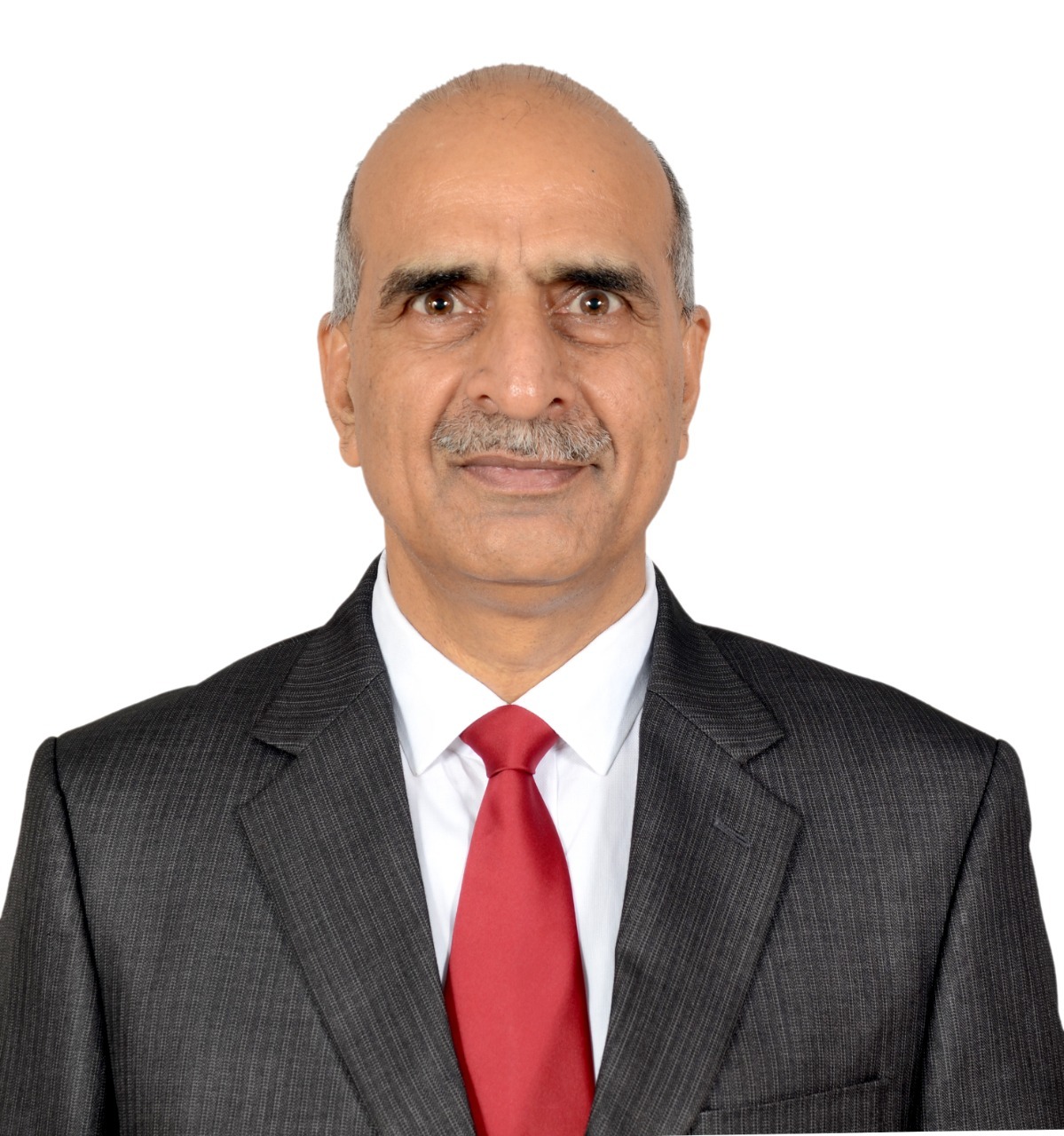
The Real DLTGH From Days Left to Go Home to Days Left to Go to Heaven—or Hell! By Col Narinder Singh Dahiya (Retd)
Date:- 11 October 2026
EDITOR'S NOTE:
This 'out of syllabus' piece by Col NS Dahiya has creatively linked the term DLTGH( Days Left To Go Home ) as a most appropriate/ apt term relevant to NDA cadets . This is not due to the nature of tough and official /structured military training during scheduled working hours but more due to the unofficial/ unstructured training/ grooming during the 24 hours cycle !
The author in the later part of the article uses this term DLTGH in a different context- "Days Left To Go To Hell / Heaven" as applicable to the life of military veterans who are presently in the age group of early 60s and have only 5000 ( 13.5 yrs) DLTGH .
The author advocates for the veterans, especially his colleagues/ coursemates/ contemporaries certain guidelines to live by for a qualitatively far better ,happier and contented life by : - living one day at a time ,in peace with oneself ,leaving aside children & military successes and finally - without treating retired life as a waiting period for life to begin !
Recommeded reading for all age groups, especially the fauji fraternity ,serving and retired especially the NDA cadets and veterans in early 60s with only 5000 DLTGH to whom it applies the most .
Col Vinay B Dalvi,
Editor ,MVI
Only those who have been cadets at the National Defence Academy (NDA), whether serving today or having passed through its hallowed portals years ago, can truly understand DLTGH.

Literally, it stands for Days Left To Go Home. Metaphorically, however, it means much more.
Life at NDA is physically gruelling and mentally demanding. The day begins around 4 AM and stretches until lights-out at 10 PM. A cadet is perpetually under training and supervision—by instructors, seniors, peers and occasionally even juniors. Training extends far beyond the parade ground, classroom or sports field. It continues during meals, while moving between training areas, playing games and even using community bathrooms.
Every activity has a routine, every routine its rituals, and every deviation its consequences. A cadet must display officer-like qualities (OLQs) at all times. One could almost believe that he is expected to fall sick, and perhaps even die, in an officer-like manner!
In this relentless environment, DLTGH becomes much more than a countdown. It is a psychological lifeline, a beacon of hope during moments of extreme distress. Knowing that another day has passed and home is a little closer makes the next ordeal easier to endure.
Without realising it, a cadet learns three invaluable lessons: live one day at a time, endure what cannot immediately be changed, and do not waste energy worrying about what lies beyond the horizon or your control.

He also learns to find happiness in life's little pleasures. A mug of cold coffee—which is little more than mud-coloured sweet water—becomes a rare indulgence. A victory on the sports field makes the day's hardships worthwhile. A good movie, a leisurely walk from the Habibullah Hall to the cadets’ mess in place of run, a Supper Night replacing the routine Dinner Night, or the unmistakable change in the Academy's atmosphere during mid-term moods can bring immense joy. Numerous other rituals, quirks and small pleasures acquire extraordinary significance.
To an outsider, these things may seem trivial. To a cadet, they are precious. Perhaps the Academy's enduring lesson is that happiness does not always require a change in circumstances; sometimes, it comes from appreciating the little things that make those circumstances bearable.
I vividly remember the widespread apprehension that Skylab, the American space station, might fall to Earth, with parts of India potentially in its path. NDA was believed to lie in the danger zone. Yet I cannot recall any cadet being particularly worried. The impending cosmic disaster became the subject of innumerable jokes. A piece of Skylab landing on us seemed considerably less intimidating than the next punishment, inspection or demanding training session.
For most cadets, death was either too distant to take seriously or less frightening than the daily trials of Academy life.
Years later, I find myself revisiting that familiar acronym.
For my coursemates, fellow officers and peers—many of whom have retired after nearly four decades in uniform—DLTGH has acquired an entirely different meaning.
It is no longer Days Left To Go Home.
It is now Days Left To Go to Heaven—or, for those who prefer a less charitable destination, Days Left To Go to Hell!
The countdown has returned, but there is no term break at its end, no return to the Academy, no next course and no new posting. There is simply the awareness that our time is finite, although none of us knows precisely how much remains.

I made a rough calculation and arrived at 5,000 days as a reasonable working estimate of the time that might remain to many of us. This is neither a medical prediction nor a promise. Some may have considerably more; others, sadly, much less.
Five thousand days amount to roughly thirteen and a half years—enough to take someone in their early sixties to 75. But this is hardly an eternity, nor an inexhaustible reserve of time.
During these years, most older friends and relatives will leave us. Some coursemates and contemporaries will also depart. Our familiar circle of people with whom we shared youth, professional struggles, achievements and disappointments will gradually shrink.
This is no longer an abstract possibility. It announces itself through a telephone call, a message or news of someone's passing.
Perhaps it is time to revive DLTGH—not as a source of anxiety, but as an instrument for living more consciously.
1. Live One Day at a Time—and Keep Politics in Perspective
We cannot recover yesterday or be certain of tomorrow. Today is what we possess. We should spend it on things that bring pleasure, meaning, contentment and companionship.

There is little wisdom in postponing happiness until the next market rally, political victory, international crisis resolution or financial milestone.
Which brings me to politics.
The BJP, Congress or any other political party can do little to change the number or quality of days remaining in our personal lives. Narendra Modi, Rahul Gandhi or any other political leader may influence India's direction, but none can return our lost years or guarantee those ahead.
Why, then, should we spend precious hours arguing over them, quarrelling with friends about political loyalties or allowing television debates and social media battles to disturb our peace? In fact, we should consciously stop watching news channels and contentious news channel debates. These don’t inform us but certainly spoil our mood.
We have every right to hold opinions, scrutinise governments and participate in public life. But there is a difference between being an informed citizen and becoming a prisoner of political arguments.

The world will continue to produce powerful leaders, controversies and international crises. Our task is not to become indifferent, but to maintain a sense of calculated proportion.
Our DLTGH is limited. Let us not allow politics, politicians or the world's endless anxieties to consume it.
2. Make Peace with Ourselves and Our Past
We have all been wronged at some point. We have also, knowingly or unknowingly, wronged others. Seniors may have been unfair, peers may have disappointed us, and subordinates may not have met our expectations. We have faced failures, sometimes because of circumstances and sometimes because of our own mistakes.
But what purpose does it serve to keep reopening old wounds?
Forgiveness does not mean that every wrong was justified. It means refusing to let past grievances occupy the precious space remaining in our lives. We have spent enough years proving ourselves, defending our decisions and competing for recognition. We can now afford to be more generous towards others and ourselves.
Let us make peace with former adversaries, competitors and colleagues. Let us reach out to old friends, make that postponed telephone call and meet a coursemate without waiting for a reunion.
The opportunities to enjoy the company of people who share our memories are becoming fewer. There is little sense in wasting them on ego.
3. Let Our Children and Military Successors Live Their Lives
Our children are grown up. They have their own families, ambitions, priorities and worldviews. They will make decisions with which we may disagree, succeed and fail, and sometimes learn lessons we believe we could have taught them more easily.
But our time as their principal coaches and mentors is largely over. We should now become their cheerleaders.
We should offer advice when asked, support them when genuinely needed, and remain available without making our presence an obligation. We must resist supervising their lives merely because we have more experience or believe we know better.
Our love should give our children the confidence to live independently, not make them feel compelled to justify their choices continually.
The same philosophy should guide our relationship with today's and tomorrow's military leadership.
We will naturally remain invested in our regiments, battalions, institutions and the Armed Forces. We may disagree with decisions, worry that standards have changed or feel that traditions are being diluted.
But the responsibility for leading the organisation now rests with those in uniform. They face their own operational realities, challenges and professional judgements. They deserve the space to lead, just as we expected our seniors to trust us when we held positions of responsibility. They also deserve our respect and encouragement.

They are capable of carrying this responsibility. Even if shortcomings exist—perhaps because we, their predecessors, did not train, mentor or prepare them as well as we should have—we must trust them to learn, correct course and do the right thing.
Let us offer suggestions respectfully, through appropriate channels wherever possible. We should avoid washing our institutional dirty linen in public merely to prove that we were right or that things were better in our time.
Let us help when we can, advise when appropriate and refrain from interfering when it is not our place. The principle is the same for our children, successors and institutions: guide without controlling, advise without imposing, and trust without demanding that everything be done our way.
4. Stop Treating Retirement as a Waiting Room
Retirement from the Army was not retirement from life. It was the end of one demanding assignment and the beginning of another—one in which we have greater freedom to decide how our days should be spent.
We can read, travel, walk, exercise, explore neglected interests, write, volunteer, cultivate friendships or simply enjoy an unhurried morning. We can even learn to enjoy doing nothing or enjoy spending time with ourselves. We should remember the saying from BRO traffic boards on mountainous roads, “Life is not a race or a rally—slow down and enjoy the valley.”

There is dignity in purposeful activity, but also wisdom in doing something /nothing simply because it gives us pleasure.
A good day need not be extraordinary. We need not travel the world, live life from a suitcase or try to cram every possible experience into our remaining days. We should not even try to drink all the liquor or eat all the delicacies of the world. A walk, a stimulating book, a leisurely conversation with one's spouse, a quiet evening with an old friend, or a thoughtful solitude might be enough.
5. Stop Waiting for Life to Begin
Perhaps the most important lesson DLTGH taught us at NDA was that we did not have to live the entire future today. We only had to live today well.
As cadets, we counted the days until we could go home. We endured present discomfort by looking forward to freedom.
Retirement offers a different opportunity. In many ways, we are already home. We have served our country, raised our families, fulfilled professional obligations and accumulated a lifetime of experiences. We need not spend our remaining years perpetually waiting for something better to begin.

It has already begun.
Let us enjoy those who are still with us, forgive those who have disappointed us, seek reconciliation where possible and stop carrying burdens that no longer need to be carried.
Let us remain interested in the world without being consumed by it, love our children without directing them, support military successors without constantly second-guessing them, and stay engaged with life without becoming enslaved to achievement.
We should remember that we may have only 5,000 days left or considerably fewer or more. This number should make us deeply focused on living life.
At NDA, DLTGH helped us endure the present by promising the freedom of going home. In retirement, perhaps its deeper purpose is to teach us to stop postponing happiness, make peace with the past, let others live their lives and appreciate the people and experiences still within our reach.
Let us live with affection, dignity, humour and a little more detachment.
Our DLTGH is ticking away. We cannot stop the clock, but we can decide what we do with the time it gives us. We can strive to make the best of the limited time left.

We once counted the days until we could go home. Now that we are home, let us not merely count our remaining days. Let us live them well.
Barhe Chalo!
Note: All photos for symbolic representation


Very well written.
Simple but engrossing language and diction.
Makes a lot of sense.
Eulogy for excellent trg at NDA by its alumnus adds authenticity to the views expressed.
Well Done the author & the publisher.
Jai Hind.