


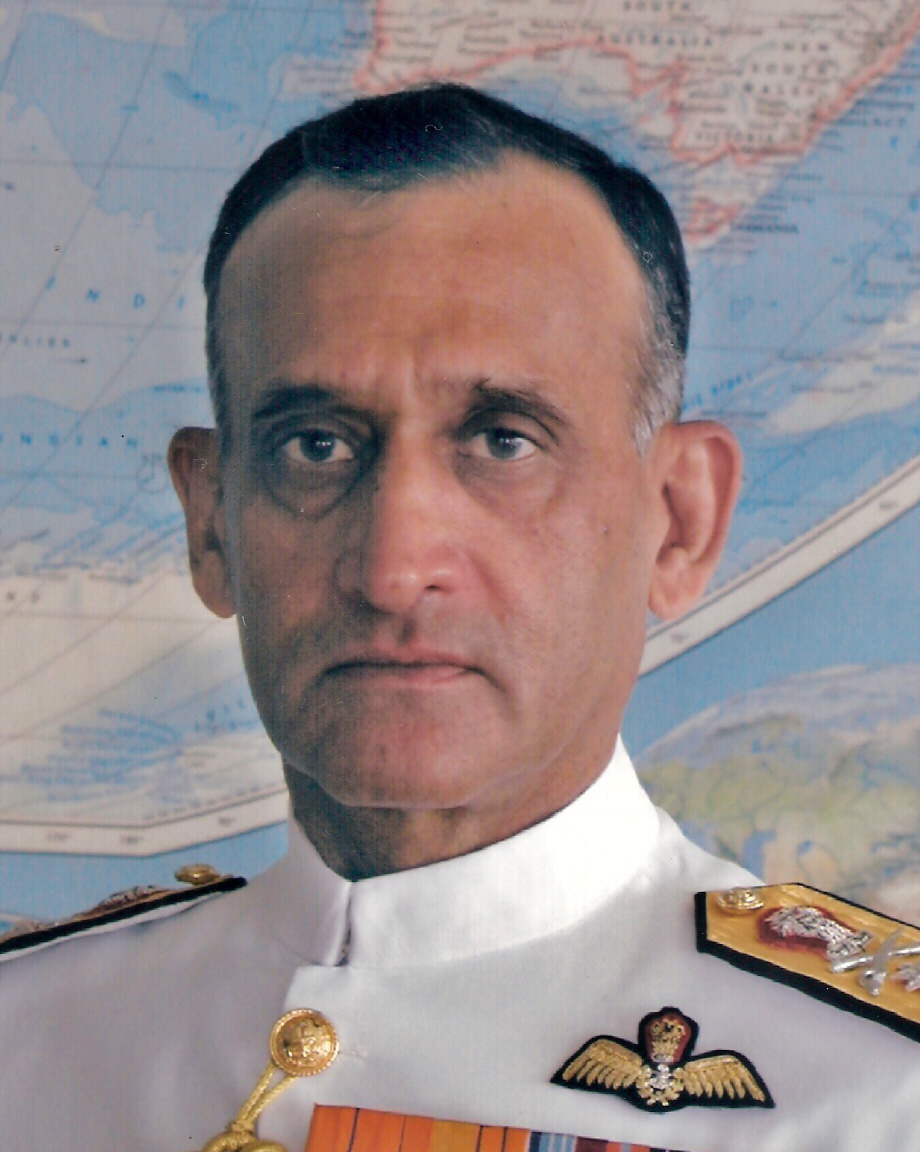
On its 25th Anniversary The Andaman & Nicobar Command Faces Uncertainty by Admiral Arun Prakash (Retd)
Date:- 07 October 2026
Editor's Note:
This article was published by The Tribune on 5 Oct 2026 and being republished by MVI with the author's permission. The article gives a deep and historical insight to the subject and its intricately linked strategic issues . It effectively connects the past with present and shows vision for future. The long and controversial tri-service debate for creation of theatre commands could possibly see the light of the day based on the 25 years functional experience of ANC . The author amply and elaborately justifies the imperative need to boost the offensive and defensive capabilities of the ANC .
A response to the article below from Gp Capt AG Bewoor aptly conveys the strategic military importance of the ANC and the imperative need for the present Govt to pay heed and gratefully accept the sound professional military advice of the Admiral ! Gp Capt AG Bewoor:
" Admiral Arun Prakash keeps warning the govt about the Bay of Bengal and ANC. Someone should listen / read what he says, he knows, he has breathed that air and has been washed by those waters. ANC was born in his hands and he nursed it into what it is today. Opposition to Greater Nicobar has to be correctly and imaginatively tackled. If the adversary can boost the ecological fears of our advance posts in Greater Nicobar and delay the development, we lose too much. The Congress party knows that we need to do it, but that they are not doing it is what hurts them. Other opposition guys and the professional protesters are there for fun and media glare. We do not have much time to get going on Greater Nicobar."
Do read and circulate to interested readers.
Responses are welcome.
Col Vinay B Dalvi Editor ,MVI
"As the microcosm of a theatre command, the ANC has fulfilled its unwritten mandate: to build the framework for a unified military formation, test it in practice, develop operating procedures and working rules, and offer a template for replication on a larger scale elsewhere. Unfortunately, there is no evidence that the ANC model has received serious consideration as an example for emulation, or problem-solving, either in the ongoing inter-service wrangling, or in seminars where 'theaterisation' is discussed. "--Admiral Arun Prakash
On October 8, 2026, as India’s first joint military formation - the Andaman & Nicobar Command (ANC) - celebrates its silver jubilee, its fate hangs in balance. If and when the Indian armed forces adopt the "theatre command" model, the ANC may be either subsumed into a larger theatre or reorganized entirely. This milestone provides an opportune moment to evaluate the 25-year trajectory of what had begun, in 2001, as a bold leap of faith.

India is indeed fortunate to possess strategically located island territories in the Bay of Bengal, but such assets can become liabilities if adequate vision, foresight and planning expertise are not employed in their development. Closer to SE Asia than peninsular India, they form a springboard from where India can reach out and project power, or strike bonds of friendship in the neighbourhood.

We should be aware that the A&N islands have long been the objects of desire for those who wished to dominate the Bay of Bengal. In 1946, the UK Chiefs of Staff had recommended retaining the islands as a Crown colony and staging-post for air traffic to Australasia and the Far East. In 1947 Jinnah staked a claim to the islands as a link between East and West Pakistan; and during the 1965 Indo-Pakistani War, Indonesian President Sukarno, declaring the islands a geological extension of Sumatra, had threatened annexation.

The early roots of the Andaman and Nicobar Command go back to 1962, when alarmed at reported sightings of Chinese submarines in the Andaman Sea, the navy positioned a small 150-man garrison, in Port Blair. With only 40 of the 572 major islands being inhabited, the navy soon realized that the task of surveilling and guarding the 700 km long archipelago, and its vast territorial waters against poachers, smugglers and infiltrators from five neighbouring countries, was a major challenge. The naval garrison was progressively reinforced, till in 1976, it was designated Fortress A&N (FORTAN), to be commanded by an Admiral.

Requests for support from sister services evoked a mixed response. The army positioned, an under-size infantry brigade in Port Blair, and Vayu Bhavan inducted a small helicopter unit in IAF Station Car Nicobar. While the brigade was placed under FORTAN’s command, the IAF retained control of its units, placing a liaison officer in Port Blair.

Fast-forward to the year 2000: the Navy’s proposal to upgrade FORTAN into a full-fledged "Far Eastern Naval Command" (FENC) was on the verge of receiving government approval. Concurrently, the post-Kargil Group of Ministers (GoM), chaired by Deputy PM L.K. Advani, was deliberating national security reforms. In Para 6.18 of its report, the GoM noted bluntly, that "the Chiefs of Staff Committee (COSC) has not been effective in fulfilling its mandate" and urged that it "be strengthened by the addition of a Chief of Defence Staff (CDS) and a Vice CDS." Emphasizing that these measures would "promote greater jointness in the armed forces," the GoM recommended the immediate creation of a Joint Andaman and Nicobar Command, alongside the tri-service Strategic Forces Command.

Demonstrating its strong commitment to jointness, the navy waived its claim to the post of C-in-C FENC, offering it, and the Fortress A&N as a crucible for India’s bold new experiment. This offer having been accepted, on October 8, 2001, all military assets in the A&N islands - including the Coast Guard - were placed under the newly created C-in-C Andaman & Nicobar Command (CINCAN), reporting directly to the CDS/COSC.

As the first CINCAN, I watched with concern, the initial inter-service tensions amongst my staff, rooted in mental blocks and mutual suspicion. With time, it was gratifying to see that as we donned a common (camouflage) uniform, officers began to appreciate and adopt each other’s perspectives, procedures and even terminology. A genuine spirit of jointness emerged spontaneously in every aspect of administration and operations, as the ANC evolved into an efficient, functioning joint-formation, which was to play a sterling role in the 2004 tsunami.

At this juncture, our SE Asian neighbors, increasingly wary of China, expected India to project influence by deploying substantial power-projection capabilities in the islands. Shortly after the ANC was established, Premier Hu Jintao issued his famous warning regarding China’s "Malacca dilemma." Regrettably, the MEA took the view that any significant force buildup in the islands would be perceived by our neighbors as muscle-flexing, and advised against it. Thus, despite repeated and fervent appeals from successive CINCANs, the government has, over the past 25 years, refrained from boosting tri-service force levels that would have enabled ANC to meet security challenges and to project influence in the region.

As the microcosm of a theatre command, the ANC has fulfilled its unwritten mandate: to build the framework for a unified military formation, test it in practice, develop operating procedures and working rules, and offer a template for replication on a larger scale elsewhere. Unfortunately, there is no evidence that the ANC model has received serious consideration as an example for emulation, or problem-solving, either in the ongoing inter-service wrangling, or in seminars where “theaterisation” is discussed.

Finally, a word about the future of the ANC. The term “expeditionary" has lost much of its earlier menacing connotation. Such forces are now essential for safeguarding a nation's vital interests beyond its borders, whether they relate to freedom of navigation, trade, energy or diaspora. As India's only geographically defined tri-service command, the ANC has developed joint planning processes, procedures and command systems that underpin rapid-reaction operations. Provided with necessary wherewithal, this command is ideally placed to handle the full gamut of maritime roles: military, diplomatic, constabulary and benign. Moreover, as India's sea-based nuclear deterrent becomes operational, ANC will be the guardian of its secure "maritime bastion" in the Bay of Bengal; extending surveillance, strike and anti-submarine cover.

Should theaterisation happen, there is merit in earmarking the ANC as a stand-alone, forward maritime outpost, given its unique geography, its role in the region, and the proven jointness model it represents.
"Should theaterisation happen, there is merit in earmarking the ANC as a stand-alone, forward maritime outpost, given its unique geography, its role in the region, and the proven jointness model it represents. " -- Admiral Arun Prakash
Note : All maps and photos are for symbolic representation only


Col NN Bhatia :
Enjoyed reading Admiral Prakash's thought provoking article.
Many years back ,I wrote two articles- Ports & Coastal Security & Strategic Importance of Indian Ocean. In both these articles I highlighted sea threats to our security equalling land threats from our adversaries. I remember starting my one article with the old Chinese saying-
" He who ruled on the sea will shortly rule the land also."
I ended the article with the quote-
"To be secure on land, we must be supreme at sea. Whoever controls the Indian Ocean controls Asia. The Ocean is the key to seven seas".
--Admiral AT Mahan
Maj Gen CD Sawant:
A very mature and wise article. Having been there from 1978 to 1980, having seen upgradation of FORTRAN from Cmde to RA. I can fully understand the implications. We have to further boost the capabilities of CINCAN.