


From Gold to Oil: Are the Foundations of Dollar Dominance Beginning to Shift? By Brig Advitya Madan

Date:-09 June 26
The story of the U.S. dollar's global supremacy is, at its core, a story of how Washington successfully navigated the collapse of one monetary order and built another around the world's most strategic commodity: oil.
The dominance of the U.S. dollar is often treated as a permanent feature of the international system. In reality, it is the product of two distinct historical arrangements. The first was Bretton Woods, which linked the dollar to gold. The second was the petrodollar system, which linked global demand for dollars to oil. Understanding this transition is essential to understanding why developments within OPEC and the Gulf today matter far beyond energy markets.
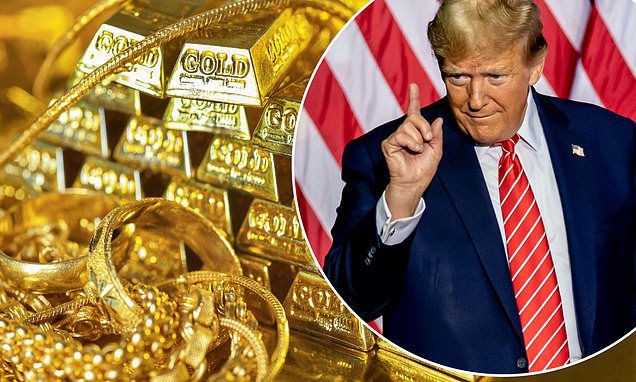
The foundations of dollar dominance were laid in July 1944 at Bretton Woods, New Hampshire, where 44 Allied nations gathered to design the post-war economic order. The conference created the International Monetary Fund and the World Bank, while establishing a monetary system under which major currencies were linked to the U.S. dollar and the dollar itself was convertible into gold at a fixed rate of $35 per ounce.
The arrangement reflected geopolitical realities. The United States emerged from the Second World War as the world's strongest economy and holder of the largest gold reserves. For other countries, holding dollars was effectively equivalent to holding gold. Confidence in the dollar was therefore confidence in America's ability to honour its promise of convertibility.
Yet the success of Bretton Woods contained the seeds of its own crisis.

As international trade expanded during the 1950s and 1960s, the world required ever larger quantities of dollars. Simultaneously, Washington financed the Vietnam War, maintained extensive overseas commitments, and ran persistent fiscal deficits. Increasingly, more dollars circulated globally than could realistically be backed by American gold reserves.
France was among the first to challenge the system. President Charles de Gaulle argued that the United States enjoyed an "exorbitant privilege" by financing global commitments through a currency that others were compelled to hold. Paris began converting dollar reserves into gold, and other countries followed. The pressure culminated in August 1971 when President Richard Nixon suspended dollar convertibility into gold, bringing the Bretton Woods era to an end.
The obvious question then emerged: if dollars were no longer backed by gold, why would the world continue to hold them?
The answer arrived through oil.
The 1973 Arab oil embargo, triggered by the Yom Kippur War, transformed global geopolitics. Oil prices surged, industrial economies faced recession and inflation, and the strategic significance of energy became unmistakable. In the years that followed, the United States deepened its relationship with major Gulf producers, particularly Saudi Arabia. Oil exports continued to be priced predominantly in dollars, creating a powerful new source of demand for the American currency.

The implications were profound. Every country that needed oil also needed dollars. Whether importing crude into Mumbai, Tokyo, Frankfurt or São Paulo, governments and companies had to maintain access to dollar liquidity. In effect, oil became one of the principal pillars supporting global demand for the dollar after the collapse of the gold standard.
The arrangement benefited both sides. Gulf producers gained security partnerships, access to Western financial markets, advanced technology and military cooperation. The United States secured continued demand for its currency, lower borrowing costs and reinforcement of its position at the centre of the international financial system.

For decades, this system proved remarkably resilient. Even today, the dollar remains the world's principal reserve currency and dominates international trade, finance and foreign exchange transactions.
Yet the global environment is changing.
Recent developments within OPEC and OPEC+ reflect a broader shift towards national interest-driven energy policies. Countries are increasingly seeking flexibility in production decisions, investment strategies and geopolitical alignments. The decision of the United Arab Emirates to pursue a more independent course in energy policy is part of a larger trend in which economic calculations increasingly outweigh traditional cartel discipline.
Simultaneously, several emerging economies are exploring local-currency trade arrangements, while BRICS members have intensified discussions on reducing dependence on the dollar in selected transactions. These initiatives remain far from displacing the dollar, but they signal a growing desire among many states to diversify financial risk in an increasingly fragmented geopolitical landscape.
None of this suggests the imminent decline of the dollar. Predictions of its collapse have repeatedly proved premature. The United States continues to possess unmatched financial depth, highly liquid capital markets and institutions that remain central to the global economy.

Nevertheless, history offers an important lesson. The dollar's dominance has never rested on economic size alone. It was first anchored in gold and later reinforced by oil. Both arrangements evolved in response to changing geopolitical realities.
For eight decades, the international monetary system has rested first on gold and then on oil. Neither foundation was permanent. The dollar remains unrivalled today, but its future will depend less on historical privilege than on continued confidence in the institutions that sustain it. As energy markets diversify and geopolitical alignments evolve, the world may be witnessing not the end of dollar dominance, but the beginning of a more contested monetary order.


Comments