


Cricket & the Military: Lessons Contest | Character | Consequence | by Col PK ‘Royal’ Mehrishi (Veteran)

Editor's Note
This short piece by Col PK Royal Mehrishi analysis the characteristics of the game of cricket in all its formats and military operations . The author highlights the significance of both cricket and military with meaningful comparisons.
These comparisons are relevant today especially in India due to the popularity of the game of cricket and respect enjoyed by the military due to its role and critical importance to the nation . Such comparisons of cricket with military are equally comparable with other sports disciplines too.
The Indian military has always given tremendous importance to sports and games especially the troop games for training of cadets ,recruits and combatants to inculcate / develop the leadership qualities so vital at all levels for our military leaders.
- Editor MVI
1. Cricket is often described as a religion in India. Stadiums filled with roaring crowds, millions watch matches across television and digital platforms, and the triumphs or failures of the national team evoke deep emotions across the country. At the same time, the Indian Military represents the nation's pride and security, a symbol of discipline, courage, and sacrifice.
2. At first glance, cricket and the military appear to belong to entirely different worlds , one a sport and the other a profession of arms.

Yet, when examined more closely, there are certain striking similarities between the two that make comparisons both interesting and instructive.
3. The Spirit of the Contest
Cricket in all its formats Test matches, One Day Internationals, and T20 is a high-adrenaline contest. It demands skill, concentration, resilience, and strategic thinking. Players must maintain composure under intense pressure while making quick tactical decisions. The margin between victory and defeat can often be razor thin.
The Military - operates under a similar spirit of contest. Whether it is an anti-terror operation, a border skirmish, an ambush, or a full-scale war, soldiers and officers function in environments of extreme pressure and uncertainty. Every engagement requires courage, calm thinking, and the ability to react swiftly to rapidly changing circumstances.
4. In both arenas, grit and resilience are indispensable qualities. A cricketer who loses focus for a single moment may lose his wicket; a soldier who loses focus for even a second may jeopardize an entire mission.

5. The Uniform and the Identity of the Team
Another similarity lies in the symbolism of the uniform. Every cricketer dons the national jersey, representing not merely himself but the country he plays for. The uniform reinforces unity, discipline, and collective identity.
In the military, the uniform carries an even deeper significance. It represents duty, honour, and the oath to defend the nation at all costs. The uniform binds soldiers together in a brotherhood where the individual subsumes himself within the larger unit.
In both cricket and the military, success depends on the strength of the team rather than the brilliance of a single individual.
6. Uncertainty of Outcome
A defining feature of both cricket and warfare is uncertainty. Before the first ball is bowled, even experts cannot reliably predict the final outcome of a match. Conditions, tactics, strategy, execution, and moments of brilliance all influence the result.
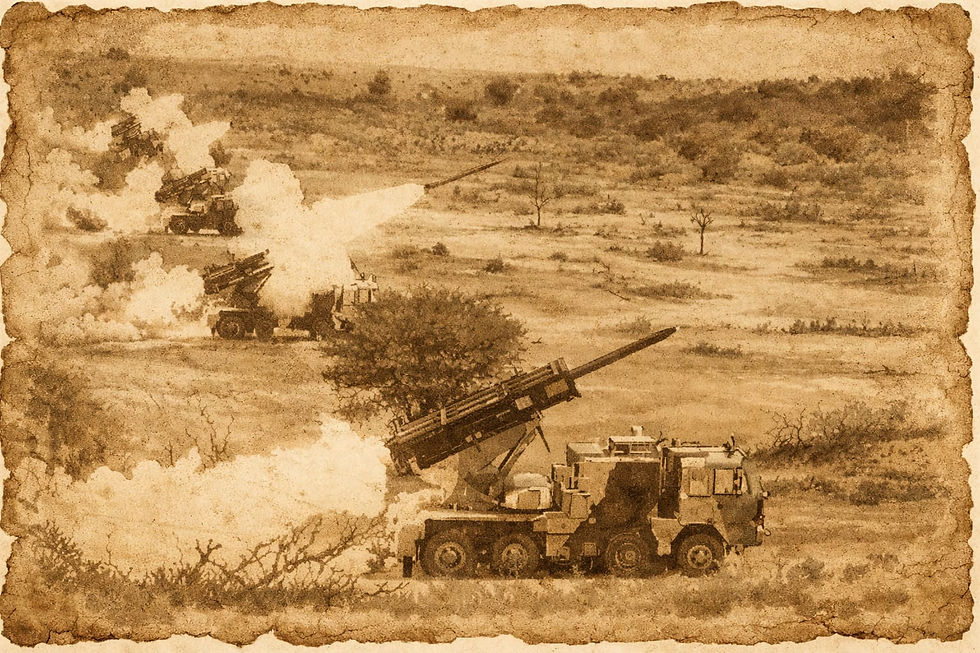
Similarly, before any military engagement begins, the outcome is never completely certain. Plans are carefully drawn, intelligence is analyzed, logistics are prepared, and troops are trained , yet the fog of war ensures that unforeseen factors always play a role.
7. Victory in both fields belongs not only to the strongest but often to the side that adapts faster and maintains composure under pressure.
8. Rigorous Selection and Training
The journey to represent one's country in cricket is extremely demanding. From countless young aspirants across the nation, only a tiny fraction makes it to the national team. The selection process is rigorous, and training regimes are intense.
The military selection process is even more exacting. For officers, barely a fraction of a percent of candidates who appear for competitive examinations ultimately succeed. The training in institutions such as the National Defence Academy and the Indian Military Academy is physically, mentally, and emotionally demanding. It is designed to produce leaders capable of making life-and-death decisions under stress.
9. Both professions therefore share a culture of discipline, endurance, and relentless preparation.
10. Teamwork and Support Systems:
Neither cricket nor the military is an individual enterprise. Cricket teams rely not only on players but also on coaches, analysts, physiotherapists, trainers, and support staff who work tirelessly behind the scenes.
Similarly, military operations depend on a wide range of supporting arms and services. Infantry units rely on artillery, armoured forces, engineers, logistics units, medical teams, and supply services. Without this integrated support system, sustained operations would be impossible.

The lesson is clear : victories are rarely the product of individual brilliance alone , they are the result of coordinated team effort
.
11. Perception and Public Attention :
In the modern world, both cricket and military actions unfold under intense public scrutiny. Cricket matches are watched live by millions. Every decision, every error, and every moment of brilliance is analyzed instantly.
Military operations too are increasingly visible due to the presence of 24-hour news channels and social media. Public perception, national morale, and international opinion are often influenced by how these events are reported and interpreted.
In this sense, modern warfare , much like high-profile sporting contests , also has a powerful spectator dimension.
12. The Crucial Difference:
Despite these similarities, one fundamental difference separates cricket from the military.
Cricket is, after all, a game. At the end of a match, one team wins and the other loses, but life goes on. Players shake hands, series move forward, and another contest begins.
The military operates in a far *harsher reality*. In battle there is the constant threat of death, injury, bloodshed, and permanent loss. In military wars there are no runners up or second best . Soldiers risk life and limb in defence of the nation. Families bear the burden of sacrifice, and the consequences of defeat can be grave.
If a cricket team loses, disappointment follows.
If a military force loses, the *security and sovereignty of the nation itself may be compromised!

Final Reflection:
The comparison between cricket and the military therefore offers useful *lessons in discipline, teamwork, resilience, and leadership*. Both demand preparation, courage, and strategic thinking. Both evoke national pride and emotional investment.
Yet it is essential to remember that while cricket entertains and unites the nation in celebration, the military safeguards the very conditions that make such celebrations possible.
At the end of the day, cricket may inspire the nation , but it is the military that ultimately protects it.


Comments