


DENIAL OF NON FUNCTIONAL UPGRADE (NFU) TO DEFENCE FORCES Brig BL Poonia, VSM (Retd)

The Origin of the NFU
NFU originated from the 6th Pay Commission as a remedy for stagnation, and was initially given to the Group-A Services, denying the same to the Central Armed Police Forces (CAPFs), and the Defence Forces, for not being a part of Group-A Services. Hence they had to approach the courts. While the CAPFs ultimately won the case in Supreme Court in 2019, the Defence Services are still awaiting a final resolution.

What Does NFU Imply?
NFU was introduced on the recommendation of the 6th Central Pay Commission, with effect from 01 Jan 2006, to offset the financial loss caused due to lack of promotional avenues in various Government services.
It implies that whenever an IAS officer gets empanelled at a particular appointment at the Centre, all other Group-A service officers are also upgraded to the same pay level after a period of two years from the date of that empanelment — on a non-functional basis, ie irrespective of whether they are actually promoted or not.
Who Got It and Who All Were Left Out?
While NFU was initially meant only for Organised Group A Services, it was later extended to the All India Services. It was implemented in 2008 to reward civil servants of 49 'Organised Central Group A Services', also called Central Group A Civil Services.
However, certain cadres which ironically faced the maximum stagnation were left out, which included the commissioned officers of the Defence Forces and the Group-A officers of the Central Armed Police Forces (CAPFs).

The stand of the Government was that these services were not exactly termed as 'Organised Group A Services' as per various office memoranda, hence lacked the attributes of being 'organised' as per the policies of the Department of Personnel & Training.
Then How Were the CAPFs Granted NFU?
They didn't get it so easily either. They had to fight a long legal battle through the courts.
Step 1 was at the level of Delhi High Court. Many officers of the CAPFs challenged the non-grant of NFU in the Delhi High Court. The central government opposed the relief, arguing that while the CAPF officers were Group-A officers, they were not members of an 'Organised Group-A Service'. Howevever, through a well-reasoned and detailed judgement, the High Court granted the relief to the affected officers and directed the Government to grant them NFU.

Step 2 was at the level of the Supreme Court. Averring essentially the same grounds taken earlier, the Union of India challenged the verdict of the High Court before the Supreme Court. However, in between, ie in the year 2017, the Supreme Court by way of a detailed order had asked the Central Government to resolve the issue, but the contentions of the affected officers were not agreed upon by the establishment.
On Feb 04, 2019, a Supreme Court bench comprising Justices Rohington Fali Nariman and M.R. Shah upheld the Delhi High Court order, ruling that CAPFs — ie CRPF, BSF, ITBP, CISF, RPF and SSB are part of the Organised Group-A Services (OGAS), and directed that NFU be granted to their officers.
The SC observed that the purpose of NFU was to give relief to Group-A officers facing the problem of stagnation. It further noted: "It has come on record that CAPFs are facing a huge problem of stagnation. On one hand, they are not being granted promotion as most of the promotional posts are filled-up by deputation, and on the other hand, they are being denied NFU."
Which All Organizations Had to Approach the Supreme Court for NFU?
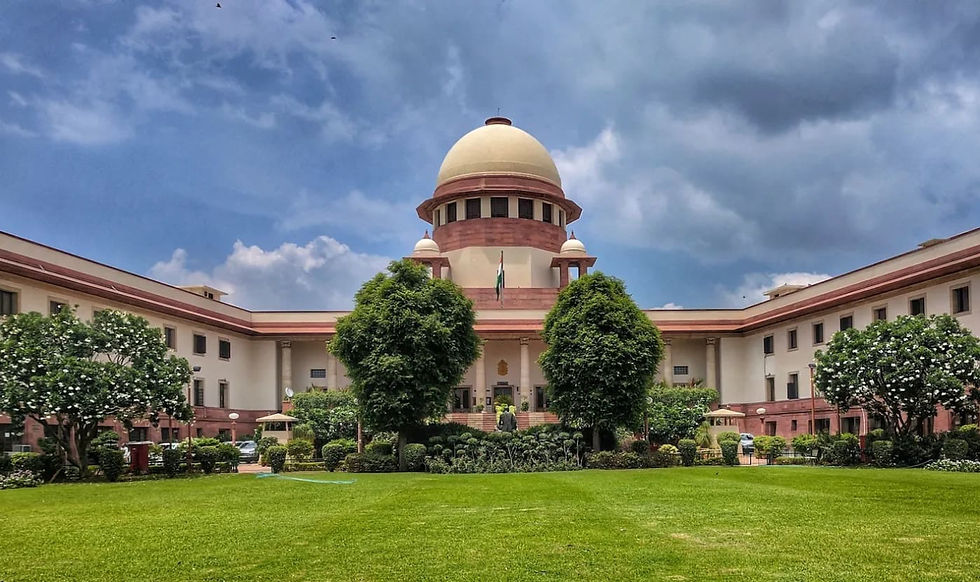
There were two major groups which had to litigate all the way to the Supreme Court:
● Group 1. CAPFs (ie CRPF, BSF, ITBP, CISF, SSB, and RPF). Group-A officers of the CAPFs approached the Supreme Court in 2021, seeking NFU, cadre review and restructuring, and amendment of recruitment rules to eliminate IPS deputation. Ultimately they won the case.
● Group 2. Defence Services (Army, Navy, Air Force). In Dec 2016, the principal bench of the Armed Forces Tribunal, directed the Government to grant NFU to Armed Forces personnel. The tribunal ruled that the denial of NFU to Armed Forces personnel had been "unfair, evasive and without valid justification." The Central Government then appealed against this before the Supreme Court in 2019.
As at now, the Defence Forces remain the only government organisation to have been denied NFU. In an attempt to resolve this, a high-level MoD committee was set up following a Supreme Court directive for re-examining the issue as recently as January 2026. However, as per the social media reports, the Committee did not recommend the grant of NFU.
Conclusion
As far as the basic principle of stagnation is concerned, based on which NFU was granted to various organizations, there is no organization of the central government services, which is as badly affected as the armed forces, yet it is the only organization that has been denied NFU. This is something beyond the imagination of a defence officer not aware of the legal nitty gritty and complexities of the case.
However, the contention of the lawyer fighting the case on behalf of the defence forces, that the Government of India is not keen to grant us the NFU, is nothing new. Let us not forget that we are fighting the case against the government, only because it is not keen to grant us the NFU, hence we have to convince the Supreme Court regarding the injustice meted out to us, and not the government.
So one thing stands out loud and clear that we have failed to convince the Supreme Court of India, for whatever reasons it could be, but doubting the integrity of the entire bench of the Supreme Court, by a few members in social media, saying that the Judiciary is trying to favour the government is not correct, since the government exercises no control over the Judiciary in any manner, whether it be their selection, promotions or postings. Hence, if we have failed to convince the Supreme Court, let us accept it gracefully, and not blame the Judiciary. The simple question is : If the CAPFs could convince the Supreme Court, why couldn't we?


Comments