


ANALYSIS OF INTERNATIONAL HISTORY & WHY INDIA'S LEADERSHIP,INTELLIGENCE & MILITARY HAVE WON ! -Gp Capt AG Bewoor

EDITOR'S NOTE :
This well narrated article by Gp Capt AG Bewoor was triggered by a recent MVI published piece by Brig Neil John. The author not only counters the perception narrated by Neil John but goes further to articulate his well recalled thoughts on the subject and some interesting and intricately linked issues of Indian history viewed against the backdrop of prevailing international affairs and documented world history. The rare insight and overview provided by the author would surely enhance reader's awareness and could even facilitate reaching his own conclusion on these issues.
Link of Brig Neil John's article is given below for reference:
-Col Vinay B Dalvi, Editor MVI
The first five paragraphs of Brig John’s article state the glorious Indian achievements as recorded in our scriptures, history books, traveller’s tales and so on. I have given para numbers to refer to them as necessary. Then suddenly in para 6 he laments that regrettably the World does not know anything about all that has been listed in the preceding 5 paras but is very familiar with the Greeks and their achievements which according to John, was already known to Indians. How come this happened, and who allowed it to happen? That really is what we must enquire, why such a situation has come to pass, is it not? Why was Indian knowledge eclipsed and hidden from the world, while the philosophies of the Greeks and later European masters flourished and spread across the Globe? In the Middle Ages even Arabian philosophies found wide acceptance in most of the known world, but Indian knowledge remained occulted and overshadowed. The author derides poor Indian leadership for this disaster. But history tells us a different tale.

The Huns invaded India around 460 CE defeating the rulers of the Gupta empire which was already in decline. They invaded Europe for nearly 100 years from 370 to 470 CE, all the way to Gaul, today’s France. They were ruthless marauders with no intention of settling in the lands they pillaged and looted. They were nomads from the lands East of the Danube River. But one remarkable thing that is always ignored is that the Huns never invaded Greece, and that is one reason why Greek philosophies were never destroyed by invaders. With the spread of Christianity, Greek thought and culture moved freely under the protection of the Church of Rome and later the Church of England. Which is why Aristotle, Archimedes, Socrates, are well known. Not so for Indian culture and thought. But there is much more

As early as 711 CE, Md Bin Qasim invaded Sind and stablished the first Muslim kingdom in the Indian sub-continent, after which there was no stopping the muslim invaders from marauding India at will. Imagine, Qasim belonged to the Umayyad caliphate of Damascus, what on Earth was he doing so far away from home? The vast repository of knowledge residing in India was supposedly secure. Not one local resident ever imagined that these invaders had another agenda which was to eradicate everything that happened before their faith took birth.
I do not wish to delve into the why and wherefore of this agenda, but that it was their aim is abundantly proven. Tragic as it is, it is true. Which is why when the invaders settled in India, one of their self-given tasks was to destroy and eradicate anything of value that did not conform to their faith and practices. Without much ado, therein lies the tale of why Indian thought, science, literature, medicine, astronomy, grammar, was destroyed in the 500 years from the 10th century onwards. Yet so much was carefully hidden and safely preserved, about which John writes with such passion. But these muslim invaders were not the only ones who demolished and suppressed Indian culture and knowledge.

The British and other European traders, with their insatiable desire to usurp what was not theirs, continued this disastrous campaign to smother Native knowledge, and finally received the stamp of approval from both the Church of England and the Church of Rome. These two centres of Christianity had also sanctioned such pillaging into Africa, Asia and Americas by their Doctrine of Discovery which gave sanction to anything and everything, in the name of the Church. We may write bitterly about treacherous muslim actions in India; but there is silence about the equally dangerous, unpredictable and unstable actions by the Christian rulers of India. Sounds unreal, but we now know how they suppressed the vast amount of far superior knowledge of India, and the reason for our ancients being unheard and unsung becomes clear.
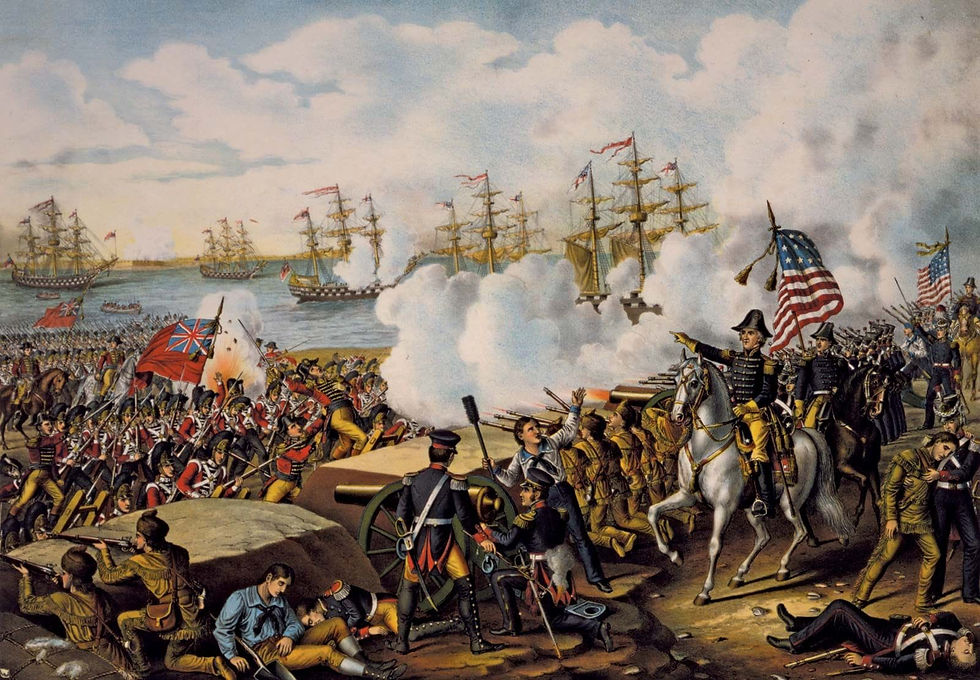
The name Macaulay defines what happened. Certainly, they did not burn and destroy that wealth, but they made sure that it remained within the confines of the very few even within India, and never saw light of day across Christian Europe. This determined action by outsiders who ruled India for more than 1000 yrs is the reason why Indian brilliance could not be studied by the European intellectuals and it is only now in the second decade of the 21st century that one such as Brig John, asks why it is so. The reason why Indian achievements are unknown to the world is not because Indian leadership failed; it is because the controllers of India for more than 1000 yrs ensured that Indian brilliance remained hidden from the rest of the world. How else could these rulers ensure that achievements of their co-religionists get recognition across nations and people; and the accomplishments of Indians dating centuries earlier on the very same matters, are never placed on the same table at the same time, for comparison. That would negate the whole plan to establish the superiority of the white man over the brown man, and they succeeded, very efficiently and ruthlessly. After all, it is the Commander who decides what will be said and what will be recorded. Indian knowledge would not be spoken of, during their reign.

We must accept that the locking up of Indian achievements was not done because of poor or non-existent India leadership; it was craftily engineered by British and muslim leadership and their clergy. They were the Bosses and their clergy dictated who their staff will be and what their staff papers will say. During the muslim rule of Iberia, Spain & Portugal, from 700 till 1490s CE, about 700 years, Christians lived as second class citizens and their culture was not available to the world. Exactly like Indian culture was not available outside India during the muslim / christian rule. Understandable. But the next matter raised by John is the absence of even a single military or political leader on the world canvas, except MK Gandhi. He has named so many, Saddam Hussain, Idi Amin, Napoleon, Hitler, Nelson, Washington, Nixon, Lenin, Clinton, Mussolini and so on. He has missed out Stalin, Montgomery, Eisenhower, Churchill, Zhukov, Rommel. He has failed to mention some of the greatest military leaders of the 20th century. Gen Alexander who oversaw the retreat from Dunkirk and also from Burma along with Slim. Von Manstein, Model and Reinhardt for the German retreat from Russia. Auchinleck from Tobruk to El Alamein where he stopped Rommel from taking Alexandria and Cairo. Without doubt, the most difficult and remarkable military manoeuvre is a Strategic Retreat that recovers the majority of one’s own forces. How come there are no Indian names in this illustrious list? Obvious is it not? But what have all these names got to do with Indian leadership being useless? Indians never ever invaded another’s land, so a retreat was irrelevant. Invading was not our culture and therefore unacceptable to the faith that prevailed in this land. The clergy of this faith too, did not urge their kings and monarchs to usurp neighbouring territories. The faith of the land was not expansive and aggressive it was defensive and protective. A quality the invaders who ruled India found strange but wonderfully convenient and they exploited it fully. In such an ambience how can one hope to find political and military names that will reverberate across the world in fear or even admiration?
China is also a very ancient civilisation, and they too did not conquer other lands to impose their culture. But what does the world know about China; Confucious, gunpowder, the Great Wall and Mao. Surely, the world knows more about Indians, ancient or modern. There is lament that the world does not recognise even one Indian military leader. Which military leader of post-independent India has equalled the general-ship of World War II? From 1947 to 2026, not one Indian general / admiral / air marshal can be compared to similar men from World War eras. We are seeking recognition where we have not earned it, and Indians must desist from self-commendation, especially the military. If Ramanujam is unknown to 90% of Indians, then is it a leadership failure, or societal inadequacy? How many know the name Visvesvaraya, one of India’s greatest engineers and builder of dams, a Bharat Ratna? Is that a leadership flaw? Today the public wants information and data for instant gratification and swift success with large remunerations. Based not on capability, but on educational and skills acquired at institutes. They even call it a ‘compensation’, as if the salary is refilling what has been squeezed out from the worker. When the national hunger for our past achievements is insignificant, who will prop up leaders of days gone by? Are the public ‘morchas’ taken out for Ambedkar, Shivaji, Nehru, Patel, Gandhi Ji, Subhash Bose to honour them or to make a political statement? Have we not seen through them? So has the current youth of India.

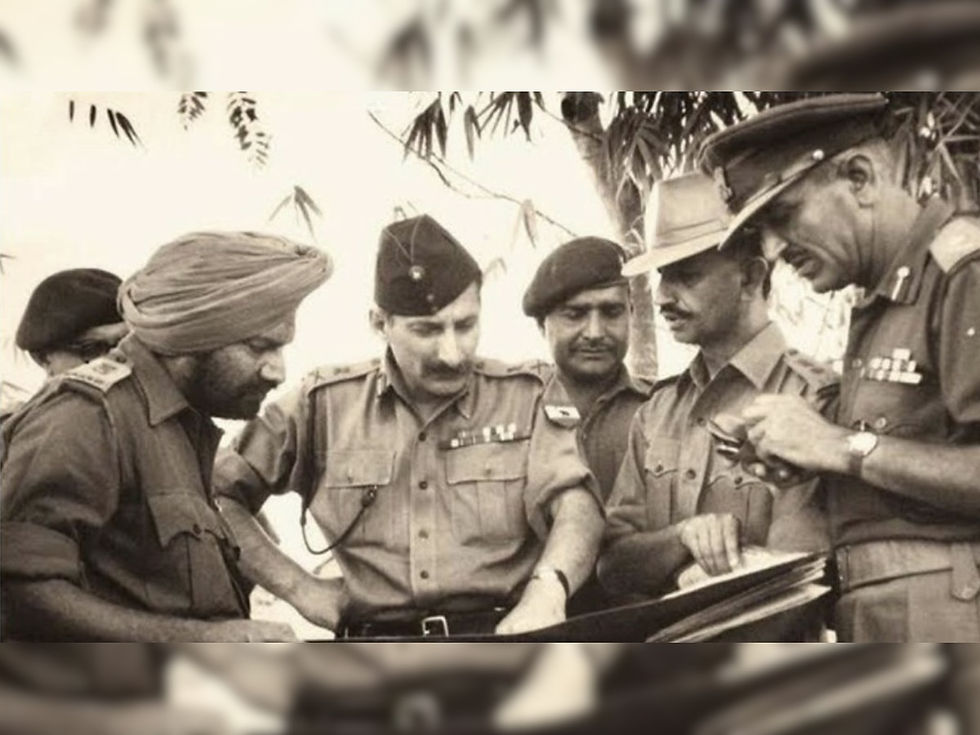
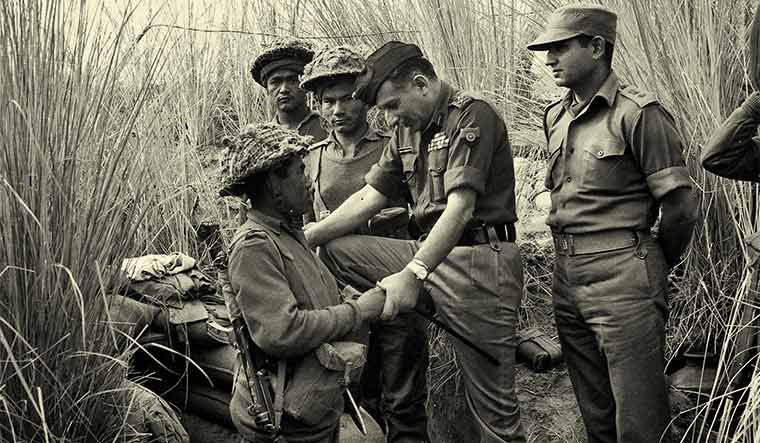
In any war, short or long, it is the political leaders who take the credit and the military leaders remain in the background. Churchill, Roosevelt, Stalin, have invariably got greater glory, than the military commanders who gave these political masters their victory. That is how it is. Who remembers Powell, and Shwarzkopf? But Bush is remembered for Desert Storm. Who remembers Sagat Singh for the fall of Dacca, but we remember Manekshaw and Indira. Tomorrow who will remember the three Chiefs during Sindoor, but India will never forget Modi for it. Who will remember the Union Forces generals of the American Civil war, but everyone will remember Lincoln as the victor. Within the Indian Armed Forces, we remember the army generals who failed us in 1962, but do we remember the political masters for the same defeat? Do we even know the names of the Chinese generals who campaigned against India in 1962, or at Nathu La in 1967? Do we know the names of Indian generals and brigadiers who captured more than 12000 Sq Kms of Pakistan in 1971? But we know who negotiated at Shimla along with Indira, where those 12000 Sq Kms and 93000 POWs were the bargaining stick, and Indira negotiated without the presence of a single military leader. That is how it is.
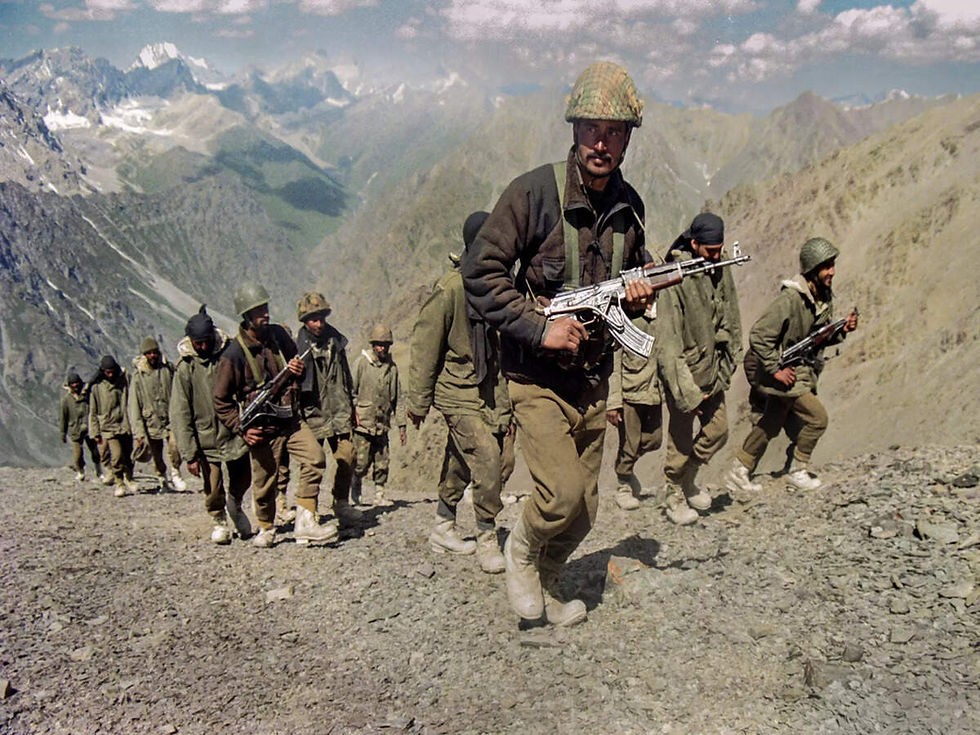
Do we know the names of the battalion / brigade / div commanders during Kargil? Just 27 years back. Military leadership cannot be primary and the front face of any democratic self-respecting nation, except Pakistan. And yet we want our military bosses to be more famous and prominent than the elected leaders? John laments that India does not nurture proactive and aggressive strategists. The belligerence and deep cognition demonstrated by our military bosses in the last 10 odd years is not enough evidence of proactivity? Many of them are seen on TV talking freely yet circumspectly, of what and how offensive actions were planned and executed. Why do we want outsiders to be interested in it? Our tactical and strategic mastery is not applicable to other nations. They do not suffer from the nasty enemy we have next door. What our military leaders have shown is not weak leadership, it is ‘tagda’ stuff? Why must we overplay these achievements to seek foreign ‘shabashi’?

That is not Indian culture to make more noise than what can be heard close by, that is what our faith advises. And in the final analysis, it is the overwhelming blanket of faith that creates culture and behaviour. Our faith is not superior to the other faiths, and our clergy, except the loudmouths, urge us to aceept other fiaths but not succumb to their mischief. The faith and culture of India is distinctly dissimilar to all others and imparts skills and knowledge that is very distinguishable.
In the end, John talks of white supremacy being all pervasive and that only Yoga and Buddha can be identified with India, everything else belongs to
the white skin peoples. This begs the question, what else should India be known for? In the second decade of the 21st century what can India put before the 8 billion denizens of Earth to be recognised as a great nation with greater people? John writes that Putin, Trump, Macron, Xi, Stramer, Netenyahu, Md Bin Salman, Sisi of Egypt, Melonia, Brazil’s da Silva, Asim Munir, Khamenei, Erdogan, Zelynski, will be remembered? Possibly, but for what? On the other hand, Modi and the masterminds of Sindoor, Kargil, Uri, Mizoram and the many more domestic infrastructure and economic achievements will be remembered in India for years to come, and are endorsed by outsiders.

How can anyone across the globe ignore India’s victory during Covid, all done without fanfare and noise. Our culture and faith advise us that, it is more important to be trusted, than be celebrated. There are major lessons in this for everyone, are there not? We want recognition and wide identification for our nation; which we wrongly deduce to mean that, India has arrived with flags waving, trumpets blowing and people clapping. That is not the India our ancestors created, nurtured, protected and educated. We look for the attractive and glitzy reflections with false auras, and miss out the substantive and fundamentals. Kama Sutra is just 20% about the act of Sex. The rest is about Virtues, Gracious Living, Family Life, Theory of Love and what Sustains Love. Yet the world looks at that 20% because that is captivating, tittilating and enchanting, and who told the world to look at Kama Sutra in this biased manner, we Indians, who wanted to make a splash. Do we want to be like these people who ignore the essential and the dependable, and chase the ephemeral and transient? That is not the Desi way of doing things.

India and her leaders are not failures, John may not be pessimistic, but he is deeply disenchanted. There is much more to Indian leadership, in all its fashions encompassing every aspect of our collective lives. Being appreciated by our own has to be more gratifying than being hailed by others. Observe the loud protests that erupted when it was Pakistan and not India, trying to broker a peace deal between USA & Iran. Have not the protests died when the brokerage failed. Incorrectly, we wanted a fleeting flash of renown, but that fame could turn murky without a warning, and besmirch you for ever? Indian leadership has selected caution, and correctly so. Witness the huge progress made in Naval offensive & defensive capability. That lethargy in defence design and manufaturing has disappeared, is this not military leadership? But must it be registered on other nation's billboards? The ability to attack our favourite enemy from the air with microaccuracy is proof of Indian military leadership. Not for a moment do I ignore the technological, political and entrepraunial leadership, but that too is Indian leadership. Foreign powers acknowledge these achievements silently without 'band-baja'; then why are we wanting a full orchestra hailing this leadership? Does proof of leadership only get afirmed with photos in other nation's Halls Of Fame?
Our ancient heritage and literature warn us against seeking and accepting such instant gratification, and John refers to that heritage with great affection and pride. Then why the desire to deviate from that wisdom? In majority of cases, institutions become bad after we retire, and anything run by the Govt is bad, except Govt jobs. One huge flaw is that we want everything, but if we get it, where will we put it? Indeed, India is full of imperfections, and will always have them, which is very good for India. Because the more perfect a thing is, the more susceptible it is to evil intentions.

India wants heroes and heroines who can keep their mouths shut even when they are right. Our country needs leaders, especially in the Armed Forces, who do not seek assurances from outside, but have confidence in themselves. That’s all. The most demanding attribute of a leader is humility, and it comes from defending the flag, not waving it. A story about Churchill is pertinent, and goes like this; Churchill met a soldier who had won the Victoria Cross during WW II, and he asks the soldier, “You must be feeling very humble and awkward in my presence?” To which the soldier replied, “Yes sir, I do”. In response, Churchill said “Then imagine how humble and awkward I feel in your presence?” Our unmitigated desire to show off what we are, what we have done, how we did it, that others have never done it, that I am the first one to tell you; releases into the public domain confidential truths that should never have escaped. Our culture says ‘If you want to keep something secret, then first hide it from yourself’


Comments