


UPHOLDING THE SECULAR IDEALS AND ETHOS OF THE INDIAN ARMY - A CASE STUDY

Updated: Dec 14, 2025
By Brig BL Poonia, VSM (Retd)
Introduction
Lt Samuel Kamalesan was dismissed from service on March 03, 2021 through an Administrative Action under Army Act 19 for being a misfit in the Indian Army, and unfit to command troops in war. Since this was the first case in the history, where an officer was dismissed for failing to uphold the secular ideals and ethos of the Indian Army, it generated different reactions from different quarters.

Background of the Case
The officer was commissioned from the Officers Training Academy, Chennai, in 3 Cavalry Regiment on March 11, 2017. This regiment had won battle honours in 1965 and 1971 Indo-Pak wars. It comprises three squadrons of Sikh, Jat, and Rajput personnel. He was appointed Troop Leader of 'B' Squadron, comprising Sikh soldiers.
Right since the day he joined the Regiment, he refused to enter the sanctum sanctorum of the Unit Madir and Gurudwara, during the regimental religious parades, stating that he being a follower of Christianity, his conscience did not permit him to do so.
In the Army, respecting the religious sentiments of your troops is an essential part of regimentation. The religion of the troops you are entrusted to command, becomes your second religion, to be treated on a par with your own religion. Moreover, there is no compulsion of making any prayers in the sanctum sanctorum, that is absolutely optional for each and every soldier of the battalion/regiment; what matters is just your physical presence, since troops must have an unquestionable and unshakable faith in their leader for honouring their religious sentiments, in case one expects them to lay down their lives on his/her word of command, without hesitation or a second thought. And it is the responsibility of each and every officer to inculcate that kind of faith and create such trust and confidence by integrating himself with the sentiments of his troops. The Unit can only guide an officer.

I have known Hindu officers commanding Muslim troops, observing 'rozas' during the entire month of Ramzan. In fact, I was commissioned in an 'All India All Class' battalion, where we had Hindu, Muslim, Sikh and Christian troops, and none of them ever displayed any hesitation in entering the sanctum sanctorum of the regimental religious institutes, including the Muslim troops. We were proud to have such first-rate soldiers in our battalion. Indian Army is known for such an unbelievably exemplary state of secularism, which the entire nation looks up with pride and respect.
Efforts by 3 Cavalry Regiment to Motivate the Officer
Lt Samuel was counselled by his seniors, including the Commanding Officer (CO). In fact they made every possible effort to motivate him to uphold the age-old ethos and the time-tested traditions of the Indian Army, since it involved the image and reputation of a highly decorated Regiment like 3 Cavalry, but he refused to budge from his stand. They wanted to groom him to be a good officer, who could fit into a truly secular environment of the Indian Army, of which the Unit could feel proud of. The CO had even arranged a meeting with a Pastor of his own faith, who clarified to him that doing so would in no way violate the religious beliefs of Christianity. But the officer was simply adamant.
After making concerted efforts for a period of 14 months, the CO was left with no option but to bring the matter to the notice of his next higher commander in the chain of command in May 2018. Since 3 Cavalry was the Division Armoured Regiment, Lt Samuel was interviewed by the General Officer Commanding (GOC) 7 Infantry Division, who personally counselled, and tried to motivate him as a father figure, but the officer continued to display an adamant approach, which was a rarest of the rare phenomenon. Simultaneously, the Unit continued with its efforts to motivate him to the best of its ability, but the officer continued to display his obstinacy with an equal degree of adamancy.
Unfortunately, his conduct was setting a bad example to the entire regiment, which if permitted to continue, could set a wrong precedence. Hence a formal show-cause notice was issued to him by the CO on January 31, 2019, after about nine months of having been counselled by the GOC 7 Infantry Division. Notwithstanding this, the efforts to motivate him by the officers of his Regiment continued for another two years.

Dismissal from the Army
However, since Lt Samuel displayed an unprecedented adamancy, placing his personal religious beliefs above the higher ideals of secularism and the rich traditions of the Indian Army, in spite of sustained efforts by the Regiment for a period of four years, and such an attitude of die-hard religious fanaticism not being conducive for the secular environment of the Indian Army, setting a wrong precedence to others, the Army was left with no option but to dismiss him from service on March 03, 2021.
Dismissal under this Act is not a punishment but merely amounts to termination of service without an officer’s consent. Nor is dismissal through an Administrative Action as simple or as easy as it sounds. It involves convicing the entire chain of higher command, which itself is a herculean task, which in this case involved the Division Commander, the Corps Commander, the Army Commander, and the Army Chief, who could not possibly have accepted the case without satisfying themselves whether the CO had used all the resources at his end, to motivate the officer without leaving any stone unturned. In fact, no CO would ever like such matters to be even talked about outside the Unit, if he can help it, since it affects the image of the Unit. Hence such a case is initiated only as a last resort. And above all, the entire chain of leadership understands the constraints of a CO, since they too had commanded Units, and are as experienced in the field of man-management as any one of the veterans could claim to be.
The option of placing his religious beliefs over the secular ideals and ethos of the Indian Army expressly rested with Lt Samuel Kamalesan. Since he voluntarily opted for his religious beliefs, he should have ideally felt relieved for being freed after dismissal, to enjoy the same to the ultimate satisfaction of his conscience. He should have rather rejoiced the dismissal. But he wanted to have the cake and eat it too. No wonder he challenged his dismissal in the Delhi High Court. The court pronounced a reasoned verdict on May 30, 2025, upholding his dismissal by the Indian Army, but he challenged the same in the Supreme Court too.
Dismissal Upheld by the Supreme Court
The bench of Chief Justice Surya Kant and Justice Joymalya Bagchi observed that an officer who leads troops cannot selectively opt out of regimental practices. Responding to his plea that his right under Article 25 of the Constitution had been violated, the bench observed that not every religious sentiment or practice is an essential feature warranting constitutional protection. “You have to respect the collective sentiment of your command as a group leader, and lead by example", the bench told him. Terming it as “clearly an act of indiscipline”, the apex court described him as a “misfit" for the Indian Army, and upheld the Army’s decision to dismiss him from service. And thus on November 25, 2025, the Supreme Court bench declined to interfere with Delhi High Court ruling of May 30, 2025, by rejecting his Special Leave Petition.
This resulted in Lt Samuel depriving the Indian Army of a vacancy, which should have rightly been utilized by some well motivated, proud and patriotic officer of the nation.
Importance of Religion, Especially in the Fighting Arms

In the Indian Army, the religion plays a very important role in motivating the soldiers, especially during war. Battle of Saragarhi is one of the finest examples, where a small contingent of 21 Sikh soldiers of 36 SIKH Battalion (now 4 SIKH), led by Havildar Ishar Singh fought against an attacking force of approximately 10,000 to 12,000 Afghan (Pashtun) tribesmen in 1897, in North West Frontier Province (now Khyber Pakhtunkhwa Province of Pakistan). They fought with an unparalleled degree of courage and patriotism, till the last man, last bullet. And what inspired them was the religious spirit of Sikhism, imbibed through the teachings of reverred and legendary Guru Govind Singh ji, which was instrumental in motivating them to perform such a unique feat of gallantry. This battle has become a case study for the armies all over the world. If such a system can inspire us to fight against our enemies with such an exemplary degree of courage and commitment, we should not dismantle the same, just because we inherited the same from the British Army.
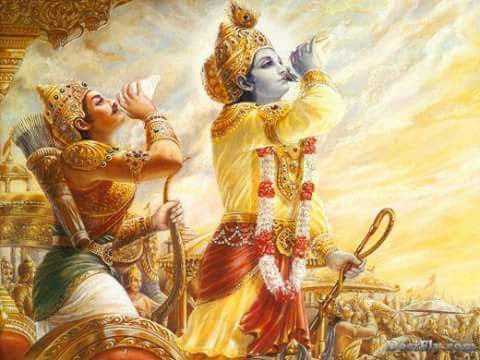
Religion should not be viewed through the narrow prism of - 'my religion versus your religion'. We are supposed to be a secular nation, and if viewed with a positive outlook, it can become the greatest source of inspiration and motivation during war. The famous poem of Guru Govind Singh ji says : देहु शिवा वर मोहि इहै, शुभ कर्मन ते कबहूँ न टरौं। जब आवकी अउध निदान बनै, अतही रण में तब जूझ मरौं॥ Similarly in the Bhagwad Gita, which is a divine commentary on Vedant, and the summing up ontology of Hindu philosophy, Lord Krishna tells Arjun, who is hesitant to fight against his own kith and kin on the battlefield of Mahabharat, "If you are killed in the battle, you will go to heaven; if you win, you will enjoy the earth. Therefore arise, O son of Kunti, resolved to fight." Aren't these teachings inspiring? Do such teachings interfere in any soldier's personal religious beliefs? Moreover, in spite of belonging to different religions, we are citizens and soldiers of same nation, hence we need to be trained to integrate in every manner, including through the time-tested regimental practices of religion.
But if a young subaltern of a particular religion displays signs of religious fanaticism, he should not be permitted to become an obstacle, generating uncalled for academic debates. Once identified as 'beyond repair' case, he should be dismissed from the Army, before it is too late, and not actuate us to dismantle the precious age-old traditions imbibed with exemplary feats of courage and sacrifice, which are far too precious to be shed. So far the Indian Army has had a tradition of dismantling only those battalions which have either mutineed or shown cowardice during war, not otherwise.
Did 3 Cavalry Regiment Fail To Motivate the Officer?
No it didn't. While only a miniscule minority comprising members of Lt Samuel's own community have tried to defend the officer by blaming the Indian Army for its failure to motivate him, it must realize that the Unit made all efforts to motivate him for a period of four years before it was finally constrained to initiate a case for his dismissal from service as a last resort.
The inability to motivate a hardcore religious fanatic does not reflect poorly upon the leadership of a battalion/regiment by any stretch of imagination. Why couldn't the Indian Army motivate Maj Gen Shabeg Singh, PVSM, AVSM, to uphold the secular ideals and ethos of the Indian Army, who post-retirement joined the movement of Jarnail Singh Bhindranwale, and died fighting the Indian Army? Or is an officer justified in shedding his secular ideals and ethos post-retirement? Obviously not. Hence such officers need to be identified at the earliest possible opportunity, ie right during the early stage of their service, since showing any leniency to any officer imbibed with religious fanaticism is fraught with danger, and can prove to be fatal to the national security. Hence, let's not overlook the bitter lessons of history.
Moreover, the Division Commander, the Corps Commander, the Army Commander and the Army Chief are competent enough to realize the need of satisfying themselves with the kind of efforts the Unit had put in to motivate the officer before progressing the case for his dismissal. Afterall, they too had commanded Units, and had not reached those positions without this basic knowledge, with which we as veterans now feel enriched in abundance. Those who feel otherwise, need to realize that right to opinion post-retirement does not imply that we start functioning on the basis of the principle of 'Vikramaditya's Throne' that anyone who graduates to become a veteran, becomes the repository of all the wisdom and knowledge regarding man-management and motivation, while the serving officers, the COs, and the senior commanders, including the Army Chief, need to be taught these basics.
Conclusion
Before we resort to fault-finding, let's not forget that even the firmest line that can be drawn upon the smoothest paper has jagged edges if seen through a microscope. But this does not matter until important deductions are made on the supposition that there are no jagged edges.
The fact of the matter is that Lt Samuel Kamalesan was an extreme case of religious fanaticism, with an obstinate and recalcitrant attitude. This led him to become a misfit in the Army, since he refused to mould himself, thus becoming unfit to command troops in war. His continued presence in the Army was not conducive to the healthy secular environment, and the Indian Army has done an exemplary job by discharging him from service unceremoniously well in time, after due deliberation, thereby saving the nation from some unseen and unexpected incident. The Indian Army owes a debt of gratitude to all the commanders in the entire chain of command, and the nation continues to remain proud of the secular ideals and ethos of the Indian Army.
The author was commissioned in 2 Guards (1 Grenadiers), with an 'All India All Class' composition.


I would really like to hear out the officer before saying anything final in the situation. But it appears to me that a candidate wants to be a surgeon while he has a belief that he will never use a knife to cut human tissue; because cutting another human is against his principles...
Sorry sir, then please look for a profession that matches your principles...
It is true that motivation in the corporate field can be managed with reward and punishment, which in turn has to do with the material world. But even here the best motivation does address the spirit. In a military context motivation has everything to do with the spirit... And the best of religions have nothing…