


The Cradle or the Crucible? Rethinking the National Defence Academy’s Leadership Legacy
Updated: Dec 31, 2025
Editor's Note:
This timely and relevant piece has apparently captured the essence of several issues that have haunted NDA for past two decades. The author has identified several critical issues and suggested viable solutions . Since the NDA has recently been in the news this article would enable serving military fraternity dealing with NDA to resolve them and qualitatively improve the quality of our military leadership at take off level.
The well researched analysis by a seasoned ex NDA veteran seems to have been inspired by recent articles on NDA by Admiral Arun Prakash ,Lt Gen HS Panag and Brig BL Poonia.
Editor , MVI
The National Defence Academy (NDA) has long been hailed as the cradle of leadership, a
phrase meant to capture its singular role in shaping India’s future military commanders. It
was envisioned as a tri service institution where raw potential would be transformed into
disciplined, visionary leaders capable of safeguarding the nation.
Yet, over time, this metaphor has begun to lose its force. What was meant as a cradle of support now risks being seen as a crucible—an institution that imposes harsh trials on adolescents, shaping them through pressure rather than fostering growth through guidance.
In such a place, adolescence—the stage meant for exploration, risk-taking, and growth becomes a period of stagnation. Talents remain undiscovered, ambitions wither, and the
spark of possibility dims.
What could have been a painter, scientist, or leader is instead moulded into conformity, their potential stunted by confinement.

The very conditions at the National defence Academy, designed to cultivate military
leadership of the highest calibre have instead yielded bonsai rather than banyan trees.
Instead of nurturing banyan trees—leaders with expansive vision and roots deep in society—
the system produces bonsai: carefully pruned, aesthetically disciplined, but ultimately
stunted in growth. The nation’s military leadership is increasingly perceived as stunted,
having failed to produce any figure of truly outstanding stature. Unlike in other contexts,
senior officers have not risen to become Defence Ministers, National Security Advisors, or national leaders in any field. Perhaps it is the fear of military influence that drives political
leaders to sideline them from state affairs; yet the deeper issue remains the military’s
inability to produce a leader capable of capturing the nation’s imagination and securing the popular mandate to lead.
Articles by Admiral Arun Prakash, former Chief of Naval Staff and ex-Commandant of NDA
(Hindustan Times, 28 January 2024), Lt Gen HS Panag, former Army Commander (The Print,
18 July 2019), and Brig BL Poonia, VSM (Retd) (‘Pay Attention – National Defence Academy’,
13 March 2024) have collectively highlighted significant shortcomings in the training
imparted at this premier military institution. Building on their critiques, this article argues
that the very concept underpinning the preparation of future military leadership at the NDA is fundamentally flawed. It calls for a thorough review of the system to elevate it to a level at least comparable—if not superior—to the selection and training processes of the Indian Administrative Service.
Catch Them Young – A flawed Concept
The idea behind “Catch Them Young” is simple: identify adolescents early, channel their
energy into military discipline, and mould them into future leaders. The National Defence
Academy (NDA) embodies this philosophy, inducting boys at the age of 16.5–19.5 and
subjecting them to a rigorous regimen of academics, physical training, and military drill. Theassumption is that early exposure will produce leaders of exceptional calibre, hardened by discipline and loyalty.
The philosophy of catching them young may indeed be effective in producing outstanding
athletes and sportsmen. In sports, early specialization allows the body to be conditioned,
reflexes to be honed, and skills to be perfected through repetition. The focus is on physical
endurance, discipline, and mastery of technique—qualities that benefit from starting young,
when the body is most adaptable.
However, this same approach is fundamentally flawed when applied to the selection and
training of military leaders. Leadership in the armed forces is not merely about physical
prowess or mechanical skill; it demands intellectual maturity, emotional intelligence, and the ability to make complex judgments under uncertainty. These qualities emerge only after the brain has matured through education, exposure, and lived experience.
NDA – A Trap for Poor but Promising Students
India often takes pride in having a fully volunteer military, but the reality is more complex.
Most senior military leaders are graduates of the National Defence Academy (NDA). In the
early 1960s, particularly after the Indo-China war of 1962, it was recognized that the NDA
was failing to attract high-quality candidates. To address this, the government established
Sainik Schools, Military Schools, and the Rashtriya Indian Military College (RIMC) across the states as feeder institutions for the NDA. Today, nearly 100 such schools exist, and the
majority of NDA cadets come from these institutions.

Students enter these schools at the age of 10–12, often from modest backgrounds, and are
provided scholarships for their education. However, admission comes with a binding
obligation: cadets must sign a bond committing to join the NDA if selected after their
schooling. The bond stipulates that if a student refuses to appear for or join the NDA, the
entire cost of their education must be repaid to the government. Further, upon joining the
NDA at the young age of 16.5 years or more, cadets are required to sign another bond
committing themselves to at least 20 years of military service. Ironically, these young men
are compelled to make lifelong commitments to the armed forces before they are even old
enough to cast a vote in an election.
As a result, many serve not out of genuine choice but out of compulsion or the lack of viable alternatives. This system of entrapment ensures a steady supply of officers but also
suppresses their bargaining power, leaving them underpaid compared to market salaries.
What was intended as a cradle of opportunity has, for many poor but promising students,
become a trap that binds them to a career path before they are mature enough to decide
their own future.
Biology of the Brain
Research demonstrates that the limbic system—particularly the amygdala—matures years before the prefrontal cortex. This system governs emotions, rewards, and social interactions, which explains why adolescents often display heightened emotional responses and impulsivity. NDA cadets are drawn precisely from this age group. They enter the academy
after clearing a demanding UPSC examination and a rigorous five-day Service Selection
Board process involving multiple tests. Yet, at this stage of neurological development, these
young cadets cannot reasonably be expected to make lifelong, carefully considered decisions
about their future.
In contrast, the prefrontal cortex—the region responsible for judgment, impulse control, and
higher-order reasoning—continues to develop well into the mid-20s. Only around age 25 do
executive functions reach full maturity, as confirmed by numerous scientific studies. This
biological reality underscores the mismatch between the age of entry into NDA and the
cognitive demands of shaping future military leadership.
Biology is responsible for the flaws in NDA
Training Adolescents, as noted earlier, are biologically inclined toward risk-taking, impulsivity, and peer-driven behaviour, and when placed within a cohort of similarly predisposed cadets, these tendencies are magnified and solidified into tradition. At the NDA, this dynamic has long manifested in negative practices such as cheating, impersonation, petty theft, and the manhandling of juniors. For decades, such conduct has been rationalized as a means of fostering initiative, resourcefulness, or toughness, yet these justifications mask the deeper issue: the behaviours stem from the neurological immaturity of the age group itself.
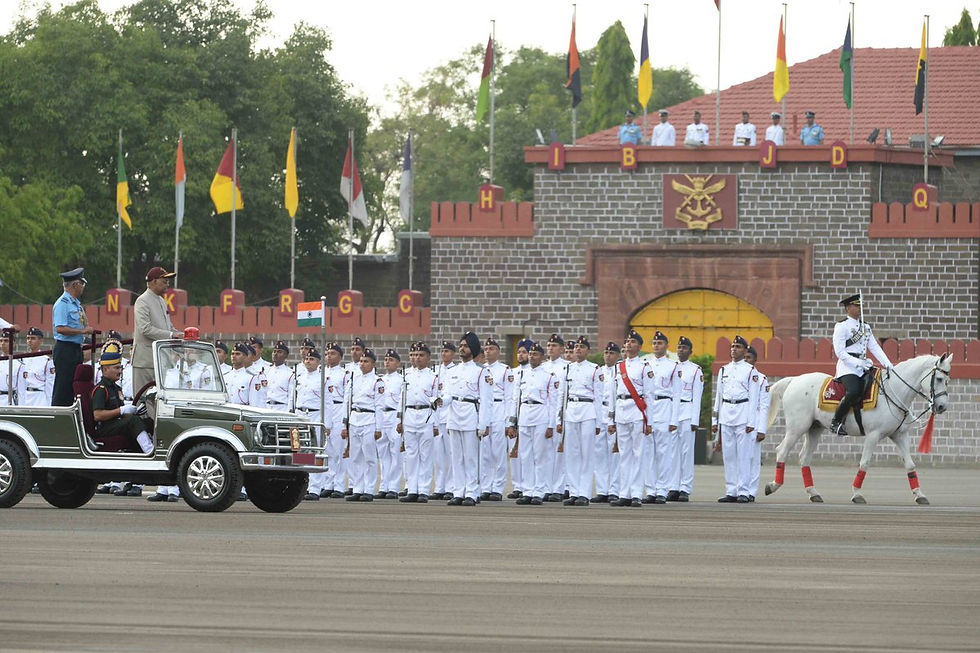
As long as recruitment continues at a stage when biology predisposes cadets to such flaws, no amount of tinkering with the training framework can eliminate them, leaving the system vulnerable to perpetuating misconduct rather than nurturing visionary military leadership.
Immature Trainers
The NDA’s system of training and leadership development rests heavily on the role of
Divisional Officers (Div Os). Each squadron is overseen by a squadron commander and four
divisional officers—one each from the Navy and Air Force, and two from the Army.
While most are ex-NDA officers with commendable service records, they are typically only around 25 years old when posted to the academy. Despite their youth and lack of formal
preparation for the role, they are entrusted with the demanding responsibility of shaping
the training and character of nearly 50 cadets. In practice, without structured training in
pedagogy or leadership development, many Div Os end up behaving more like senior cadets
than mentors. Their tenure is short—barely two years—and just as they begin to gain
proficiency through on-the-job experience, they are rotated out.
Expecting such young and untrained officers to carry the burden of moulding future military leaders is fundamentally flawed and constitutes a major reason for the persistent shortcomings in leadership development at the NDA.Excessive Focus on Physical Training and Drill The NDA’s training framework continues to emphasize physical training and drill as central pillars. While these elements may be valuable for soldiers and junior leaders, they contribute little to the cultivation of higher-order leadership qualities in cadets. Historically, physical endurance and drill discipline were critical during the world wars, when warfare was manpower-intensive and technologically unsophisticated. However, the revolution in military affairs has fundamentally altered the demands placed on future leaders.
Modern warfare is defined by complexity, technology, and information dominance.
Leaders today are required to operate in dispersed environments, often in isolation, making rapid decisions with strategic consequences without ever leaving their command centers. Success depends less on physical stamina and more on cognitive agility, systems thinking, and the ability to integrate intelligence, technology, and diplomacy into military strategy.
In this context, excessive time devoted to physical training and drill represents a misallocation of scarce training resources. Physical fitness should remain a baseline requirement—tested and maintained by individuals—but it should not consume the bulk of institutional training time. Instead, the academy must prioritize intellectual development, critical thinking, ethical reasoning, and exposure to emerging technologies. Only by shifting focus from rote physical routines to the cultivation of strategic minds can the NDA prepare cadets to lead in the wars of tomorrow.
No Time for Silent Contemplation or Critical
Thinking One of the most serious shortcomings of the NDA’s training system is the absence of space for reflection and intellectual growth. Cadets are kept under relentless schedules of physical training, drill, and routine tasks, leaving little opportunity for silent contemplation or the
cultivation of independent thought. Leadership, however, is not forged merely through
discipline and endurance; it requires the ability to pause, reflect, and critically evaluate
complex situations.

The absence of contemplative space has two damaging effects: first, it stunts the
development of strategic imagination, leaving officers technically competent but
intellectually narrow; second, it discourages moral courage, as cadets are conditioned to
follow orders rather than wrestle with ethical dilemmas. In contrast, institutions that nurture
leaders—whether in civil services, academia, or global military academies—deliberately
carve out time for reflection, reading, and dialogue, recognizing that leadership is as much
about thought as it is about action.
Lower Order Competence in Public Perception
A persistent anomaly exists in how the public perceives NDA graduates compared to those
entering the Indian Administrative Service (IAS). Despite clearing a rigorous UPSC examination and an exhaustive Service Selection Board process, NDA cadets are often seenas less educated or competent than their IAS counterparts. This fact is evident from the
denial of NFFU to the military leaders. This perception is misleading. Military leaders are in
no way inferior in intellect or capability; their training emphasizes discipline, resilience, and
operational leadership under extreme conditions—qualities that are indispensable for
national security.

The real gap lies not in competence but in exposure. Senior military officers, whose careers
are largely confined to defence institutions, often lack direct experience in the broader
machinery of governance. As a result, they are less visible in civil administration and less
likely to be considered for senior government posts outside the military. Correcting this
imbalance is critical. Greater integration of military officers into civil institutions—through
structured cross-postings, joint training programs, and policy roles—would not only dispel misconceptions but also strengthen coordination between the armed forces and civilian organs of the state.
This reform is not merely cosmetic. Future wars will demand a whole-of-government
approach, where military, diplomatic, economic, and technological instruments of power
must be synchronized seamlessly. Bridging the divide between military and civil leadership is
therefore essential to national preparedness. By correcting the anomaly in perception and
practice, India can ensure that its military leaders are recognized not only as defenders of
the nation but also as strategic thinkers capable of contributing to governance at the highest
levels.
Way Ahead – Selection of Military leadership through UPSC Examination for IAS
India must rethink how it selects future military leaders. At present, NDA cadets are
recruited at 16–17 years of age, long before their cognitive maturity has fully developed, and
are bound to lifelong commitments they are scarcely equipped to make. In contrast, IAS
officers enter through the UPSC Civil Services Examination after completing higher
education, ensuring intellectual maturity, diverse exposure, and a broader worldview.
Aligning military leadership selection with the UPSC framework would allow candidates to
be chosen later, when their judgment and foresight are more developed, and would broaden the talent pool by attracting individuals with varied academic backgrounds.

Such reform would also correct the anomaly of public perception, where military officers are often seen as less qualified than their civil service counterparts. By placing military
leadership selection on par with the IAS, India would elevate the stature of the armed
forces, strengthen integration between military and civil institutions, and prepare leaders for the “whole-of-government” approach that modern warfare demands. This shift would
ensure that future commanders are not only disciplined executors but also visionary thinkers capable of inspiring confidence across the nation.
Training at NDA
The NDA’s training should be restructured into a focused two-year program. The first year
must emphasize the art of warfare, equipping cadets with the fundamentals of military
science, tactics, strategy, discipline, and battlefield leadership. Alongside these core skills, cadets should also study geopolitics and India’s role in global affairs, ensuring they develop both professional military competence and a broader strategic outlook. This phase would instil the ethos and expertise essential for their responsibilities as future military officers.
The second year should then mirror the training provided to IAS officers at the Lal Bahadur
Shastri National Academy of Administration (LBSNAA), exposing cadets to governance,
public policy, economics, technology, and national security decision-making. Such a dual
structure would produce leaders who are not only proficient in the conduct of war but also
capable of operating within a whole-of-government framework, bridging the civil-military divide and preparing India’s armed forces for the complexities of modern conflict.
Trainers at NDA
Trainers at the NDA should be drawn from diverse fields of expertise—military science,
technology, geopolitics, economics, and public policy—so that cadets are exposed to a broad
spectrum of knowledge essential for modern leadership. Their appointments should be
tenure-based, ideally for five years, allowing sufficient time to develop continuity, depth, and
meaningful mentorship. In addition to training cadets, these officers and experts should be
tasked with producing research papers on national security and strategy, thereby
contributing to the intellectual capital of the armed forces while ensuring that the academy
itself evolves as a hub of thought leadership.
Exposure to Various Organs of Government
To realize their full potential, ex-NDA officers should be systematically exposed to service
across different organs of the state beyond the armed forces. While their training equips
them with discipline, resilience, and operational leadership, their effectiveness as senior
leaders is often limited by a narrow focus on defense institutions. Structured postings in
ministries, public agencies, and policy bodies would broaden their understanding of
governance, economics, technology, and diplomacy, preparing them for leadership roles that demand a whole-of-government perspective.
This exposure would also benefit the departments in which they serve. Military officers bring with them the discipline, integrity, and ethos of hard work and dedication ingrained through their training. By embedding these values into civilian institutions, they can raise standards of efficiency, accountability, and professionalism. Such integration would strengthen civil-military coordination, correct the perception gap between military and civil officers, and ensure India’s future leaders are strategic thinkers capable of contributing meaningfully to both national security and governance.
Conclusion
The National Defence Academy was envisioned as the cradle of India’s military leadership, yet its current structure has fallen short of that promise. By recruiting adolescents too early, overemphasizing drill and physical training, and failing to provide intellectual space for reflection, the NDA has constrained the very qualities—strategic imagination, ethical
judgment, and visionary thinking—that modern military leadership requires.
The result is that the true potential of India’s military leaders is being wasted. Poorly
designed training, combined with limited exposure to the wider organs of the state, has left officers technically competent but intellectually narrow, unable to fully contribute to governance or inspire national confidence. Unlike their civil service counterparts, they
remain confined to defence institutions, missing opportunities to broaden their perspectives
and strengthen civil-military synergy.

Correcting these flaws demands bold reform: aligning military leadership selection with the
UPSC framework, restructuring NDA training into a balanced two-year program, appointing
tenure-based trainers who also contribute to national security scholarship, and
systematically integrating officers into civil institutions.
Only by nurturing leaders with both military expertise and governance exposure can India prepare for the whole-of-government approach that future wars will demand. By unlocking the wasted potential of its officers,
India can ensure its armed forces produce leaders who are not only defenders of the nation
but also strategic thinkers capable of guiding it through the complexities of the twenty-first
century.
About Author
Col Narinder Singh Dahiya (Retd)
Col (Retd) Narinder Singh Dahiya is a graduate of National Defence Academy, Khadakwasla. He has done his masters in Defence and Strategic Studies from Madras University. He is also a Law graduate. He has vast experience of 23 years of serving in the Rajput Regiment of Indian Army. He left theArmy to pursue exciting opportunities at the pinnacle of a very successful career.
In the last ten years, the Officer has headed the Security & Administration Department of three corporate houses including an Israel MNC.
He has been an Instructor in NDA, the Infantry School and Head of Training Team in Rajput Regimental Centre. Reading and jogging are his hobbies. He is proud of his contrarian views and is not afraid of treading the unchartered course.
He believes that fear and greed are the two basic force that drive all human endeavours. But these base instincts can be overcome by conscious thought and diligent contemplation.


In my view, this subject, and the flood of articles discussing this, gives rise to certain questions, the primary one being the trigger that has set off this debate. What event, study or case studies have given rise to this perception that the NDA training syllabus is inadequate or inappropriate, that ex-NDA officers do not have the requisite skills or leadership traits, or that the quality of officers posted as instructors leaves much to be desired?
On the contrary, the discussion has highlighted some other issues which would call for some soul-searching, especially amongst the veterans community who have been so vocal about this subject. What has clearly emerged from the discussions can be summarized below:
1. Like old, aging…
True that it begins with a vision of what a ex-NDA is supposed to be. If it is about a young fit officer who obeys orders without questioning, who will charge up that mountain without an iota of hesitation on being ordered to do so, then the present training is trying to get there by trashing the shit out of the late teen. But if your vision is about a leader who can even be found deserving to lead a nation, then the way the training is carried out at NDA will not do.
Clearly, some fundamental questions need to be addressed regarding the purpose of the NDA itself and what the military leader of the 21st century India is…