


Operation Sindoor and India’s New Deterrence Doctrine -By Brig Advitya Madan

Date: 08/05/26
Why remembering Operation Sindoor matters
Nations that fail to study their victories often end up repeating their vulnerabilities. As India marks the first anniversary of Operation Sindoor, the temptation will be to celebrate it merely as a spectacular military success that compelled Pakistan to seek a ceasefire after four days of intense conflict. That would be an incomplete reading of a defining moment in India’s strategic evolution.

Operation Sindoor was far more than a punitive military campaign. It marked a decisive shift in India’s national security doctrine, deterrence posture, escalation management, civil-military coordination and geopolitical confidence. For the first time in decades, India demonstrated that it could execute calibrated conventional operations under the nuclear shadow while simultaneously controlling escalation, maintaining economic stability, retaining diplomatic legitimacy and shaping a coherent political outcome.
The operation also exposed uncomfortable realities. While India dominated the battlefield, Pakistan managed to aggressively push its narrative internationally through disinformation and perception warfare. The conflict revealed gaps in India’s information warfare architecture, the urgent need for integrated theatre commands, the importance of cyber and satellite capabilities, and the necessity of preparing for a prolonged two-front challenge involving China and Pakistan.

The anniversary of Operation Sindoor must therefore not become an exercise in rhetorical triumphalism. It should instead be viewed as a strategic audit — an opportunity to assess what worked, what nearly failed, and what India must urgently strengthen before the next conflict.
The trigger: Pakistan’s shrinking relevance in Kashmir
To understand why Operation Sindoor became inevitable, one must first understand what fundamentally changed in Kashmir.
For decades, Pakistan derived strategic relevance from instability in the Valley. Its military establishment sustained the narrative that Kashmir remained an unresolved dispute requiring international intervention. However, by early 2025, that narrative was visibly collapsing.
The transformation in Jammu and Kashmir after the abrogation of Article 370 and Article 35A on August 5, 2019 had steadily begun altering ground realities. The Supreme Court’s judgment of December 11, 2023 upholding the constitutional validity of these measures effectively sealed Kashmir’s full integration into the Indian Union. Simultaneously, the Valley witnessed a remarkable return of normalcy. Tourism surged dramatically. Srinagar was handling nearly 93 flights daily, while the Tulip Garden attracted a record 8.25 lakh visitors in April 2025.

For Pakistan’s military establishment, the symbolism was deeply unsettling. Kashmir was no longer globally associated with violence but increasingly with tourism, infrastructure and economic revival. The launch of the Vande Bharat train to Srinagar further reinforced the perception that the Valley was moving irreversibly toward integration and prosperity.
For Rawalpindi, this was not merely a political setback; it was a strategic crisis. Pakistan had effectively lost narrative ownership over Kashmir.
At the same time, Pakistan itself was facing severe internal instability. The hijacking of the Jaffar Express by the Balochistan Liberation Army on March 11, 2025 exposed the fragility of the Pakistani state. Instead of introspection, however, the Pakistan Army attempted to externalise the crisis. DGISPR Lt Gen Ahmed Shah Chowdhury publicly accused India of orchestrating the incident without producing credible evidence. His press conference relied on recycled allegations, including references to an old lecture by NSA Ajit Doval and coerced statements linked to Commander Kulbhushan Jadhav.

The rhetoric escalated further when Pakistan Army Chief General Asim Munir resurrected the two-nation theory and once again described Kashmir as Pakistan’s “jugular vein”. The repeated communal framing of India and inflammatory references to Hindus and Muslims were not accidental statements. They were ideological signalling intended to prepare the domestic environment for escalation.
The Pahalgam massacre that followed was therefore not an isolated terrorist attack. It was a calculated attempt to achieve three strategic objectives simultaneously: derail Kashmir’s return to normalcy, provoke communal polarisation inside India, and restore the battered credibility of the Pakistan Army after repeated blows from internal insurgencies.
Pakistan appeared to assume that India would react in the traditional manner — through diplomatic protests, dossiers and calibrated restraint.
That assessment proved inaccurate.
What exactly happened during Operation Sindoor
Operation Sindoor represented a doctrinal leap in India’s response to cross-border terrorism.
Unlike earlier terror attacks — whether the 2001 Parliament attack, the Kaluchak massacre of 2002 or the 2008 Mumbai attacks — India did not limit itself to diplomatic signalling. Even compared to the 2016 surgical strikes and the 2019 Balakot airstrike, Operation Sindoor was unprecedented in both scale and strategic depth.

For the first time in over five decades, India struck deep inside Pakistan’s Punjab heartland using precision stand-off weapons, including BrahMos and Scalp cruise missiles. The operation also witnessed the first major drone warfare exchange between the two countries. Pakistan responded with ballistic missiles such as Fatah-I, Fatah-II and Hatf-I, hoping to impose escalation pressure.
India’s response was swift, calibrated and operationally effective.
Indian forces successfully neutralised nine identified terror hubs — later acknowledged by Pakistani sources to be even more numerous than initially admitted. Several Pakistani airbases were struck, and sections of Pakistan’s air capabilities were reportedly degraded during the course of the conflict.
Equally important was the operational validation of India’s defence ecosystem. Indigenous systems such as Akash performed effectively alongside platforms like Rafale and the S-400 air defence system. The operation showcased India’s growing capacity to integrate indigenous and imported technologies into a cohesive warfighting framework.

Operation Sindoor also raised important questions regarding the battlefield effectiveness of several Chinese and Turkish military systems supplied to Pakistan. The much-publicised Chinese JF-10 aircraft, HQ-9 air defence systems and PL-15 missiles did not appear to significantly alter the battlefield balance. Turkish Songar drones and Yiha-III missile systems also appeared to have delivered limited operational impact.
Yet perhaps the most significant aspect of the operation was not the destruction inflicted but the discipline displayed.
India consciously calibrated its military response. Terror camps were struck at night to minimise civilian casualties. Indian air defence units exercised restraint despite Pakistani provocations and avoided actions that could endanger civilian commercial aviation. Throughout the conflict, India demonstrated that precision and proportionality could coexist with military dominance.

The strike on Nur Khan airbase near the Chaklala cantonment, close to Pakistan’s sensitive nuclear infrastructure around Kirana Hills, became a critical inflection point. It signalled that India was prepared to challenge Pakistan’s long-standing strategy of nuclear blackmail.
For decades, Pakistan assumed that the mere possibility of nuclear escalation would permanently constrain India’s conventional options. Operation Sindoor effectively punctured that assumption.
India’s calibrated escalation ladder ensured Pakistan’s retaliatory choices remained limited from the very beginning. By targeting terrorist infrastructure in the opening phase itself, India seized escalation dominance and denied Pakistan the strategic initiative.

Eventually, the operational and strategic pressure appeared increasingly difficult for Pakistan to absorb.
Pakistan’s DGMO eventually reached out through the hotline mechanism seeking a ceasefire, which India accepted from a position of operational advantage.
The diplomatic and strategic significance
One of the most remarkable aspects of Operation Sindoor was the absence of major international backlash against India.
No United Nations Security Council resolution condemned India. No major power attempted coercive intervention. India’s diplomatic preparation and political messaging ensured that its actions were viewed globally as calibrated counter-terror operations rather than reckless escalation.
This represented a major shift from earlier decades when India often struggled to shape the international narrative after major crises.
India also employed a sophisticated whole-of-government approach. Military operations were synchronised with diplomatic pressure and economic signalling. The decision to hold the Indus Waters Treaty in abeyance demonstrated that India was now willing to leverage instruments previously considered politically untouchable.

Equally important was the political unity displayed domestically. Delegations comprising leaders from both ruling and opposition parties travelled internationally after the conflict, reinforcing the message that India spoke with one voice on terrorism.
Perhaps the most enduring image from the conflict was the sight of senior Pakistan Army officers, corps commanders, police officials and even elected representatives attending funerals of slain terrorists. Those images significantly weakened Pakistan’s long-standing claim that such actors operated independently of the state apparatus.
Operation Sindoor established a new Indian doctrine: there would no longer be any distinction between terrorists and the states that sponsor, shelter and arm them.
China’s shadow over the conflict
Any serious assessment of Operation Sindoor must also recognise the broader geopolitical context.
China was not a passive observer.
Beijing has consistently armed Pakistan, strengthened the China-Pakistan Economic Corridor and viewed Islamabad as a strategic proxy capable of tying down Indian military attention on the continental front. During Operation Sindoor, there were strong indications that China actively assisted Pakistan with satellite intelligence and battlefield awareness.
China’s larger strategic objective remains clear: keep India preoccupied on land so that New Delhi remains distracted from maritime competition in the Indo-Pacific, particularly around critical sea lanes such as the Malacca Strait.
This reality reinforces the danger of drawing simplistic conclusions from Operation Sindoor. Some television debates and armchair analysts prematurely argued that future wars would be fought exclusively through missiles, drones and air power, reducing the relevance of infantry and armoured forces.
That conclusion would be deeply flawed.
Stand-off precision warfare is transforming conflict, but it cannot replace the enduring importance of infantry, armour and conventional force structures. Wars of the future will likely involve hybrid combinations of cyber warfare, drones, missiles, electronic warfare, space assets and conventional ground combat.
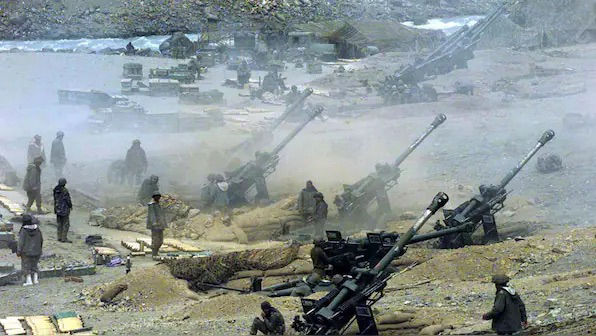
India cannot afford doctrinal overcorrection.
The lessons India must urgently absorb
At the same time, strategic prudence demands that India avoid overreading the conflict as a template for every future war. Escalation under a nuclear backdrop always carries inherent unpredictability, and prolonged military confrontation imposes economic and diplomatic costs even on stronger states. The central lesson of Operation Sindoor is therefore not permanent escalation, but the importance of preparedness, clarity of objectives and calibrated use of force.
The most important lesson from Operation Sindoor is that deterrence succeeds only when backed by credible capability and political resolve.
India demonstrated both.
However, future conflicts may be more prolonged, more technologically complex and more difficult to control. Therefore, several urgent reforms are necessary.
First, India must dramatically improve its information warfare capabilities. While India dominated militarily, Pakistan often appeared more aggressive in shaping international narratives through propaganda and digital amplification.
Modern wars are fought simultaneously on battlefields and information networks.
India needs an integrated information warfare architecture staffed by technologically proficient personnel and functioning directly under the highest levels of government coordination. Narrative management during conflict is no longer secondary; it is central to strategic success.

Second, India must accelerate the establishment of integrated theatre commands. Inter-service silos can no longer dictate national security reforms. Operation Sindoor demonstrated the benefits of synergy between the Army, Navy and Air Force, but future conflicts will require even deeper integration.
Theatre commands do not weaken services; they optimise national combat power.
Third, India must urgently address force levels and recruitment challenges. The COVID-induced pause in recruitment and the transition to the Agniveer system created significant manpower shortages. The retention rate under the scheme should be increased from 25 per cent to at least 50 per cent, while the upper recruitment age should be revised upward to compensate for lost recruitment cycles.
At the same time, Operation Sindoor also disproved criticism directed at Agniveers. These young soldiers displayed remarkable adaptability, especially in drone warfare and technology-intensive operations.

Fourth, India must significantly strengthen aerospace, cyber and satellite capabilities. Future wars will depend heavily on real-time intelligence integration involving satellites, drones, cyber networks and precision-guided munitions.
India must expand its satellite infrastructure substantially, particularly in military surveillance and battlefield intelligence.
Fifth, India should increase defence spending to at least 3 per cent of GDP if it intends to sustain credible preparedness for a two-front challenge.
The expansion of Air Force squadron strength from the present levels to the sanctioned 42.5 squadrons can no longer remain delayed. Simultaneously, next-generation systems such as BrahMos-NG, advanced stand-off weapons and integrated air defence systems must receive accelerated investment.
Finally, India must deepen joint military culture from the training stage itself.
A long-term reform worth serious consideration is the gradual transformation of service-specific academies into integrated armed forces academies on the lines of the National Defence Academy. Institutions such as the Indian Military Academy, Officers Training Academy, Air Force Academy and Naval Academy can progressively incorporate tri-service training structures.
Such integration would help dismantle the silo mindset that often hampers operational synergy.
A model of calibrated escalation
One of the defining features of Operation Sindoor was India’s ability to execute a controlled and structured escalation ladder.
Unlike prolonged conflicts such as Russia-Ukraine or Israel-Gaza, India demonstrated how limited political objectives, calibrated military action and a clearly defined exit strategy can coexist effectively.
Pakistan had hoped to draw India into a wider conventional conflict that would internationalise Kashmir once again. Instead, India denied Pakistan that opportunity.
Normal civilian life across India continued with minimal disruption during the conflict. Economic stability was maintained. There was no nationwide panic or paralysis.

This was strategic maturity.
India demonstrated that military success is not measured merely by territorial gains or destruction inflicted, but by the ability to achieve political objectives swiftly while preserving national stability.
The operation also sent a powerful deterrent message.
India made it unmistakably clear that future acts of cross-border terrorism would invite direct and punitive consequences. More importantly, India signalled that nuclear coercion would no longer provide Pakistan with immunity for proxy warfare.
The real success of deterrence, however, will be achieved only when Pakistan begins believing that any future adventurism may invite consequences even more severe than Operation Sindoor.
The road ahead
Operation Sindoor was not merely a military campaign. It was a strategic declaration that India had entered a new phase of national security thinking.
The operation showed that India is capable of combining military precision, diplomatic balance, political unity and economic stability during conflict. It also reaffirmed that India’s rise toward becoming a developed power under the vision of Viksit Bharat 2047 cannot occur without credible national security preparedness.
But history also warns against complacency after victory.
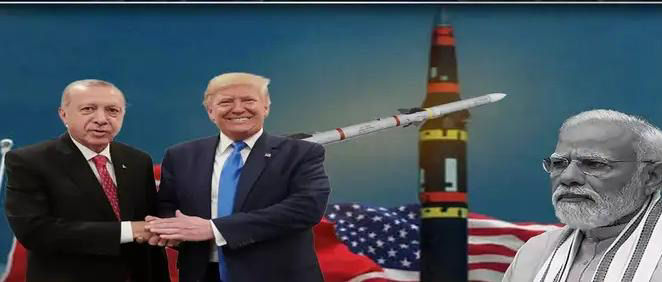
Pakistan’s internal instability, the ideological posture of its military establishment and its growing strategic alignment with China mean that future provocations remain possible. Developments such as Pakistan’s increasing engagement with major powers, renewed international outreach and military modernisation could embolden adventurism again.

India therefore cannot afford strategic inertia.
The lessons of Operation Sindoor must now translate into sustained reforms — in force modernisation, information warfare, cyber preparedness, integrated command structures, defence manufacturing and strategic communication.
Future wars may not resemble Operation Sindoor. But refusing to learn from it would be a historic mistake.
The operation ultimately reinforced one enduring truth: India’s security will depend not on international sympathy or external guarantees, but on its own preparedness, political clarity and strategic resolve.

That is why Operation Sindoor deserves to be remembered — not only as a victory, but as a blueprint for the India that must emerge in the decades ahead.
Author's Bio :- Brig Advitya Madan was an Instructor at IMA, commanded 15 Punjab in Lebanon, 27 Sector in Manipur as DIG and was selected as Brigadier Operational Logistics at Western Comand


Op Sindoor demonstrated India`s resolve to catch the bull by the horns at all levels - the synergy obtained and demonstrated is evident in the results achieved in such a short time, whereby Pakistan was forced to seek a ceasefire - as adequately brought out by the Author, India cannot sit on its laurels, but needs to build up on its strengths and fill up the gaps for any future mishap by Pakistan and its proxies.