


Ombudsman for the Indian Defence Forces: A Reform Long Overdue
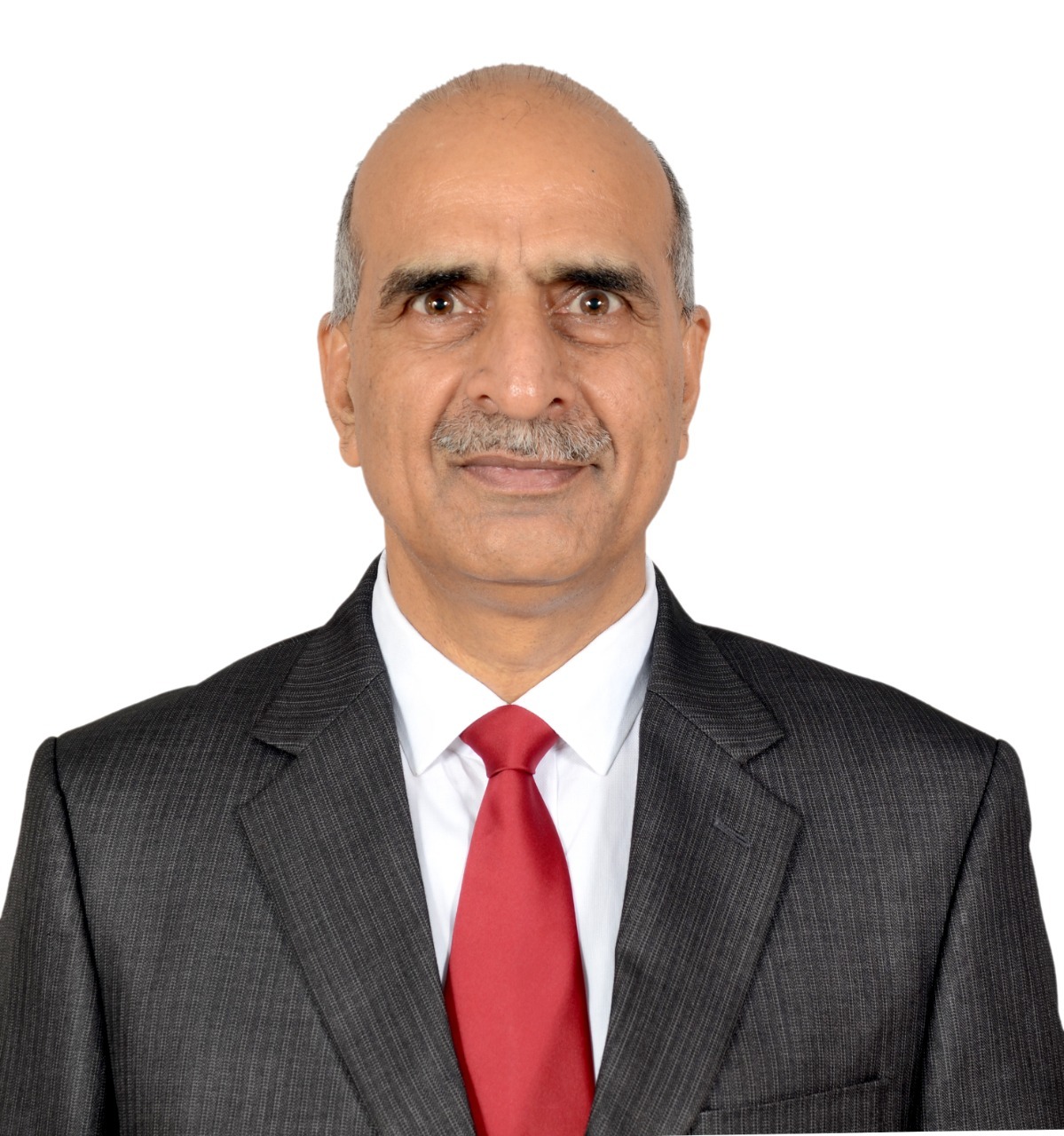
"India’s military grievance system delivers delay, not justice, and litigation instead of resolution.
An empowered Defence Ombudsman is no longer optional—it is the price of institutional credibility.
Reform voluntarily, or have reform forced upon a system that refuses to correct itself."-- Col NS Dahiya

“Nobody can stop an idea whose time has come.”
Introduction: When Institutions Refuse to Reform, Reform Is Forced Upon Them
The Indian Armed Forces never tire of proclaiming their virtues—discipline, adaptability, leadership. Yet, when asked to reform themselves, particularly in matters affecting their own people, these virtues conspicuously evaporate. On personnel welfare and grievance redressal, the Services have not merely dragged their feet; they have institutionalised resistance.
Almost no meaningful reform has originated from within. It has been extracted—by political will or judicial compulsion. Permanent commissions for women officers were not embraced as a matter of equality; they were prised loose by the Supreme Court. The Armed Forces Tribunal was not welcomed as a corrective; it was conceded under pressure. The post of Chief of Defence Staff was resisted for decades, until strategic incoherence became impossible to defend. Even today, Non-Functional Financial Upgradation (NFFU) is treated not as a legitimate service issue but as an irritant to be neutralised through delay.

Each reform followed a predictable script: loud warnings about the collapse of discipline, grave invocations of “military ethos”, and dire predictions of chaos—followed by meek acceptance once resistance became futile. In hindsight, this behaviour appears less principled than defensive, less institutional than insecure.
Meanwhile, trivia are sold as transformation. New uniforms, redesigned mess etiquette, ceremonial embellishments—these are paraded as reform, while uncomfortable questions of accountability, transparency, and justice are carefully avoided. Dissent is discouraged, grievances are buried, and litigation becomes the only language the system understands. When a former Chief of Army Staff is driven to court against his own institution, it is not an aberration. It is a warning flare.

Against this backdrop, one reform can no longer be postponed, diluted, or quietly sabotaged: the establishment of an Ombudsman for the Indian Defence Forces.
The Grievance Redressal System: Impressive in Theory, Punitive in Reality
On paper, the Indian military possesses an elaborate grievance redressal architecture. The Army Act (1950), Air Force Act (1950), and Navy Act (1957) permit complaints through the chain of command, up to the Central Government. Veterans are nominally catered for by the Department of Ex-Servicemen Welfare (DESW) and the Directorate General Resettlement (DGR). The Armed Forces Tribunal, established in 2009, was projected as a specialised and expeditious forum to deliver justice.
In reality, this architecture operates less as a system of redress and more as a mechanism of attrition. The Ministry of Defence is one of the largest litigants in India, particularly in service and pension matters. Soldiers, veterans, widows, and dependents spend years—often the final years of their lives—entangled in bureaucratic apathy, procedural opacity, and institutional hostility.
Compounding this dysfunction is the complete absence of meaningful whistle-blower protection. Soldiers who witness corruption, abuse of authority, or gross violations remain silent—not out of indifference, but out of rational fear of reprisals and career destruction.
What is advertised as redressal has degenerated into endurance.

Structural Failures the System Can No Longer Excuse
The failures of the current system are neither accidental nor episodic. They are systemic.
Delay is endemic. Armed Forces Tribunal benches are overwhelmed, with lakhs of cases pending. Elderly veterans and war widows routinely die before their claims are adjudicated, converting justice into a posthumous courtesy.
Litigation is institutionalised. Administrative authorities avoid taking decisions, allowing matters—sometimes deliberately—to drift into courts. The legal process itself becomes punishment.
Fear of reprisal is pervasive. Serving personnel know that complaining can quietly destroy careers through adverse reports, stalled promotions, or inconvenient postings.
Command authority is eroding from within. When routine postings, evaluations, and promotions are increasingly challenged in court, authority collapses—not because subordinates are insubordinate, but because the system has lost credibility.
Justice is being commercialised. A thriving ecosystem of legal opportunism feeds on institutional dysfunction, encouraging speculative and frivolous litigation that further chokes an already paralysed system.

Accountability is systematically avoided. By the time relief is granted, the officers responsible for delay or maladministration have usually retired—decorated, pensioned, and untouched. Responsibility is diluted until it disappears.
Above all, the system is inherently adversarial. Soldiers and veterans are forced to fight the very institution they once served without question. For those trained to obey orders unto death, this betrayal corrodes morale more efficiently than any external adversary.
Here, justice delayed is not merely denied—it is dehumanising.
Civil Justice Has Evolved; Military Justice Has Fossilised
India’s civilian justice system, confronted with crippling pendency, has at least adapted. Alternative Dispute Resolution mechanisms—Lok Adalats, mediation, conciliation, arbitration—are now mainstream, accepted as faster, cheaper, and less corrosive.

Military justice, however, remains stubbornly tribunal-centric. Despite serving a constituency of nearly five million—serving personnel, veterans, widows, and dependents—it offers litigation as the default, and often the only, pathway.
This is indefensible. Routine service and pension disputes that could be resolved swiftly through impartial mediation are instead converted into protracted legal battles. The absence of ADR-style mechanisms in military justice is not an oversight; it is institutional inertia masquerading as discipline.

An Ombudsman is not a threat to discipline. It is a corrective to administrative lethargy and moral abdication.
Lessons from Militaries That Take Their People Seriously
Other democracies have confronted these realities—and acted decisively.
The United Kingdom’s Service Complaints Ombudsman(2006) investigates maladministration, enforces timelines, and reports directly to Parliament. Discipline has not collapsed; institutional credibility has improved.
Canada’s National Defence and Canadian Forces Ombudsman (1998) covers serving personnel, veterans, civilian employees, and families. Its emphasis on accessibility and early resolution has significantly reduced litigation and restored trust.

Australia’s layered system, combining the Inspector-General of the ADF with the Commonwealth Defence Ombudsman, treats litigation as institutional failure—not standard operating procedure.
These systems recognise a truth the Indian establishment still resists: fairness strengthens discipline; arbitrariness destroys it.
Powers of the Ombudsman: Authority or Irrelevance
An Ombudsman that merely “advises” can be politely ignored—and therefore should not exist. Credibility demands authority:
● Investigative Powers: Direct access to complaints from serving personnel, veterans, and families; power to summon records, officers, and officials from the Services and the Ministry of Defence.
● Corrective Authority: Binding recommendations in routine service and pension matters; power to direct remedial action in cases of delay, denial, or maladministration.
● Oversight and Transparency: Mandatory annual reports to Parliament, identifying systemic failures and policy distortions.
● Protective Functions: Statutory whistle-blower protection; safeguards against reprisal; confidentiality for sensitive complaints.
● Filtering Role: Acting as a pre-litigation forum—resolving genuine grievances while eliminating frivolous or vexatious claims before they burden the AFT.
Anything less would merely add another bureaucratic speed-breaker to an already stalled system.

Composition: Independent Enough to Be Feared, Informed Enough to Be Trusted
A credible Ombudsman must be structurally independent yet operationally literate:
● Ombudsman (Chairperson): A retired senior defence officer of unimpeachable integrity, appointed for a fixed, non-renewable term; no remuneration, to attract service rather than ambition.
● Deputy Ombudsmen: One for each Service, drawn from retired senior officers with deep operational and administrative experience.
● Advisory Council: Representatives of veterans’ organisations, military families, retired JCOs/NCOs, and civilian experts in law and public administration.
● Professional Secretariat: Legal officers, grievance specialists, and analysts supported by a transparent, digitised case-tracking system.
Why India Needs a Defence Ombudsman—Now
A Defence Ombudsman would not weaken the Services. It would do what the current system manifestly fails to do:
● Deliver swift, impartial, non-adversarial justice.
● Prevent routine disputes from metastasising into endless litigation.
● Reduce the crushing burden on Armed Forces Tribunals.
● Restore faith among serving personnel, veterans, and families.
● Reinforce discipline by aligning authority with fairness.
This is not indulgence. It is institutional self-preservation.

Conclusion: Reform, or Accept Irrelevance
The Armed Forces Tribunal was a necessary reform—but it is no longer sufficient. Litigation fatigue, collapsing trust, and the steady erosion of command legitimacy demand a new institutional response.
The old British Indian Army institution of the Colonel of the Regiment functioned, in spirit, as a moral ombudsman. It failed because it lacked authority and independence. India must not repeat that mistake.
A nation that demands unlimited liability from its soldiers owes them timely, humane, and credible justice. Reform voluntarily to retain legitimacy—or face reform imposed without consent or courtesy.
A force that refuses to evolve does not merely risk inefficiency.
It risks forfeiting its autonomy.
The time to act is now.


UNICCM School develops learning pathways that support evolving career demands. Academic content is aligned with professional practice. Flexible formats allow learners to study at a sustainable pace. This supports consistent progress.