


HONEST REVIEW & TRUTHFUL ANALYSIS OF NDA -Nixon Fernando
- Nixon Fernando
- Mar 19
- 17 min read
Editor's Note
This rare technical analysis and bold review of NDA encapsulates the truth about the official and unofficial training ,structured and non structured training and includes all that is good , bad and ugly ! All aspects and issues are well covered and accurately articulated . The readers should gain immensely from the deep insight of the author and would surely facilitate an honest review and serious introspection of NDA for what it was in the past ,what it is today and what it should be tomorrow !
-Col Vinay B Dalvi, Editor, MVI
NDA SPIRIT: ERRING AT THE POINT OF DHARMA AND FARZ
The personal experience of meeting alumni:
A family friend was commanding a middle size Indian Naval Ship, and on a special occasion our family got invited to visit the ship at the Chennai Harbor. I had a chance to break off from the group and meet the young officers who were serving on that ship. Two of the five or six present there at that time happened to be NDA alumni. I readily recognized one of them by face as he was a senior appointment in the academy from the same battalion in which I was counselor at various times. They were about ten years or so into their service

The NDA spirit should have taken over, I expected more than human warmth in the chanced meeting, a bit of familiarity perhaps, an eagerness to exchange notes maybe. There was none of that. It felt like a small parade, it did not look like the two officers wanted to show any familiarity in the presence of others there; though the other person, I, was from the NDA. Or then was it just that, they did not want to show the others that they were too enthusiastic about the association with the NDA? The exchange could be classified as nothing more than courtesies, some small exchange of notes, and it gave the feeling that the interaction was over even before it started.
It left me disappointed. I was a very low-ranking civilian officer in the academy. But because of my participation in all kinds of activities, not normal for civilian officers there, I was a known figure. It is unlikely that they did not recognize or know about me. But even that was not necessary really, if the NDA spirit was anything to go by.

Or then was the civil-military gap too large? Or then, were these young officers indeed trying to live down their association with the NDA amongst their peers who in turn were from the Indian Naval Academy? Or did they have anything personally against me? (Not likely)… Or then did it have to do anything with the dynamics in their service alongside the host? I really could not figure out… But the truth remains that the NDA spirit could not make up for whatever it was that made the interaction so shallow.
Maybe it had to do with the fact that the officers are a let-down to the cadets at the NDA; they are expected to run a system which, on paper, says 30% physicals and 70% academics, but the officers turn a nelson’s eye to the fact that it is almost the opposite on ground. So much more happens at the squadrons, which in turn are controlled by the traditions in the squadrons, and the officialdom has only fire-fighting control over it. You could find graffiti on the NDA desks that say “I am living in hell”. Surely a situation that creates such toxicity is not by design, but if the authorities responsible cannot do anything about it, how much warmth would the cadets share with officers there? So then was it this that led to the kind of interaction on the ship 10 years later in Chennai? It is another fact though that cadets and officers enjoy, very often, relationships that reflect mutual respect and admiration and are therefore very rewarding and heartening. But this based on the personalities involved and on the basis of personal relationships which are not damaged by many adverse systemic characteristics.
So, while I wonder why that warmth was missing in our interaction, thought also drifted to the concept of jointmanship. Would it help if this ship were to coordinate some battle action with the Airforce and the Army? Is the NDA spirit a gift to the services or then does it lead to resentment amongst others. What does the overall NDA spirit stand for? What is the experience of the nation, of the peers from other academies, of the men who come to serve under them? Is it positive or is it negative or then, are there shades of grey. Is there any way to work on it so that it can take the Indian armed forces and the nation to better realization of potential?

The many things that contribute to making the NDA spirit
As one analyzes what NDA stands for, one realizes that the credits are of an exceptional order. It is one of its kind in the country and it even has international repute. The dignitaries who have visited NDA include the King and Queen of the UK and that too on more than one occasion. NDA was designated as one of the temples of modern India that came into existence under the direct patronage of the first prime minister Pandit Nehru himself. It accounts for the majority of officer leadership in the armed forces today, and is one of those unique institutions in the world which caters to all three wings in the armed forces, in a spirit of jontmanship. Its alumni have gone on to occupy the highest offices in the armed forces with all three chiefs being alumni, many times over. Many from the alumni have distinguished themselves in service abroad too, won acclaims in international military competitions, and excelled in courses at foreign academies. Many NDA alumni have also distinguished themselves in military field action, both in peace and in war, and are listed amongst the bravest of the brave in the nation.
Out of the millions applying to join the institution, only around 600 make the final cut. NDA therefore represents a collection of an incredible pool of talent from across the nation. On the trainers’ side, the NDA also gets some of the best of officers; instructor grade. In the original scheme, even the civilian officers were among the best available in the nation. And even the present incumbents come from a serious competitive process. For infrastructure, it is evident that the government is lavish in its expenses to build and sustain the best of facilities relevant to this level of training. And with an officer to cadet ratio of around 1:10 and with overall staff to cadet ratio of may be less than 1:3, the NDA is indeed marked out as a very special institution.

Besides all that there are two factors that combine to give the institution the real substance of distinction. The first one is that the career that it caters for is noble at its very constitution; the noble profession of arms. A cadet who signs up for it, signs away some of his individual freedoms, which are otherwise available to all other Indians. He signs up to being among the first to face life-threatening danger that may come upon the nation. And the other factor is that passing through the NDA portals means that he gets trained to be a leader in this noble profession. He would go on to lead his men from the front, into life threatening situations. In other words, the profession itself is noble and one trained at the academy is expected to lead that profession from the front, regardless of danger or concern for self-preservation.
It is a heady combination, belonging to a distinguished profession, belonging to a talented peer group, trained in an institution of international repute, which the nation itself considers unique, invests so much in, and an institution with outstanding achievements in its alumni. The fact that this distinction reflects in the NDA spirt of the cadets and the alumni is natural and proper even. Surely it should combine with a degree of humility, which is a natural characteristic of people of merit as they are some of the best national talents who make it to the NDA.

Three-year bonding
Then there is the human dimension in the NDA spirit that arises from bonding within the campus. There is the fact that the cadets live together for three years. That surely adds to the NDA spirit. In fact, one of the defining features of the NDA, jointmanship, is based on this.
When people live together, over long durations, it is natural that a certain bond develops between them. And it is relevant in a family (as can be proved in families that adopt children), in a school, college, in all kinds of hostels, even in a jail, a company, a colony, a village… when humans are associated with each other in a regular interactive basis, and more so if the association has factors of living together over extended periods of time, acquaintances, friendships, brotherhood and all kinds of human-to-human bonds develop. And it should be the same with the NDA too. Let us, for the moment, call the training as ‘tough military training’. The interactions in this tough training are in fact different from the civilian average as there is this additional dimension of learning the nuances of ‘command and obey’ in a defense institution. The result is that hazing and ragging get amplified. There is this no man’s land between the official and the unofficial in which a lot of positive and negative human emotions are at play. The conscientiousness in seniors make them take initiative for training of their juniors, but apart from this, even sadistic pleasure taking, targeted harassing, and terror image building play a role. Therefore, this dimension of command and obey makes the human interactions more intense. If the sense of belonging and association is at one level in the civilian world, it can be at a much higher level in the case of the NDA and both, the positive and the negative aspects of this association would be relatively more intense.
In general co-inhibiting endows the alumni of any institution a sense of belonging, or a family spirit which could imitate blood relations, and the NDA spirit clearly demonstrates this. The positive side of it manifests as jointmanship and the institution takes pride in it, as it can help build bridges across the three services and, somewhere down the line, since, as cadets, the officers have played together on the NDA fields, they would sync better when they have to coordinate on a battle field. The negative part is of course a corrupted sense of loyalty that seems to develop between the alumni. Just as there is a tendency to promote relatives or place types, or language types, or caste types, or religious types in power situations in the nation, the same also happens in the military. And for the NDA alumni, in addition to promoting regimental types and unit types, there are the squadron types, course mates and NDA types who get special favors. And while it works to the advantage of those who wield power, it is to the detriment of merit. When nepotism takes a front seat, the institution, which ever it may be, suffers. Therefore this ‘loyalty to clan’ in the NDA spirit is not completely well placed, and it needs to be addressed along with nepotism everywhere else in Indian society and institutions.

Baptized in fire
Then again, there is pride in the NDA spirit about the toughness of training in the NDA. While it can be said that military training will surely be of a higher degree of difficulty in comparison to civilian college life, everything that comes under tough training in the NDA need not be positively contributing to training or to the positives of the NDA spirit.
Anyone who even hears about the specifics of the Commando training knows that it is indeed tough. An American who attended the course is known to have called it “In-human”. One that has successfully completed it feels rightfully proud that he completed such a challenging course. One that passes through the NDA also carries this impression. Is it justified?
It is said of the 4th term ‘Camp Rovers’ at NDA that it competes with another from China as the world’s toughest camp for that particular age group. But otherwise, the PT Tests recommended, the drill, equitation, academics, services training all together do not account for anything too much out of the ordinary or anywhere close to what happens at Commando school. In fact, GCs in IMA achieve all that is achieved at the NDA, as far as military physical training is concerned, in just two years. In comparison, one trained in NDA is expected to achieve the same standard after four and half years training in all. At the OTAs the GCs are trained for less than a year, and they too manage to achieve the required standards for commissioning. So then, what is it about the training that is so hard at the NDA, which accounts for such a high rate of attrition?
The difference between the training at the commando school and the NDA is that everything in the commando school is done above board, however the ‘toughness training’ at the NDA is done on the sly. It is as if the cadets are sworn to silence about the happenings in a squadron on the basis of their loyalty to what is equivalent to a home for three years. What is this that they keep under wraps?
The sugar-coated name for this is ‘unstructured training’. ‘Unstructured’ would mean that it is not part of the official syllabus, but it happens in the squadron regardless. The cadets undergo this training to help them pass the required official tests as also to attain military toughness in their bearing. And unstructured training is conducted mostly by non-professional senior cadets.
One can compare this to a civilian setting, where after a tough day of college when the student is at home, the elder brother helps the little brother become better at what he is being trained in. Since the elder brother is more experienced, he can help. Needless to say, this is a sentiment that makes many senior cadets take out time to help out their juniors. But there are two problems that come tagged with this ‘help’. The first is that the cadet has more than one elder brother, and second is that the toughening also involves some things that neither the senior nor the junior want the world outside the squadron to know about.

But if one peels it layer by layer the question arises as to what this toughness is really about. There is this example of a 30 something lady in Europe who holds the record for running 365 full marathons over the course of a year without a single break. No NDA cadet has ever done that, so is this lady tougher than the NDA cadet? So then is it right to consider physical activity to be a bench mark for deciding toughness? Then there is this cadet who had a hemoglobin problem and so could not run a cross country like his course mates though he sincerely worked at it. He got relegated on disciplinary grounds, was on the verge of a second relegation which would have led to withdrawal, but fortunately his medical condition was discovered and that relegation was converted into a medical case, and he eventually made it through.
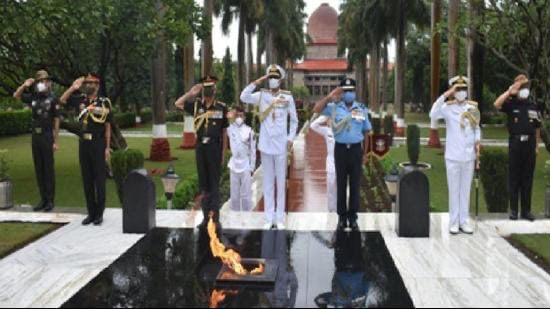
If toughness is decided on the basis of his surviving in the academy, does his toughness depend on his ability to communicate with his officers? Then there is this case of a cadet who had a problem in his wrist because of an accident in training. He could not do the mandatory high horse required for passing out of the academy. The injury was kept under wraps and the tests were ‘managed’ with the help of others. So then is toughness about the ability to ‘manage’ the system? Or take this tradition of ‘pal’ in the academy. Once a senior becomes a pal of the junior then the junior receives protection and patronage of the senior. And sailing through the academy becomes easy for him. So then is toughness about making and having pals; place types, school types, relatives, team types, state types… and what not…? Or then, you are being subjected to some degrading bathroom sessions, or worse and you bite your teeth, bear the humiliation, do not react and the seniors let you be. So is toughness all about swallowing your pride and letting go of your dignity. And then someone asks you to front roll down a flight of stairs or hits you with a hockey stick and you are just lucky that no bones are broken. So is toughness all about luck. And as luck would have it, the official punishment to Singhad, the rolling to the mess from the Habibullah hall, the 7th heaven session, the night cross country practice and the shinbone pain from over straining the past week fall on the same day. And you sincerely do everything without complaining and you land up in the MH with a stress fracture for two months and you don’t clear your tests. And for some reason you get boarded out. So, you did everything sincerely and therefore you are not tough?
Somewhere these connotations of toughness do not add up. Our ancient land also had some of the best traditions of military valor. But none of these really record something like what happens at the NDA. A very sophisticated psychological claim pertains to breaking the civilian ego and building a military ego. There is no task of this kind assigned to the NDA on paper, but the sum total of the transformation, that happens in three years of late teenage growth, is interpreted in this manner to make it feel high sounding. And a critical study of what happens, in this unstructured training appears to be nothing more than hazing that is maybe a little more sophisticated than school boy tendencies in sainik school hostels.
The worst part is this that there is a sentiment in it which there is pride in claiming that the hell during my time was worse than your hell; in other words it is about taking pride in saying: “I have survived a tougher training!” This tendency was discovered as one of the findings in the initiation rites of the cadets at the Australian Defense Academy. The more elaborate and wicked the initiation rites, the more accomplished the cadets felt they were; the juniors who suffered it surely and probably the seniors who organized it as well. And humans are the same everywhere. So, there is this dormant aspect in the NDA spirit where an alumnus draws self-worth through the feeling that he sailed through a really very tough training.

The outcome of the toughness training
Does a soldier become tough and courageous when he shows ability to bear all kinds of torture, hazing or ragging? Not necessarily; it is often claimed that the real act of courage of a fire fighter is when he signs up for the job. Once he has signed then encountering a fire and helping victims is part of his duty. It should be the same for a soldier too; the act of courage of a soldier is the point where he signs up for the life of a soldiers knowing well that he accepts to be in the first line of defense when his nation is in danger. Once he signs up then training just helps him improving his fitness for the role he is going to play.
Military toughness is not about physical ability, because there are enough examples of physically weak individuals who have shown exemplary courage on battle fields. It is also not about a bloated military ego either, of someone who “thinks” he is very tough because he went through ‘tough training’. On the contrary, real courage and toughness is something else. As Bruce Lee puts it, “The real fighter does not become tense, he becomes ready.” Real soldiers are those who let go of their ego and become ready for battle, with minds firmly focused on the present moment and therefore tuned to excellence. It is encompassed in the Kshatriya traditions of this ancient land in which the point of focus is ‘Dharma’ or ‘Farz’ or ‘obedience to the will of God’.
So, the question naturally arises, as to whether NDA alumni must measure their toughness, or the toughness in their training, on the basis of harassment one has undergone in the unplanned aspect of training at the NDA or then should they measure it on the basis of the strength of character in which one goes beyond the ego, is compassionate of fellow humans, is focused on righteousness and lives life in the present moment, to the full.
Magnifying what the inspired cadets really came in for
This spiritual dimension of toughness and its link to righteous action, Dharma or Farz is a challenge that faces all of Indian society. The legendry heroes of the Indian civilization are those who stood up for righteous action. And therefore, excellence in an individual doing his job, whatever that job may be, is the true measure of heroism in Indian society. A mother, a sweeper, a cook each of them are measured by this scale alone, whether they perform righteous action in the tasks assigned to them and do they achieve spiritual heights and excellence in the process. And even though it applies to every individual in society, the martial legends have always been the ideal platform to highlight these values in Indian society. For example, the Ramayan and the Mahabharata have soldiers as the main characters and the discussion is about their rising to perform their Dharma. And with the military platform having this central importance, the onus is on the thinkers and movers of the Indian Military to carry that load on behalf of the nation. And NDA its staff and faculty hold vintage position to handle that responsibility.

If Dharma were to drive the wheels in the NDA, then it can blaze a trail for the rest of the nation to follow. Among the bureaucrats we have Mr. TN Seshan who by the sheer force of doing his duty diligently played a pivotal role in protecting the Indian democracy in the end of the last century. The armed forces have examples in the Param Veer Chakras and other decorated modern-day warriors who have blazed a brilliant trail. An outstanding example of military leadership, is Field Marshal Sam Manekshaw who demonstrated what it is to be a righteous military leader in the modern Indian context. If the NDA spirit can exemplify this magnanimity, diligence, presence of mind and unwavering integrity then it will play the role it must play in the armed forces and the nation. The sainik schools on one hand and the civilian political leadership on the other would have the right idealism to observe and follow. And when those, who hold any form of authority in the nation, perform their duties in the spirit of the eternal heroes, that the nation will rise to meet its destiny.
Instead of this idealism being facilitated in the academy, the ‘tough’ training, largely thanks to the unstructured activities that happen in the squadron traditions, puts the cadets in a kind of a crucible where they are kept on constant boil and have to worry about small opportunities for rest and recovery. The situation actually discourages initiative, kills enthusiasm, teaches cadets to dodge, to chill, to beg, borrow, steal, manage… And there is proof that it actually is detrimental to excellence. A sports medicine specialist was invited to one of the squadrons to talk to the cadets. He saw them running about like headless chicken and initiated corrective measures. He ensured that they follow a proper routing with sufficient opportunity for rest and recovery. The cadets adopted it, and it is remarkable that for six terms consequently after that, the particular squadron took the inter-squadron championship banner. By just taking care of rest and recuperation the cadets in that squadron were able to perform better than average.
Do I really want NDA to represent global excellence?
The choice is clear: On one side is this ‘hell’ that has been created in the NDA under the garb of ‘unstructured training’ where the cadets are kept in a spin, trying just to survive and make it through something that is called tough military training, and in the process they pick up all kinds of attitudes that help them dodge the system in order to survive. This is a substantial component of the NDA spirit now and it is blatantly defended by some of the alumni. And on the other is the spirit of the gracious, duty bound, majestic warrior who stands for righteousness, the selfless spirt of immortal warriors and the universality of divine oneness. He controls the narrative and cherishes the NDA to be a crucible of leadership training where those who come in inspired go out empowered without losing an iota of that inspiration. Now, that is what the NDA spirit must represent. The instructors there, even the civilian instructors, should not be satisfied with merely aiming for excellence as Acharyas. They should pursue instead the idealism of the Guru, being tuned to transcendence and facilitating the cadets along that path that cherishes Dharma.
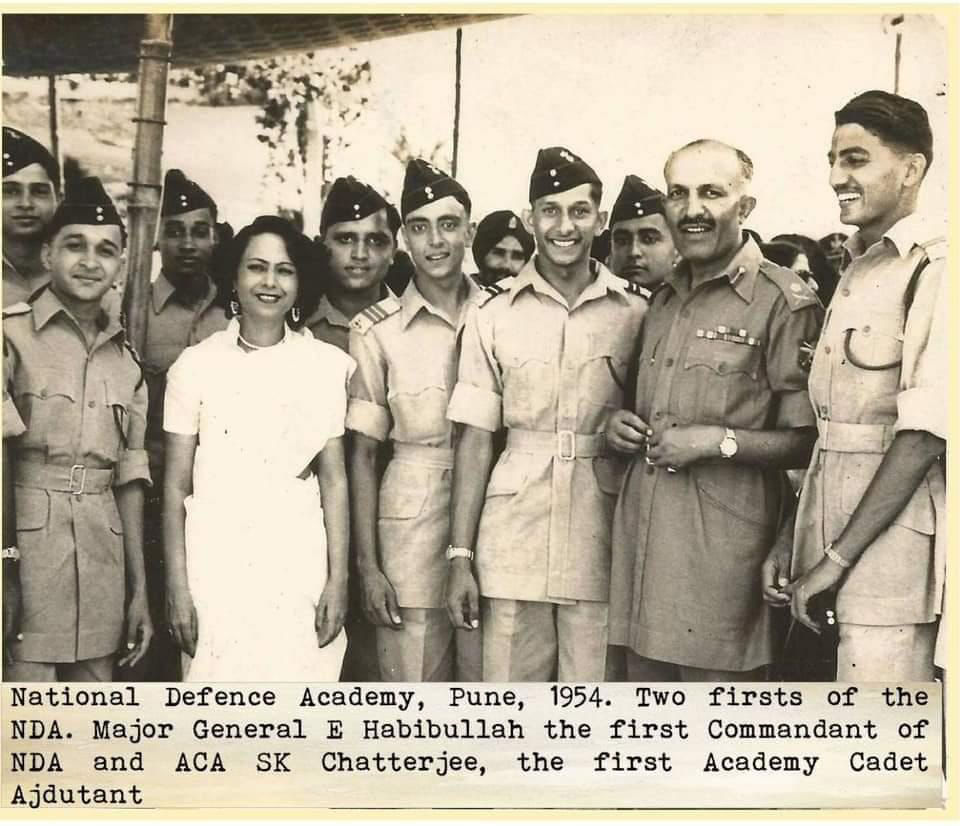
The choice to represent the NDA spirit stands presents these two extremes. On one side one can be an alumnus that is a self-seeking self-preserving smart-ass who is resented by peers and is a disappointment among the men. And on the other hand, is the duty-bound soldier, magnanimous, righteous, just, groomed in the shadow of timeless heroes who everyone can look up to. And the choice is not just about what one must be, it is about what one must encourage among his fellow NDA alumni.

As NDA looks into the future, the first thing that must happen is a thorough review, Now the NDA spirit among the alumni should show the courage in being open to transparent review, knowing that the NDA represents the best and is open to adopt the best practices from anywhere in the world. If the NDA needs to remain relevant, provision must be made so that every officer in the armed forces gets an opportunity to be part of that spirit of NDA jointness through other courses that happen post commissioning. The NDA has outlived its mandate of creating cosmopolitan candidates for occupying the positions vacated by the British officers at independence; now the focus must change to leadership that cherishes values that made this civilization and other civilizations outstanding in their respective times. That would be a ‘NDA spirit’ that would cherish relationships, which makes peers look up in genuine admiration and a spirit that takes India to its highest destiny.


Comments